Most people shopping for a pressure washer start with the PSI number on the box, and that is exactly how they end up disappointed. Pressure is how hard the water hits. Flow is how much water actually does the work. A machine moving 2.3 gallons per minute will clear a concrete slab faster, and far more evenly, than a higher-PSI unit dribbling 1.1 GPM through the same wand. This guide rounds up the best pressure washer picks for the jobs most homeowners actually face: concrete, siding, decks, cars, and the occasional boat hull. It also covers the two accessories that quietly decide whether a setup feels professional or frustrating, because the nozzle you screw onto the wand matters as much as the machine behind it.
Related: Pressure Washer Nozzle Colors Explained: Which Tip for Which Job
Quick answer
The Greenworks 2700 PSI (2.3 GPM Max) Brushless Electric Pressure Washer is the strongest fit for most homes because it pairs the highest flow rate in this group of electrics with a brushless motor and a standard corded format that needs nothing more than an outdoor outlet. Choose the Simpson Water Blaster 4400 PSI Gas Pressure Washer instead when you are washing boats, long driveways, or anything that justifies gas-level flow and a duty cycle that does not need a break.
Pressure washers and cleaning accessories worth comparing
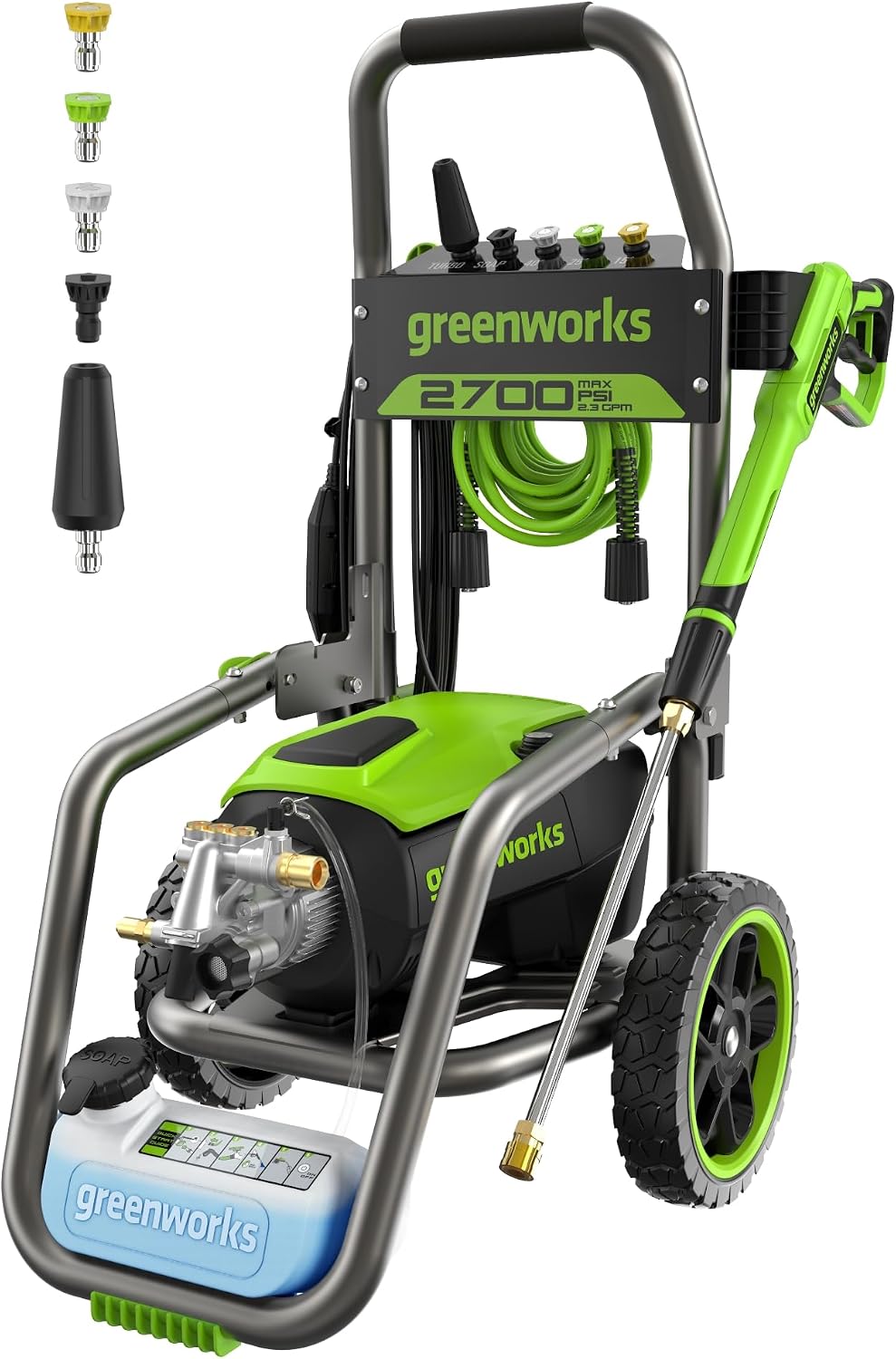
Greenworks 2700 PSI (2.3 GPM Max) Brushless Electric Pressure Washer
A corded electric rated 2,700 PSI with a 2.3 GPM max flow rate. The brushless motor design reduces wear parts compared with a brushed motor, and the flow figure is the highest among the electric units compared here.
Visit on Amazon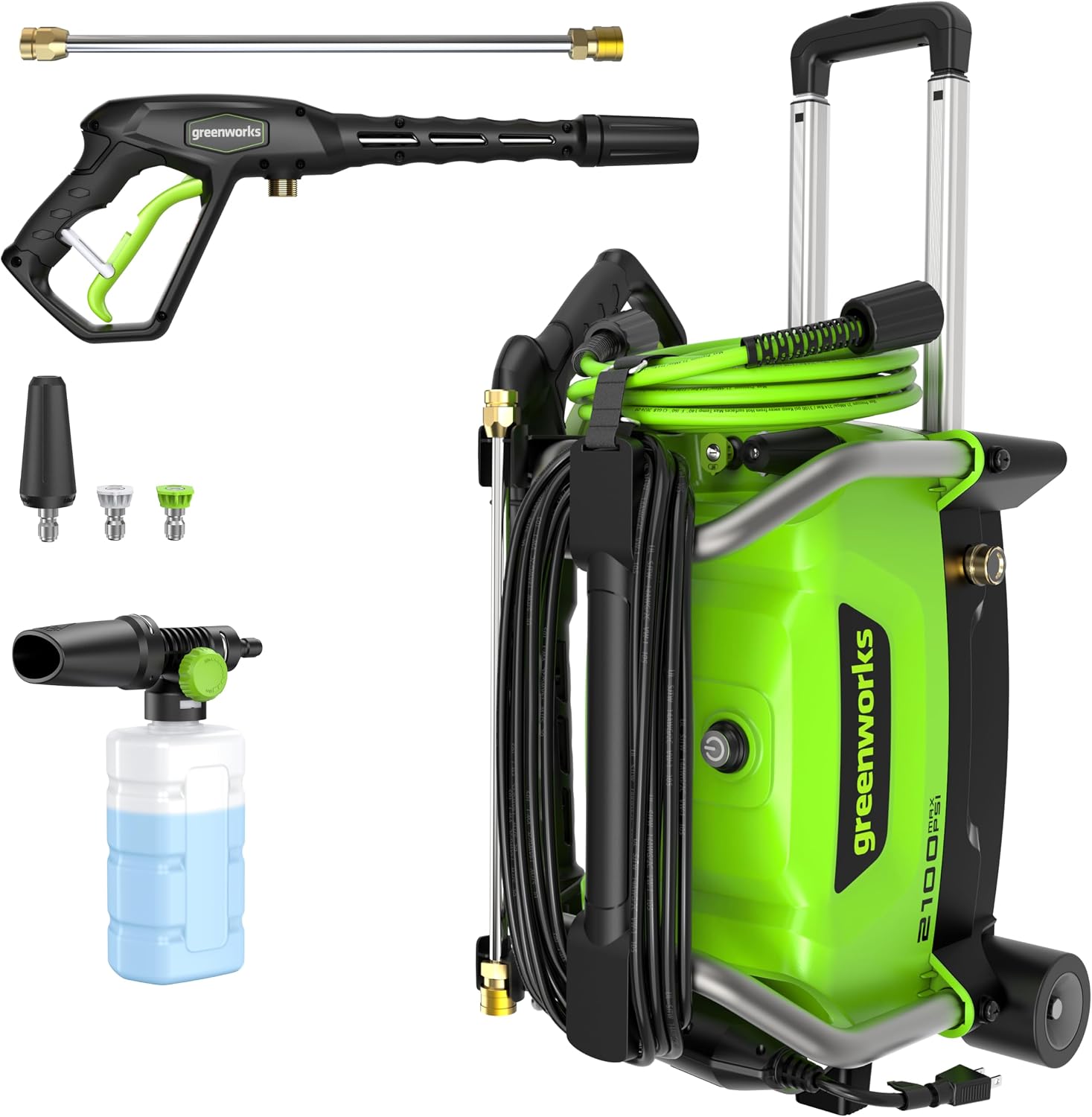
Greenworks 2100 PSI (1.2 GPM) Electric Pressure Washer
A compact corded electric rated 2,100 PSI at 1.2 GPM. The lower flow rate makes it a light-duty option aimed at car washing, patio furniture, and small hard surfaces rather than large slabs.
Visit on Amazon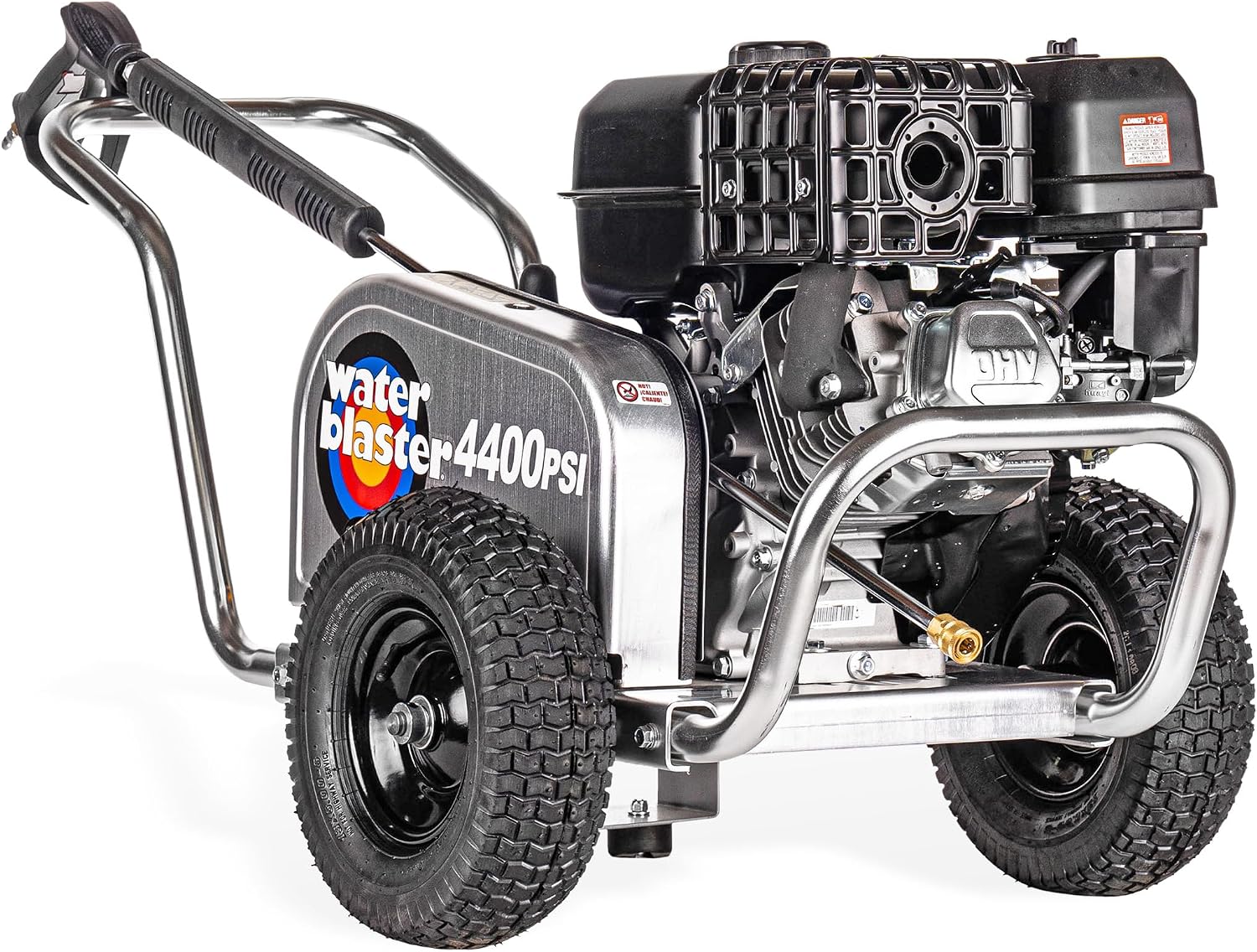
Simpson Water Blaster 4400 PSI Gas Pressure Washer, 4.0 GPM, CRX 420 Engine
A gas machine with a CRX 420 engine, rated 4,400 PSI and 4.0 GPM. Flow is the headline here: roughly double what a typical electric delivers, which is what makes long concrete runs and hull cleaning realistic.
Visit on Amazon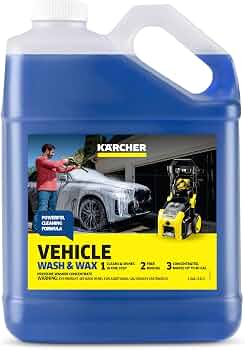
KÄRCHER Vehicle Wash and Wax, Pressure Washer Detergent
A pressure washer detergent formulated for vehicle wash and wax duty. It is intended to be drawn through a washer's soap system, so it only pays off if the machine you buy can actually inject detergent.
Visit on Amazon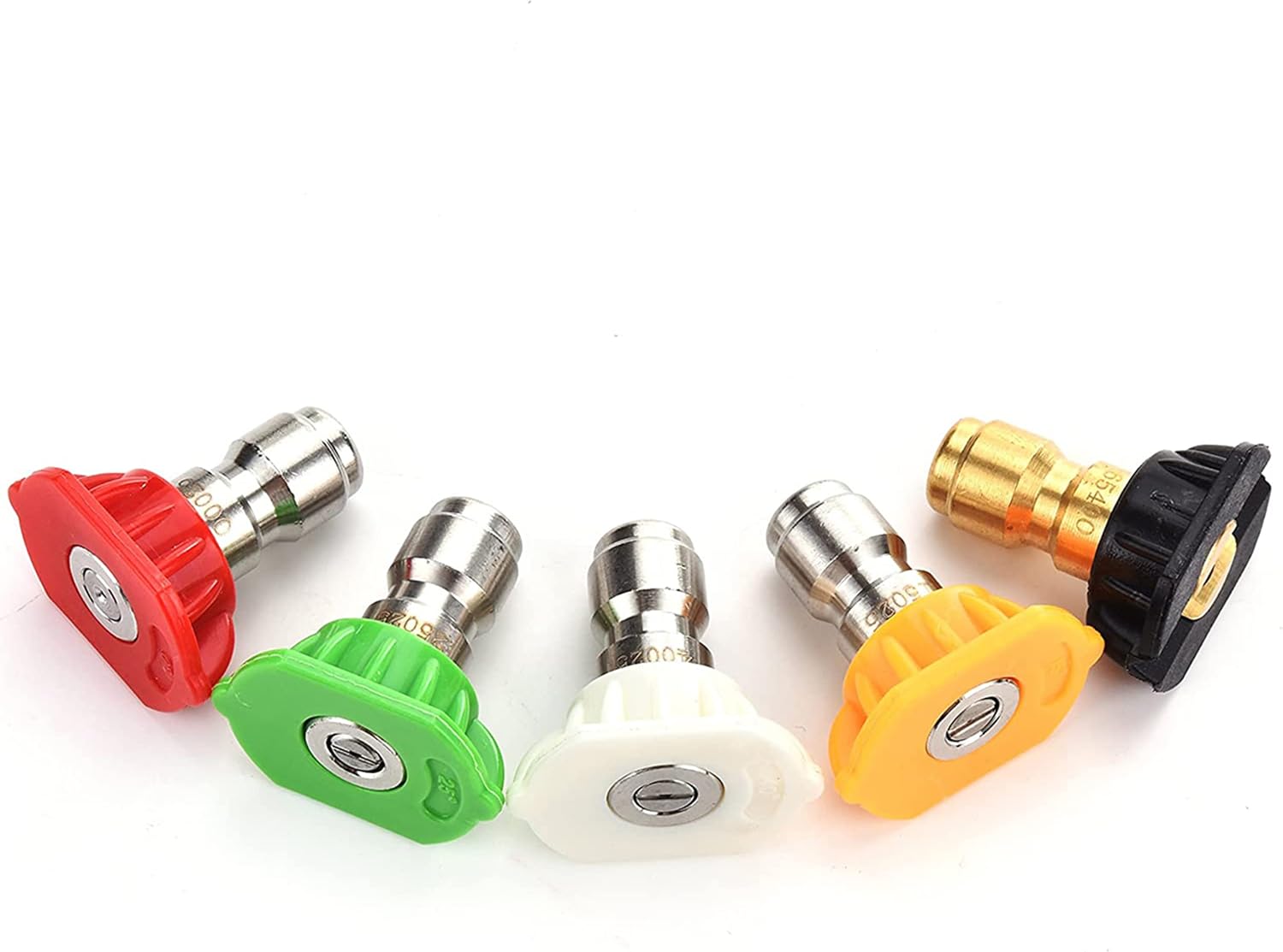
Tool Daily Pressure Washer Nozzle Tips Multiple Degrees, 1/4 Inch, 2.5 GPM
A multi-degree nozzle tip set on 1/4 inch quick-connect fittings, rated 2.5 GPM. Changing the spray angle changes impact and coverage without touching the machine's pressure setting.
Visit on Amazon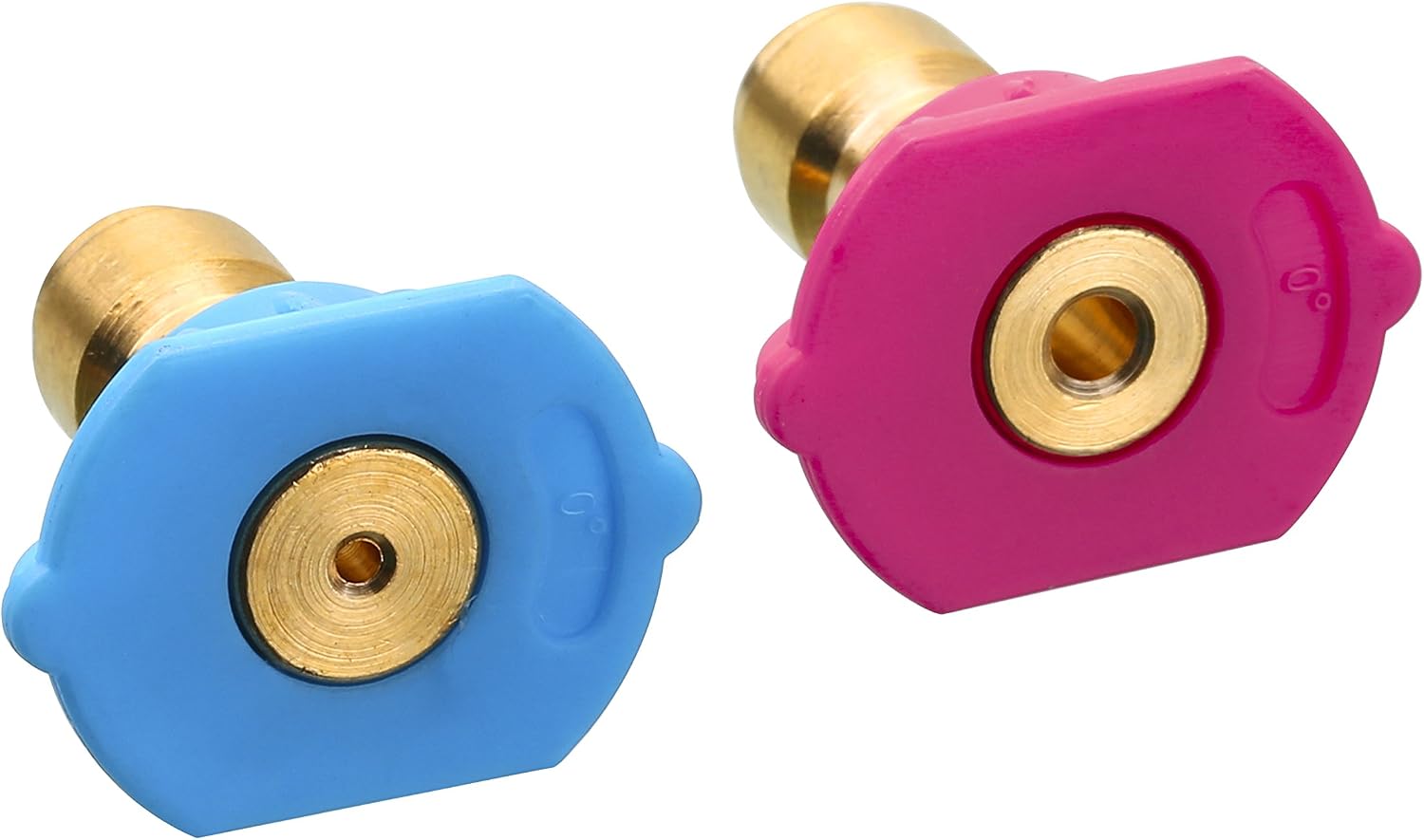
M MINGLE Second Story Quick-Connect Nozzle Tips for Power Washer, Soap and Rinse Jet Stream, Long Range Nozzle,1/4 Inch, 4000PSI, 2-Pack
A two-pack of long-range quick-connect nozzle tips with soap and rinse jet stream patterns, rated to 4,000 PSI on 1/4 inch fittings. The reach is the point: second-story siding and gutters without dragging a ladder around.
Visit on AmazonPrices and availability may change. Check the retailer for current details.
How these products were compared
This guide compares flow rate in gallons per minute, pressure rating in PSI, power source and the duty cycle each one implies, detergent draw capability, and nozzle and hose compatibility with 1/4 inch quick-connect fittings. Product names, images, and retailer links are matched by product identifier so that every card points to the exact item shown.
Nothing here is presented as a timed hands-on test. The comparisons rest on manufacturer-stated specifications and the practical consequences of those numbers, and the article deliberately avoids quoting current prices because they move. Use the retailer link on each card to confirm today's price and availability before you commit.
How to choose the right pressure washer
Start with flow, then look at pressure. GPM tells you how much water is available to carry away dirt, and it is the number that decides how long a driveway takes. A machine with generous flow at moderate pressure cleans evenly and rinses clean; a machine with high pressure and thin flow leaves streaks and forces you to crawl. Among the electrics here, the 2.3 GPM rating is a real advantage over the 1.2 GPM unit, and the gas machine's 4.0 GPM is in a different category entirely.
Then decide the power source honestly. Corded electric suits a household with an outdoor outlet, a car, a patio, and maybe a walkway, and it asks almost nothing in maintenance. Gas makes sense when you have long concrete runs, a boat, or a fence that has to be done in one afternoon, and when you accept fuel, oil, noise, and a heavier machine in exchange. There is no universal right answer, only the answer that matches your yard.
Detergent draw is the feature people forget and then regret. If a washer cannot pull soap from a bottle, it is a hose with a trigger, and vehicle washing turns into a bucket-and-mitt routine. That is why the wash and wax detergent on this list belongs next to the machines rather than in a separate article: it only earns its place if your washer can inject it. Nozzles matter just as much. Both tip sets here use 1/4 inch quick-connect fittings, which is the common standard, but confirm your wand's connection before assuming either one drops straight on.
Greenworks 2700 PSI (2.3 GPM Max) Brushless Electric Pressure Washer
This is the pick that makes sense for the widest range of homes. It is rated 2,700 PSI with a 2.3 GPM max flow rate, and the brushless motor is the detail worth caring about: fewer wearing parts than a brushed motor, which is the failure point on cheap electrics. The corded format means no fuel to store, no oil to check, and no pull cord on a cold morning.
The trade-off is duty cycle and mobility. A corded electric ties you to an outlet and an extension cord, and it expects breaks during long jobs, so a two-car driveway in one continuous pass is gas territory. It is also not the machine for stripping a deck or a heavily soiled hull, and that is a reasonable limit rather than a flaw: pressure that aggressive damages wood and paint if you are not careful with the tip.
Alternatives to consider
The Simpson Water Blaster 4400 PSI Gas Pressure Washer is better suited to boats, long driveways, and large concrete areas where 4.0 GPM and a CRX 420 engine keep you working without waiting on the machine, while the Greenworks 2100 PSI (1.2 GPM) Electric Pressure Washer is a stronger fit when you want something compact for cars, patio furniture, and light touch-ups where 1.2 GPM is not a penalty.
The Tool Daily Pressure Washer Nozzle Tips, the M MINGLE Second Story Quick-Connect Nozzle Tips, and the KÄRCHER Vehicle Wash and Wax detergent cover the jobs the machines cannot do alone: changing spray angle and impact, reaching second-story siding from the ground, and getting soap onto a vehicle without a bucket. None of them cost much, and each one changes results more than a jump in PSI would.
Day-to-day use and maintenance
Treat the nozzle as a consumable and the machine as a tool. Rinse tips after use, especially after any detergent, because dried soap residue is the usual reason a tip starts spraying crooked. If your washer has a detergent tank or siphon tube, flush it with clean water at the end of a session rather than leaving wash solution sitting in it.
Water left inside the pump is the other common killer. If you live somewhere that freezes, drain the unit, the hose, and the wand before storing them, and keep the machine indoors. Check the inlet filter screen for grit, and do not let a kinked hose run under pressure for long stretches. As for safety, keep the tip moving, never aim at people or pets, and stay off ladders while holding a wand with a trigger. Siding, paint, and wood take damage from pressure far faster than concrete does, so test a small hidden area first.
Buying checklist
- Measure the longest run you need to cover, then check the reach of the cord, hose, and any long-range nozzle tip.
- Choose GPM based on normal use rather than an occasional edge case, and treat PSI as a secondary number.
- Confirm that the exact model includes a detergent draw system if you plan to wash vehicles.
- Verify that the wand connection matches 1/4 inch quick-connect fittings before buying nozzle tips.
- Read the cleaning and maintenance instructions, especially winter storage and pump flushing.
- Verify the current retailer price, availability, and return terms before ordering.
Final recommendation
Choose the Greenworks 2700 PSI (2.3 GPM Max) Brushless Electric Pressure Washer when you want one machine for a car, a patio, siding, and a driveway, and you value a brushless motor and the best electric flow rate in this group over raw pressure. Choose the Simpson Water Blaster 4400 PSI Gas Pressure Washer when the work is big enough that 4.0 GPM and a gas duty cycle pay for themselves in time saved. Whichever you pick, budget for a nozzle set and a detergent that suits your surface, because those small accessories are what turn a pressure washer into a cleaning system.