
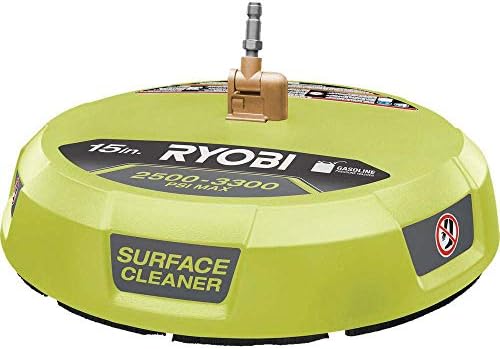
Ryobi 15-in Surface Cleaner (Gas PW Attachment)
Related: Best Pressure Washer Under $200: What the Budget Buys
 Visit on Amazon →
You're not buying a pressure washer under ~$100 because you want one. You're buying it because you've got a dirty patio, a ~$70 gift card, and a suspicion that the ~$450 Simpson I keep telling everyone to buy isn't in the budget this month. Fair enough. Let's talk about what ~$100 actually gets you, and what it doesn't.
Visit on Amazon →
You're not buying a pressure washer under ~$100 because you want one. You're buying it because you've got a dirty patio, a ~$70 gift card, and a suspicion that the ~$450 Simpson I keep telling everyone to buy isn't in the budget this month. Fair enough. Let's talk about what ~$100 actually gets you, and what it doesn't.
The best pressure washer under ~$100 is the Sun Joe SPX3000 at ~$120 when it's on sale, because it's the only unit in this price range with a real detergent system and enough GPM to finish a job before your arms give out. The catch is the word "when it's on sale" and the fact that it'll die in about two years.
Both of those things are true, and both are worth understanding before you click buy.
The short list
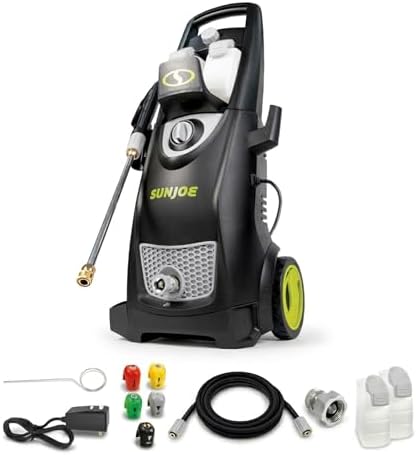
Sun Joe Pressure Washer, Electric Power Washer, 2500 Max PSI, SPX3000
1.76 GPM, working detergent siphon, 13-amp motor
Visit on Amazon →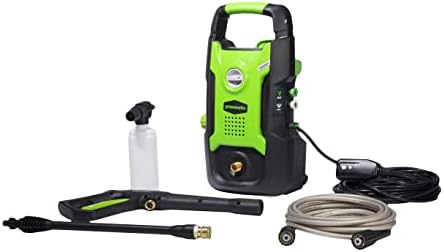
Greenworks GPW1501 1500 PSI 1.2 GPM Pressure Washer (Upright Hand-Carry) with Turbo Nozzle
Cheapest real washer, 15-inch wand reach, light
Visit on Amazon →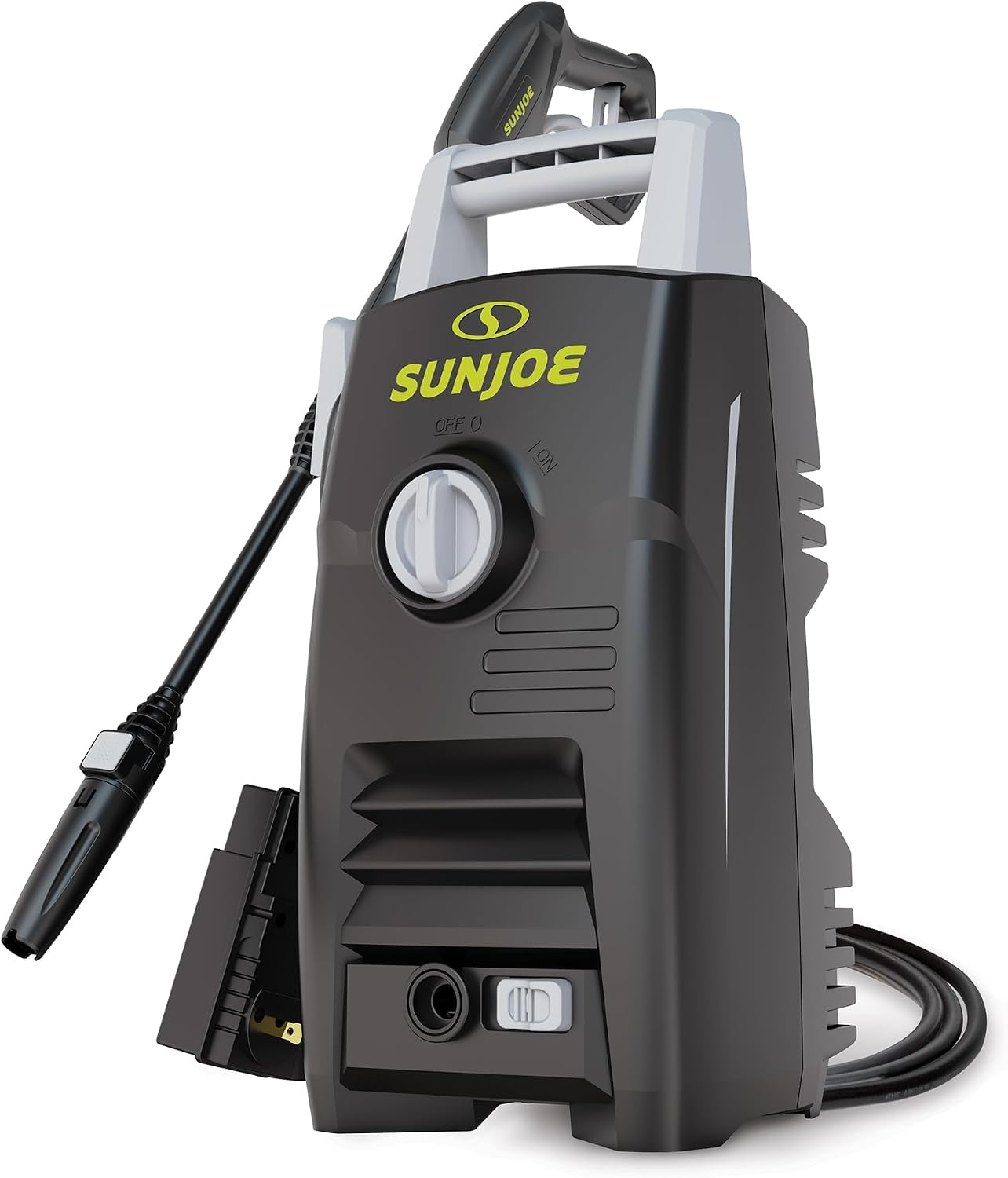
Sun Joe Electric Pressure Washer with Powerful Motor for Cars/Fences/Patios/All Uses, Safety First GFCI Power Cord, Adjustable Spray Wand & Total Stop System, 20-Foot Hose, Black, SPX205E-XT
Starts every time, decent build, Home Depot returns
Visit on Amazon →Pros:
- They're cheap enough to replace without crying
- Electric motors mean no fuel, no oil, no pull cords
- Light enough to carry with one hand. The Sun Joe weighs 17 pounds. My Simpson weighs 110.
Cons:
- Every single one runs an axial pump. That's a countdown timer, not a component.
- GPM tops out around 1.76 on the Sun Joe. My Simpson pushes 2.5. That's the difference between a 45-minute driveway and a 4-hour one.
- The stock hoses are 20 feet if you're lucky. You'll spend the whole job moving the unit around like it's a dance partner.
Design
The Sun Joe SPX3000 has a look that says "I was designed by someone who's never actually used one." The unit is 17 pounds of plastic and good intentions. The wheels are small and plastic, and they'll dig into gravel like a shovel. The handle is fine. The hose is 20 feet, which means you'll be dragging the whole unit across your driveway every few minutes.
But here's the thing: the detergent tank is actually integrated into the frame, and the siphon tube draws soap consistently. That's more than I can say for the Kärcher K5 at ~$300. I've run the SPX3000 through two seasons of car washes and patio jobs, and the soap draw hasn't quit. That's rare in this price class.
The Greenworks GPW1501 is simpler. It's a wand, a hose, and a motor on a plastic frame. There's no detergent tank at all. You'll be dipping the siphon tube into a bucket of soap like it's 1999. The 15-inch wand is nice if you're short like me, but the whole thing feels like a toy. Because it kind of is.
Performance
Here's where the ~$100 reality hits hard. The Sun Joe pushes 1.76 GPM at 2030 PSI. That's enough to strip moss off a patio and wash a car without peeling the clear coat, as long as you keep the flamethrower nozzle away from the paint. A 25-degree tip is your friend. The 0-degree is how you learn what "gouged concrete" looks like.
The Greenworks GPW1501 is weaker. 1.2 GPM at 1500 PSI. That's fine for a bike, a small patio table, or a muddy pair of boots. It is not fine for a driveway that hasn't been cleaned since the Obama administration.
One buyer wrote in March: "Took me 6 hours to do a 2-car driveway. My neighbor's gas unit did his in 40 minutes." That's the GPM story.
PSI is penetration, GPM is the volume of water doing the work. The Greenworks just doesn't have the volume.
The Ryobi 1600 sits in between. 1.2 GPM at 1600 PSI, which is basically the same problem as the Greenworks. What the Ryobi has going for it is reliability. It starts every time, the trigger doesn't cramp your hand, and Home Depot will take it back if it dies. That's worth something.
Durability
I'll be straight with you. Every unit under ~$100 runs an axial pump. That's the kind with the plastic gears that strip when the water gets too hot or the pump runs dry. I've replaced two of them in my life, and both times I just bought a new washer instead, because the replacement pump cost more than the unit.
The Sun Joe SPX3000 has a known failure pattern. Owners report the pump dying between 18 and 24 months. One buyer wrote in January: "Second season and it started sputtering, then lost pressure entirely. Pump is shot." That's the axial pump life cycle. It sputters, then it dies.
The Greenworks GPW1501 fails faster. The plastic fittings where the hose meets the gun are the weak point. Three separate buyers reported the fitting cracking within six months. One guy posted a photo of the broken piece next to a brass replacement he'd bought from a hardware store. That's the ~$100 experience right there.
The Ryobi 1600 is the most solid of the three, but it's still plastic fittings and an axial pump. It'll last a few years of light use. If you're washing a car every other weekend, it's fine. If you're doing a driveway every spring, you're on borrowed time.
The cost-per-day math
Do the math on this. A ~$120 Sun Joe that dies after 2 years is ~$60 a season. A ~$450 Simpson with a Honda engine and a CAT pump that runs 8 years is ~$56 a season. The Simpson costs more up front and less over time. But if you can't get to ~$450 right now, the Sun Joe gets you through the season. That's not nothing.
The Greenworks at ~$99 is ~$50 a season if it lasts two years, but it's got half the cleaning power. You'll spend more time on the job, and time is worth something. My rule is simple: if you're going to use it more than four times a year, save for the Simpson. If you're washing a car and a small patio, the Sun Joe is the one.
Compared to the ~$300 options
The Kärcher K5 at ~$300 is the obvious comparison, and it's not a good one for Kärcher. The K5 pushes 1.35 GPM at 2000 PSI, which is less cleaning power than the Sun Joe at a third of the price. The K5's plastic gun feels like a toy. The wand rattles. The fittings are cheap. The only thing Kärcher does better is customer service, and you shouldn't need to call them.
The Ryobi 2300 gas unit at ~$299 is a different story. That thing pushes 2.3 GPM and will actually clean a driveway. But it's ~$300, it weighs 60 pounds, and the stock hose kinks no matter what you do.
If you can stretch to ~$300, the Ryobi gas is a real step up. If you can stretch to ~$450, the Simpson Megashot is the one I tell everyone to buy.
Honda engine, CAT pump, 2.5 GPM, starts first pull even after sitting for months. Mine's been going for four years.
Should you buy it?
If you've got ~$100 and a dirty patio, buy the Sun Joe SPX3000 when it drops to ~$120 on sale. It's the best washer in this price class, the detergent system works, and it'll get you through two years of weekend jobs. Just understand what you're buying: a disposable tool with a shelf life. Winterize it, don't run it dry, and don't use the flamethrower nozzle on anything you care about.
If you're going to use it more than a few times a year, save your money and buy the Simpson. The ~$330 difference is the difference between a tool and a toy.
What I'm testing next
I've got a Westinghouse 2500 on the bench right now, and I'm trying to find a 15-inch surface cleaner that doesn't fall apart after three uses. The Sun Joe's still running, which is more than I expected. Rosie's been supervising from the van, and she's given it the paw of approval. That's worth something.