Most pressure washers do not die. They get strangled somewhere between the pump and the surface. The machine gets sold on its PSI number, but the thing that actually lifts dirt off concrete is flow, and flow is exactly what a bad pressure washer hose and nozzle quietly steal from you before the water ever reaches the ground.
I run a mobile detailing business out of Tampa, which means I wash boats, driveways, and work trucks in heat that makes the concrete steam. Twelve years in, I have learned that the cheapest way to make a mediocre machine clean like a good one is to fix the two parts everyone ignores. A hose that kinks every six feet costs you flow and patience. A nozzle with the wrong pattern costs you the surface. Neither upgrade requires a new machine, and neither one is difficult.
Here is the whole job: what to buy, how to judge it, and how to swap it in an afternoon.
Why you should trust me
I have been detailing cars and boats since I was 26, and I own three pressure washers: an electric one for light work, a gas one for boat season and full driveways, and a cheap one I bought to review that died inside a month. I have replaced more hoses than I can count, and I have thrown away the ones that kinked, the ones whose fittings stripped, and the ones whose crimps started weeping at the ferrule after a season in the Florida sun.
The rule I work by is simple: show me the GPM and the nozzle. PSI is how the machine feels. GPM is what does the work. A 2.5 GPM machine with a clean 25 degree tip will outclean a 3.5 GPM machine with a clogged one every single time, and no marketing copy on the box changes that.
How I judge a hose and a nozzle
Four things, in this order.
Flow, not pressure rating. A hose's PSI rating tells you it will not burst. It says nothing about how much water it moves. The number that matters is the inside diameter. A 3/8 inch hose moves meaningfully more water than a 1/4 inch hose of the same length, which is why the thin coil hose that came with your machine is usually the first thing worth replacing.
Fittings. Check the connection on your machine before you buy anything. Some machines use threaded connections, some use quick connects, and some use a proprietary fitting you will have to adapt. A great hose with the wrong end is a return shipment.
Kink behavior. This is the daily annoyance that makes people hate their washer. A hose that folds and chokes the flow every time you round a corner turns a 20 minute job into a 40 minute argument. Stiffer, thicker hose resists kinking better than thin coil hose.
Nozzle match. A nozzle is a hole with a shape. The size of that hole has to suit the flow of your machine, and the angle of the spray has to suit the job. Too small an orifice on a high flow machine chokes the pump. Too big on a low flow machine gives you a lazy stream that does nothing but get things wet.
The two upgrades worth doing first
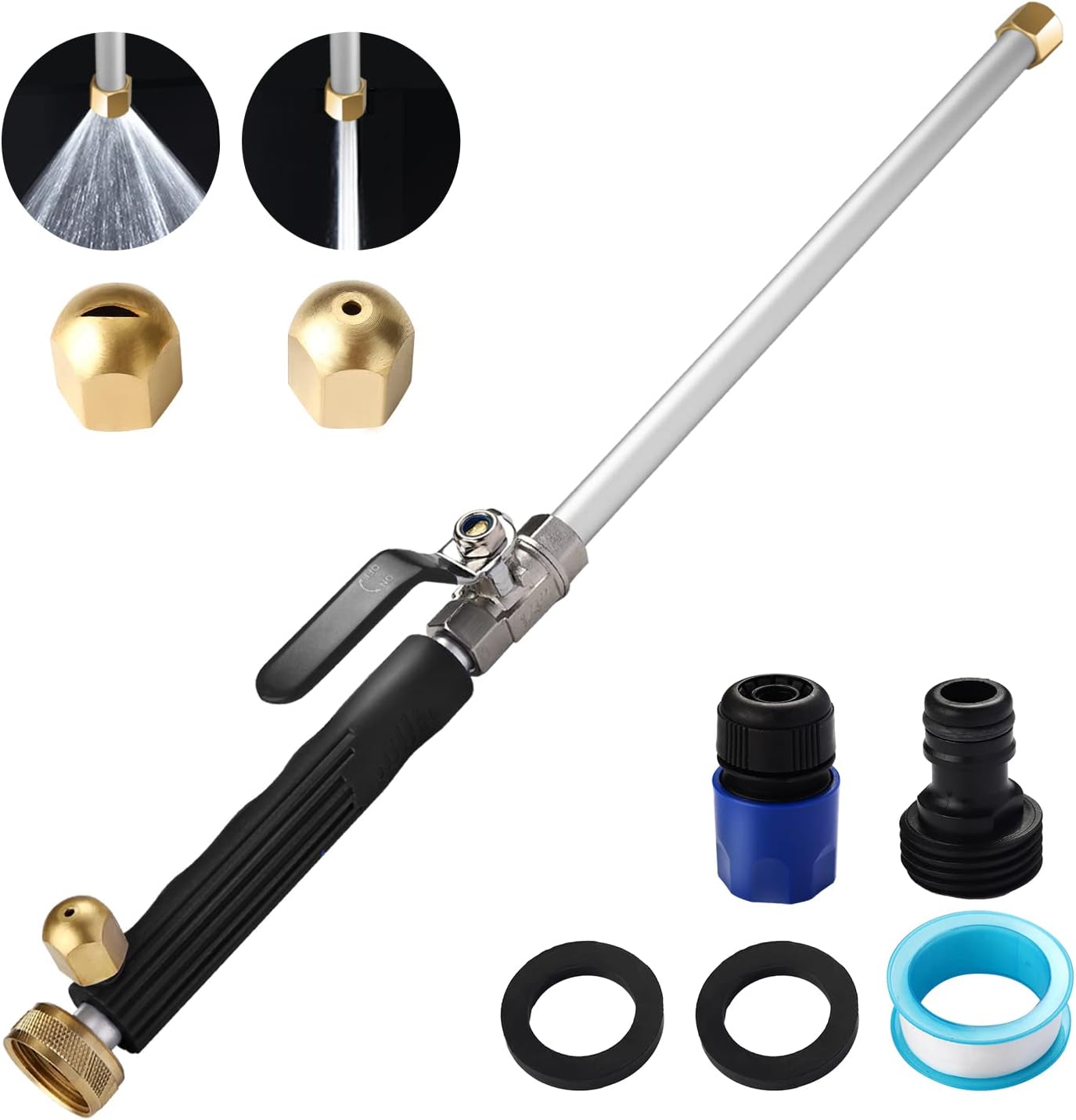
The nozzle: Upgraded Jet Nozzle for Garden Hose Power Washer Wand
 Visit on Amazon →
Start here if you only do one thing. The nozzle is the cheapest part of the whole system and the one that changes how the machine feels the most. This one is built for a garden hose power washer wand, the kind of setup you reach for when you want more bite than a plain hose sprayer without dragging out the gas machine. It threads on in place of the wand tip you have now.
A jet nozzle like this concentrates the water into a tight, hard stream. That is the right tool for knocking mud out of tire treads, clearing crud out of a concrete expansion joint, blasting the hinge line on a garbage can, and getting under the lip of a wheel well. It is not the tool for washing a whole driveway evenly, and it is not the tool for a painted panel, because a tight stream on paint is how you learn an expensive lesson about clear coat.
Flaws but not dealbreakers: One nozzle does one job. If you want a fan pattern for rinsing, you still need the rest of your nozzle set. And because this is made for a garden hose wand, it is not the part you want for a gas machine running quick connect tips.
This is for the homeowner with a garden hose wand who wants a real stream instead of a mist, and for anyone who wants a dedicated nozzle for the filthy jobs so the good tips stay clean.
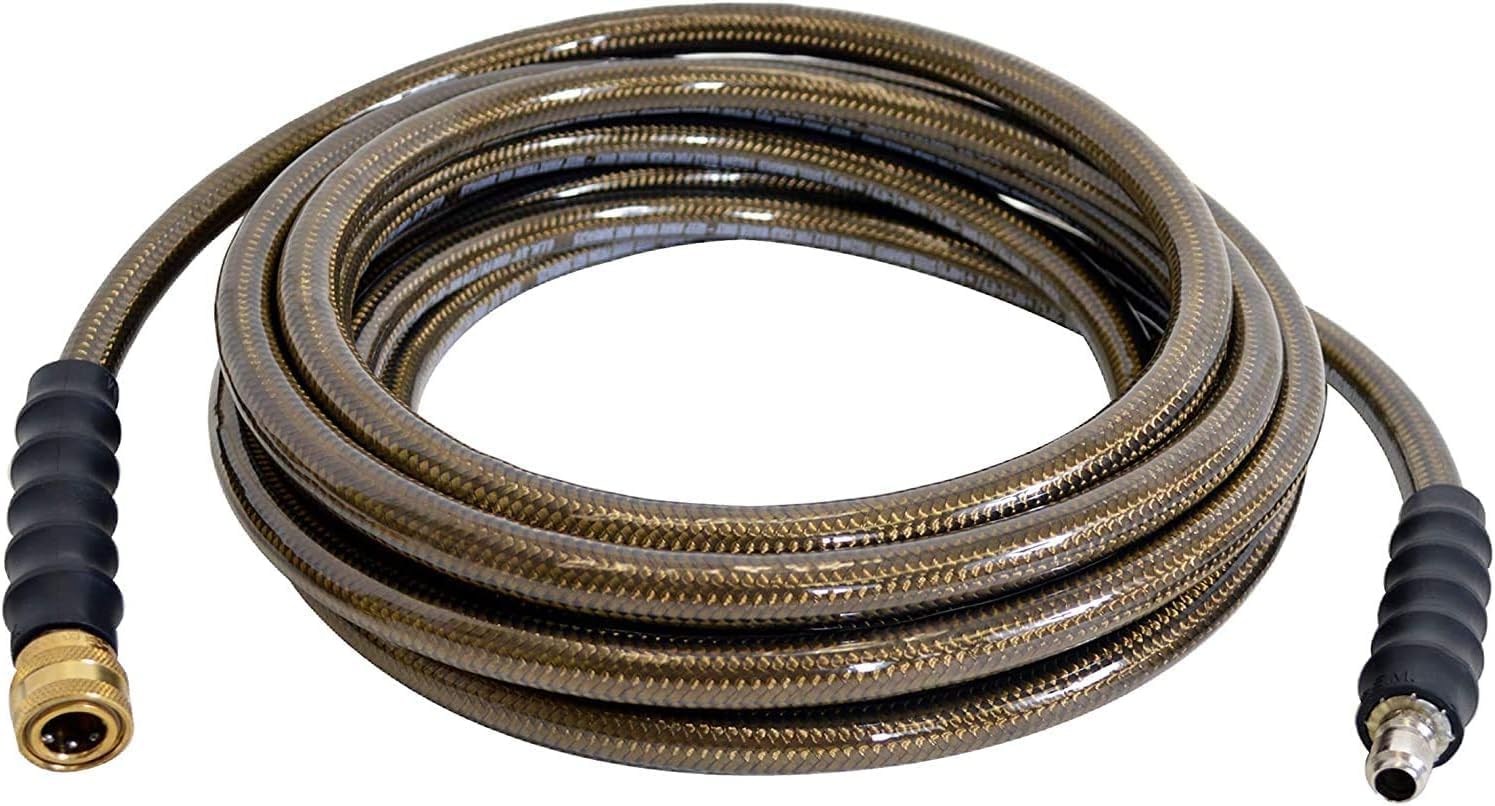
The hose: Simpson 50ft, 3/8" 4500 PSI Monster Cold Water Pressure Washer Hose, 41028
 Visit on Amazon →
This is the hose I reach for when the machine has to stay put and the work is 40 feet away. Fifty feet of reach means you stop dragging the washer around the driveway, which is the single most annoying part of the job. The 3/8 inch size is the flow-friendly one, and the 4500 PSI rating means the hose is not the weak link no matter which machine you hang it on. It is a cold water hose, which is all most residential work needs.
The tradeoff with length is pressure loss. Every extra foot of hose costs you a little pressure at the tip, and 50 feet is enough that a small electric machine will feel it. If your washer is on the weak side, run the shortest hose that reaches the work and add length only when you have to. If you have a gas machine with real flow, 50 feet is a gift.
Flaws but not dealbreakers: It is heavier and bulkier to coil than the thin hose that came in the box. That weight is the price of the flow, and I will pay it every time over a hose that pinches shut.
Buy this if you are tired of moving the machine every 15 feet, or if your stock hose has started weeping at the crimp.
The step-by-step swap
Step one: Kill the machine and bleed the pressure. Shut off the water, shut off the power or the engine, and pull the trigger on the wand until nothing comes out. A pressure washer holds pressure after you shut it down, and that stored pressure is what sprays water into your face when you crack a fitting. Bleed it first, every time.
Step two: Check your connections before you order. Look at the end of your current hose and at the outlet on your machine. Note the thread and whether there is a quick connect coupler in the chain. Order the hose that matches, or order the adapter at the same time. Doing this before you buy saves a week of staring at a hose you cannot attach.
Step three: Match the hose to the flow of the machine. A 3/8 inch hose is a good default for most gas machines and stronger electrics. If you are running a small electric unit, a 1/4 inch hose over a short run will feel stronger at the tip. Buy for the machine you own, not the machine you plan to own someday.
Step four: Attach by hand, then a quarter turn. Thread the hose on by hand until it seats, then snug it a quarter turn with a wrench. Overtightening crushes the washer inside the fitting and creates the leak you were trying to avoid. If you use quick connects, push until you hear the click, then tug to confirm it.
Step five: Uncoil fully and route the hose before you start. Lay the hose out in the shape you will actually work in, with wide loops and no tight bends. A hose that is still coiled on the reel will kink the moment you pull it. Route around the car or the patio, not through the middle of the work area.
Step six: Swap the nozzle with the water off. Change tips with the machine off and the trigger released. Then start the water, start the machine, and pull the trigger to purge air. Air in the line is why the first three seconds of spray sputter.
Step seven: Test on a scrap surface. Point the new nozzle at a piece of scrap concrete or a junk board before you point it at anything you care about. Ten seconds of testing tells you whether the stream is tight and clean or whether you have a clog, a wrong orifice, or a leak at the fitting.
Step eight: Check for leaks at both ends, then work. Run the machine for a minute and look at the machine connection and the wand connection. A drip means a loose fitting or a missing washer. Fix it now, because a weeping fitting under pressure gets worse, not better.
Where people go wrong
Buying hose by PSI alone. A 4500 PSI hose rating sounds impressive and tells you almost nothing about cleaning. Match the inside diameter to the flow of your machine and you will feel the difference immediately.
Putting the wrong nozzle on the wrong tool. A nozzle built for a garden hose wand is not a nozzle for a gas pressure washer, and the reverse is true too. Match the part to the tool it was designed for and you avoid a fitting that will not seal and a spray pattern that makes no sense for the job.
Ignoring detergent draw. If your machine draws soap, the soap line runs through the same path as your water. A clogged or kinked hose kills the soap draw, and you end up blaming your detergent when the real problem is the hose.
Coiling tight for storage. Tight coils train the hose to kink in the same spot forever. Loop it wide, or hang it on a reel with a generous diameter.
Chasing a bigger machine when the hose and nozzle are the problem. If your washer cleans poorly, the first two things to check are the nozzle orifice and the hose. Fix those before you spend money on horsepower you may not need.
What this all costs
Check current Amazon price on both parts before you buy, because listings move. The point is the ratio: a nozzle and a hose together cost a small fraction of a new pressure washer, and they are the two parts that decide whether the machine you already own feels strong or weak.
Spread over a couple of seasons of driveway and car washing, the math gets silly. A hose that lasts three years and a nozzle you keep in a drawer cost pennies per wash. A new machine costs a lot more and often does not fix the actual problem, which was flow at the tip.
The bottom line
Show me the GPM and the nozzle. That is the whole game. Swap the nozzle first if you want the fastest improvement for the least money. Swap the hose when reach and flow are what is holding you back. Do both, and the machine sitting in your garage will suddenly clean like the one you were about to buy.