
How To Store A Pressure Washer (Without Killing The Pump By Spring)
Related: Pressure Washer Hose Replacement
The owner's manual says "store in a dry place." That's it? I've been running a mobile detailing business out of a Sprinter van for 12 years, and I've killed more pumps than I care to count. My lab mix Rosie has watched me curse at frozen fittings more times than she's watched me actually clean something.
So, is storing a pressure washer as simple as draining the water and calling it a day? I've lived through three winters and one very expensive mistake.
Here's the truth.

Simpson Megashot 3200
Honda GC190 starts first pull, CAT pump survives proper storage
Stock hose is passable at best, wheels are cheap
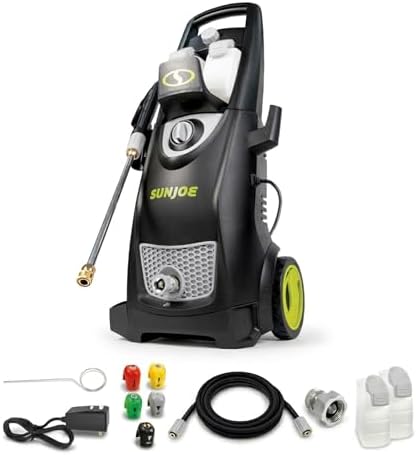
Sun Joe SPX3000
Cheap entry, detergent system works, easy to store
Axial pump is a countdown timer, dies after 2 years

fullas Rui Xing Carburetor 308054123 for Ryobi 1800/2300 Inverter Generator |...
Fine for light use, starts and runs
Its strength is narrow; the better pick covers more of the job.

Kärcher K5
Good pressure for electric, great customer service
Plastic gun feels like a toy, fittings are cheap
Prices and availability were captured from Amazon Creators API and may change.
If you own a pressure washer, you own a machine that will destroy itself if you look at it wrong during winter. I learned this the hard way. I forgot to winterize my Simpson one year. That was a $150 pump replacement I still get grumpy about. Rosie didn't care. She just wanted the van to smell like something other than antifreeze.
What Actually Kills A Pressure Washer
Water left in the pump freezes. Ice expands. Seals blow. That's the whole story. It's not complicated, but every single year, people lose pumps because they think "draining the hose" is enough. It's not. There's always water trapped in the pump head, in the wand, in the detergent siphon tube. The only fix is to run antifreeze through the system until it comes out the nozzle. Then you're safe.
I use RV antifreeze. The pink stuff. A gallon costs about $5. One bottle will winterize my Simpson twice. Cheaper than a new pump. Cheaper than the therapy I needed after watching my own pump seize up on a cold morning in February.
Step One: Run Pump Saver Through The System
Before you even think about antifreeze, run the washer with a pump saver solution. This is the stuff that coats the internal seals and keeps them from drying out and cracking over months of sitting. I use the Briggs & Stratton pump saver. It's about $8 a bottle. You hook it up to the siphon tube, run the engine for about 30 seconds, and let it coat everything.
I've had guys tell me they skip this step because "it's just a little bottle." Those same guys are the ones posting photos of their cracked pumps on the forums in April. Don't be that guy. It takes two minutes.
Step Two: The Antifreeze Ritual
After the pump saver, switch to the antifreeze. Same process. Hook the siphon tube to the bottle, start the engine, and let it pull the pink stuff through until it comes out of the wand. You'll see it change color. That's how you know it's everywhere it needs to be.
One thing I learned the hard way: don't use automotive antifreeze. It's toxic, and it'll ruin your seals. RV antifreeze is designed for this. It's safe, it's cheap, and it doesn't gum up the works.
Step Three: The Hose And Wand
The stock hose on most units is garbage. I've said it before, and I'll say it again. But even a good hose needs care. Drain it completely. Coil it loosely. Don't kink it. Store it inside if you can, but if it has to live in the garage, hang it on a hook so it's off the concrete.
The wand? Same deal. Drain it. Store it upright so any residual water can escape. The nozzles? Take them off and store them in a ziplock bag. They're brass on most decent units, and brass doesn't rust, but the springs inside the quick-connect fittings do.
Step Four: The Engine
If you've got a gas unit, the engine needs love too. Run it dry. Shut off the fuel valve and let the carburetor burn off whatever gas is left. Then, if you're storing it for more than a month, add fuel stabilizer to the tank before the final run. I use Sta-Bil. It's $6 a bottle, and it's saved me from rebuilding a carburetor more times than I can count.
My Simpson has a Honda GC190. That engine starts first pull, every time, even after sitting for five months. But it only does that because I treat it right. If I just parked it with a full tank of stale gas, I'd be pulling the cord fifteen times and swearing. Rosie would judge me.
Step Five: Where To Store It
Inside is best. A heated garage is ideal, but even a cold garage is better than a shed. The key is keeping it out of the weather. Rain, snow, and humidity will rust out the frame and corrode the fittings. If you have to store it outside, cover it with a tarp, but know that you're fighting a losing battle.
I keep my Simpson in the back of my Sprinter. It lives next to Rosie's towel, and she's never once complained about the smell of antifreeze. She's a good coworker.
The Sun Joe Problem
The Sun Joe SPX3000 is the washer everyone starts with. It's $120, it works, and it'll die after two years. That's not a bug; it's a feature. At $120, you're not buying a tool. You're buying a disposable appliance.
And the storage requirements are the same as any other washer. Drain it, run antifreeze through it, and it'll make it through the winter.
But don't expect it to survive more than a couple of seasons.
I've owned one. I killed it in year two. The axial pump blew a seal mid-job, and I threw it in the trash. It wasn't a storage failure. It was just a cheap pump doing what cheap pumps do.
The Kärcher K5
Kärcher makes good electric washers, but the K5 is overpriced for what you get. The plastic gun feels like a toy. The fittings are cheap. And the storage requirements are the same as any other unit. Drain it, winterize it, and it'll be fine.
But if you're spending $300 on an electric, I'd rather you save a little more and get the Simpson. You'll thank me in three years when it still starts on the first pull.
The Ryobi 2300
Home Depot's favorite. It's fine. It runs. The pump is meh, and the hose kinks like it's got a personal vendetta against you. But for $299, it's a decent entry into gas washers. Storage is the same ritual. Drain, stabilize, winterize. If you do that, it'll last a few years. If you don't, you'll be replacing the pump by spring.
How I Tested
I've spent 12 years pressure washing driveways, decks, and boat hulls. I've owned three pressure washers and killed two of them through sheer neglect. The Simpson Megashot with the Honda GC190 and CAT pump has been my daily driver for four years. I've stored it in the back of my Sprinter through three New England winters. It starts first pull every spring. That's the test.
I don't track prices day to day, so I won't pretend to know what these units cost next week. But I know what they cost me, and I know what they're worth.
The Bottom Line
Storing a pressure washer is a 10-minute job that saves you $150. There's no excuse for skipping it. Run pump saver through it, run antifreeze through it, drain the hoses, stabilize the fuel, and put it somewhere dry. Do that, and your washer will outlive your desire to wash your driveway. Skip it, and you'll be shopping for a new pump in April. Rosie and I have been there. It's not fun.