Two pressure washers can both print 2,000 PSI on the box and clean nothing alike, and that gap is where most buyers get burned. PSI tells you how hard the water hits the surface. GPM, gallons per minute, tells you how much water is actually doing the work. Pressure washer GPM is the number that decides whether a driveway takes twenty minutes or an hour, and it is almost always the number printed smallest on the packaging.
This is an explainer, not a shootout. The point is to show you what the specs on four real listings mean, which jobs each kind of machine actually handles, and where a cheap washer quietly costs you a weekend.
Related: Pressure Washer Nozzle Colors Explained →
Quick answer
Buy for flow, detergent draw, and nozzle quality, not for the largest PSI number on the shelf. For most homes, an electric machine with real flow, a soap system that actually injects, and a hose that does not kink will handle cars, siding, patio furniture, and a typical driveway. Higher-flow electrics and gas units earn their keep on boats, large flatwork, and weekly commercial jobs. Battery handhelds are for rinsing, spot work, and small jobs where a cord is a nuisance. If your gas setup runs off a dual-fuel generator, the generator's fuel system is part of the pressure washing rig, which makes a replacement carburetor a real purchase rather than an odd one.
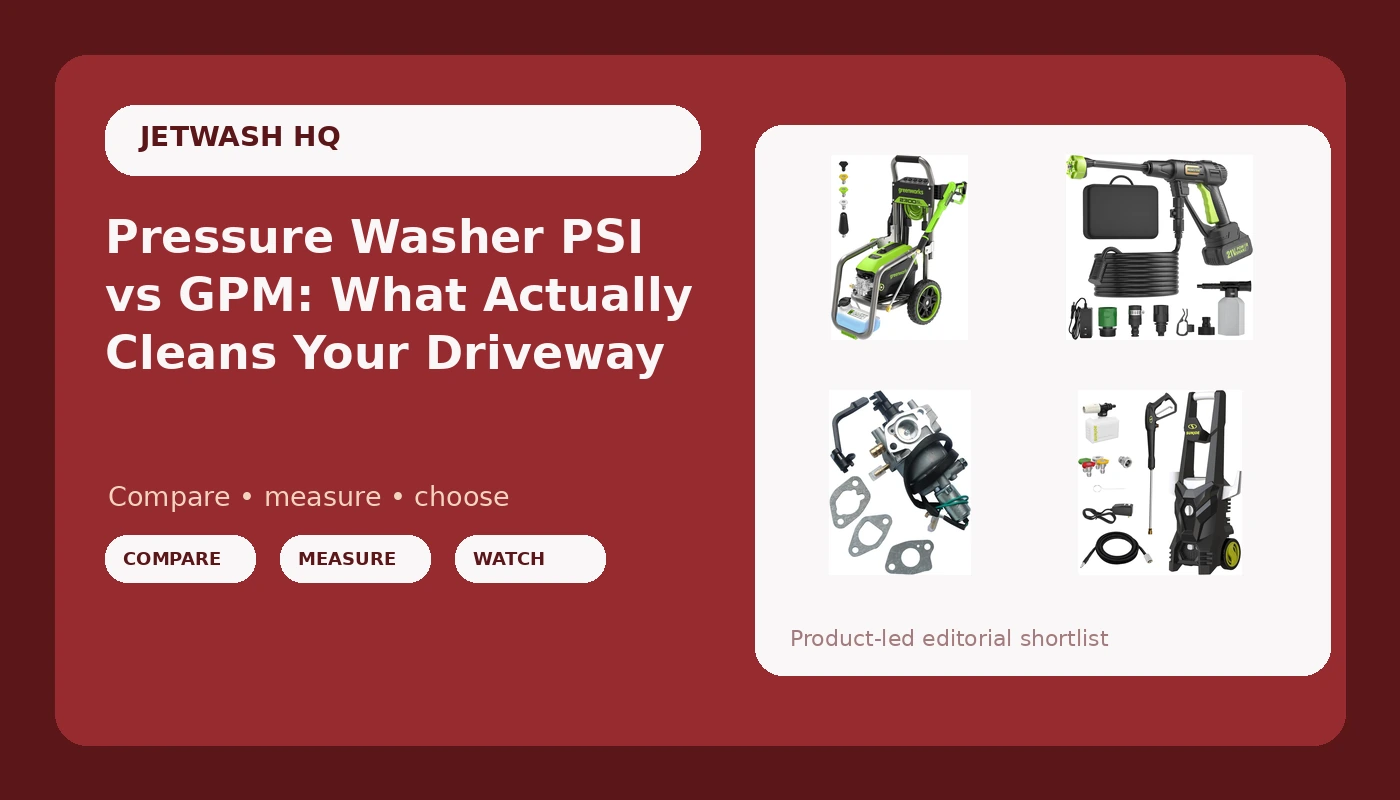
Four useful options
| Model | Best fit | What stands out |
|---|---|---|
| Greenworks Pro 2300 PSI 2.3 GPM Electric Pressure Washer | Driveways, siding, and larger flatwork | 2.3 GPM flow, the highest in this group, paired with a 2300 PSI rating and SGS certification noted in the listing |
| Sun Joe SPX100-GO Electric Pressure Washer | Light-duty home jobs and vehicles | 13-amp electric motor with four nozzles and a foam cannon included |
| Cordless Pressure Washer, Handheld Portable Battery Cordless Power Washer | Rinsing and small jobs away from an outlet | Battery-powered handheld format with no cord to manage |
| Carburetor Carb For WEN DF475T DF475X DF475 4750 Watt Dual Fuel Generator | Keeping a generator-powered rig running | Replacement carburetor listed for the WEN DF475T, DF475X, and DF475 dual fuel generators |
The flow-first electric: Greenworks Pro 2300 PSI 2.3 GPM Electric Pressure Washer
Flow costs money and it costs weight. A machine moving 2.3 gallons a minute is heavier, it wants a healthy circuit and a hose that can feed it, and it is more machine than someone rinsing a single patio chair needs. The trade is straightforward: if your jobs are driveways, siding, or anything measured in square feet rather than square inches, flow is the spec you are paying for, and the higher PSI rating is the bonus, not the reason.
The light-duty all-rounder: Sun Joe SPX100-GO Electric Pressure Washer
The honest limitation here is flow. A 13-amp electric is not built to strip a two-car driveway in one pass, and no nozzle is going to turn it into the Greenworks unit above. What it is built for is the ordinary list: a car, patio furniture, a fence panel, a walkway, a trash can that has seen things. If you go in expecting a light-duty machine and you pair it with the right nozzle for the surface, it does the job it was sold to do.
The grab-and-go option: Cordless Pressure Washer, Handheld Portable Battery Cordless Power Washer
Set expectations before you buy one of these. A handheld cordless washer is not a driveway machine and it is not a paint stripper. It is what you grab to knock the pollen off a porch, rinse a kayak, clean patio cushions, or spot-treat a step before guests arrive. Judged against a full-size electric, it loses. Judged against a garden hose and a brush, it wins, and that is the comparison that matters.
The support part: Carburetor Carb For WEN DF475T DF475X DF475 4750 Watt Dual Fuel Generator
Dual-fuel generators that sit with old fuel in them are carburetor killers, and the symptom is always the same: it cranks, it will not catch, and the fuel system is the suspect. Before ordering any part, read your generator's own model plate and confirm the number, because DF475T, DF475X, and DF475 are three separate listings that this carburetor is stated to fit. Matching the plate beats matching a photo every time.
Prices and availability may change. Product images, names, and retailer links are matched to verified listings. No current price, rating, stock status, or measured result is stated here without current evidence.
PSI versus GPM: which number actually cleans?
PSI is pressure, and pressure is what you feel when the wand kicks back in your hand. GPM is volume, and volume is what carries dirt off a surface. A narrow nozzle raises the impact at the tip by forcing the same flow through a smaller hole, which is why nozzle choice can change results more than a few hundred PSI ever will.
Put the two together and the practical rule is simple. Flow moves the dirt, pressure breaks its grip, and time on the surface does the rest. A machine with modest pressure and honest flow will out-clean a high-pressure unit with weak flow on flatwork, because the surface gets flushed rather than pecked at. That is also why chemical help matters: detergent lifts the film, and water carries it away.
The other half of the equation is the delivery system. A stiff hose that kinks every few feet cuts your flow at the worst moment, and a wand that feels like a toy makes a two-hour job feel like four. Detergent draw is the third leg. A washer that cannot inject soap properly turns every job into two jobs: one to rinse the surface, and one to scrub it by hand afterward.
How to decide before you spend
- Measure the job, not the machine. Count square feet of flatwork, list the vehicles, and note whether there is siding or a deck involved. That list decides your flow requirement.
- Check GPM first, then PSI. If a listing will not state flow clearly, treat that as a warning rather than a typo.
- Confirm the soap system. Look for a detergent draw or a foam cannon in the box, because scrubbing by hand defeats the point of owning a washer.
- Read the included accessories. Nozzles, hose length, and wand quality are the parts you will actually touch every time you use the machine.
- Match your power source. If the job is far from an outlet, that is a battery or generator question, and if it is a generator, confirm the model number before ordering any part.
Getting more out of whatever you buy
- Match the nozzle to the surface before you squeeze the trigger. The wrong tip on the right machine still damages paint and wood.
- Keep the wand moving. Holding a stream in one spot is how you etch concrete and strip finish.
- Pre-treat with detergent and give it a minute to work. Chemistry lifts dirt that water alone has to blast off.
- Store the hose coiled loosely and off the ground. Kinks and cracks start in storage, not in use.
- If a gas or dual-fuel unit sits for months, run the fuel system dry or treat the fuel. Carburetor problems are storage problems.
Which option should you choose?
Choose the Greenworks Pro 2300 PSI 2.3 GPM Electric Pressure Washer when your regular jobs are driveways, siding, and larger flatwork and you want the highest flow in this group. Choose the Sun Joe SPX100-GO Electric Pressure Washer when you want a light-duty electric with four nozzles and a foam cannon already in the box for cars, patios, and furniture. Choose the Cordless Pressure Washer, Handheld Portable Battery Cordless Power Washer when portability matters more than flow and the job is a rinse, a spot clean, or a small surface. Choose the Carburetor Carb For WEN DF475T DF475X DF475 4750 Watt Dual Fuel Generator when a WEN dual fuel generator that powers your rig will not start and you have confirmed the model number on your own unit.
One caveat applies to all four. The specs here come from the listings, not from a timed test on your property, and no listing can tell you how a machine feels after an hour in your hands. Check your own outlets, your own water supply, and your own model plate before you order, and treat any single number on a box as one clue rather than the whole answer.
The bottom line
PSI sells machines and GPM cleans surfaces. If you take one thing from this, take the habit of reading flow rate, detergent draw, and nozzle quality before you look at the pressure rating. For most homes that points to an electric machine with honest flow, which is why the Greenworks Pro unit leads this group on the number that matters. For light-duty work, the Sun Joe SPX100-GO covers the soap step out of the box. For rinsing and small jobs, the cordless handheld trades flow for convenience on purpose. And for a generator-powered setup, the carburetor is the unglamorous part that decides whether the day happens at all.