Related: Electric vs Gas Pressure Washers: Which One Belongs in Your Garage
There is a specific moment when people start hunting for the best pressure washers for home use. The driveway has gone from gray to a dirty green-black along the edges. The fence is green on one side and gray on the other. The car has a winter of road film on it and the garden hose is just pushing the dirt around in circles.
I have spent 12 years detailing cars and boats for a living, mostly out of a van in Tampa, and I have pressure washed more flat concrete than I want to think about. Here is the thing that took me years to accept: the number on the front of the box is almost never the number that decides whether a machine cleans. Flow rate moves dirt off a surface. Pressure is how aggressive the water feels when it bounces off your shoe.
So this is not a ranking by the biggest number. It is four machines, what each one is genuinely for, and the questions I ask before I would spend money on any of them.
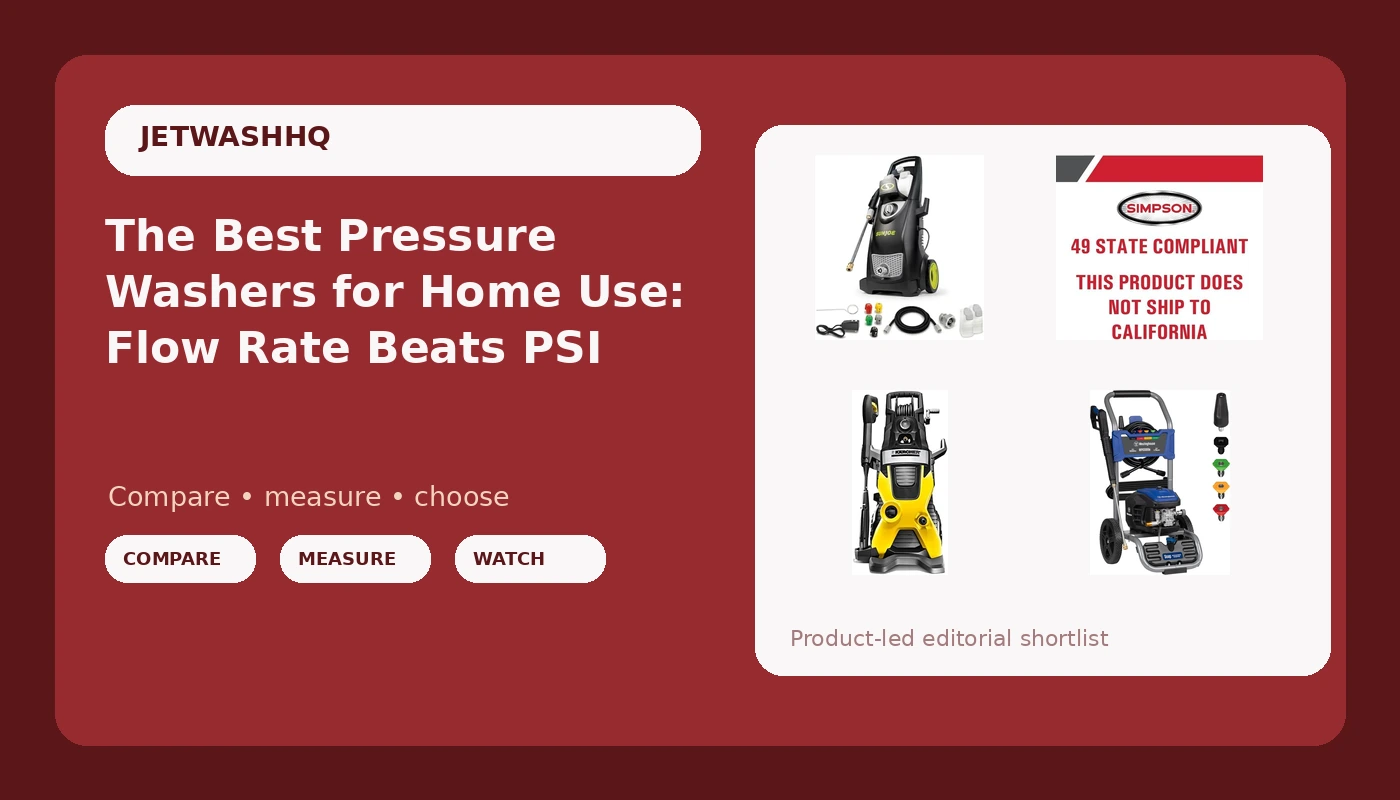
Best Overall for Most Homes: Sun Joe SPX3000
The SPX3000 is the machine I would put in front of almost anyone who asks me what to buy for a normal house. It is electric, rated at 2500 max PSI, and the dual detergent tanks are the detail nobody advertises and everybody uses once they have them. You can keep a car soap in one tank and a concrete cleaner in the other and switch with a twist, instead of dumping a bottle out on the driveway and rinsing it.
Be honest about what 2500 max PSI means. Max is a peak figure, not a working figure. The flow is what decides how quickly the dirt leaves, and this machine has enough of it to clean a two-car driveway in an afternoon without feeling like you are painting with a wet brush. That is the whole test for a homeowner machine.
Electric also gives you something gas never will: no fuel, no oil changes, no pull cord, no exhaust, and no complaints from the neighbor at 7 a.m. on a Sunday. You do need an outlet and an extension cord rated for the draw, and you need to keep the wand moving instead of parking it in one spot.
Where it falls down is stripping and heavy neglect. It is not the tool for paint removal or for cutting years of caked growth off a hull. That is gas territory. For the 90 percent of jobs that live between the driveway looking tired and the fence looking green, this is the pick.
Best Gas Pick: SIMPSON MegaShot MSH3125
If you wash concrete for a living, or you wash a boat, this is the machine in this group that will not make you wait. The MegaShot MSH3125 is rated at 3200 PSI and 2.5 GPM and runs a Honda GC190 engine. That 2.5 GPM figure is the whole story. Flow like that pulls dirt out of a porous driveway instead of just wetting the surface, and the Honda engine is the part of a gas washer that usually decides whether it starts on the third spring you own it.
The kit is sensible. You get the spray gun and extension wand, five quick-connect nozzle tips, and a 1/4-inch by 25-foot MorFlex hose, which matters more than people think because a stiff hose that kinks every five feet will ruin your opinion of an otherwise good machine.
The costs are real. It is loud in a way that electric never is. It is heavy, it needs fuel, it needs oil, and it needs to be run regularly or it will sulk. The listing is marked 49-state, so if you are in California, check before you order. But when the job is a two-car driveway and a fence in the same weekend, the flow pays you back in hours.
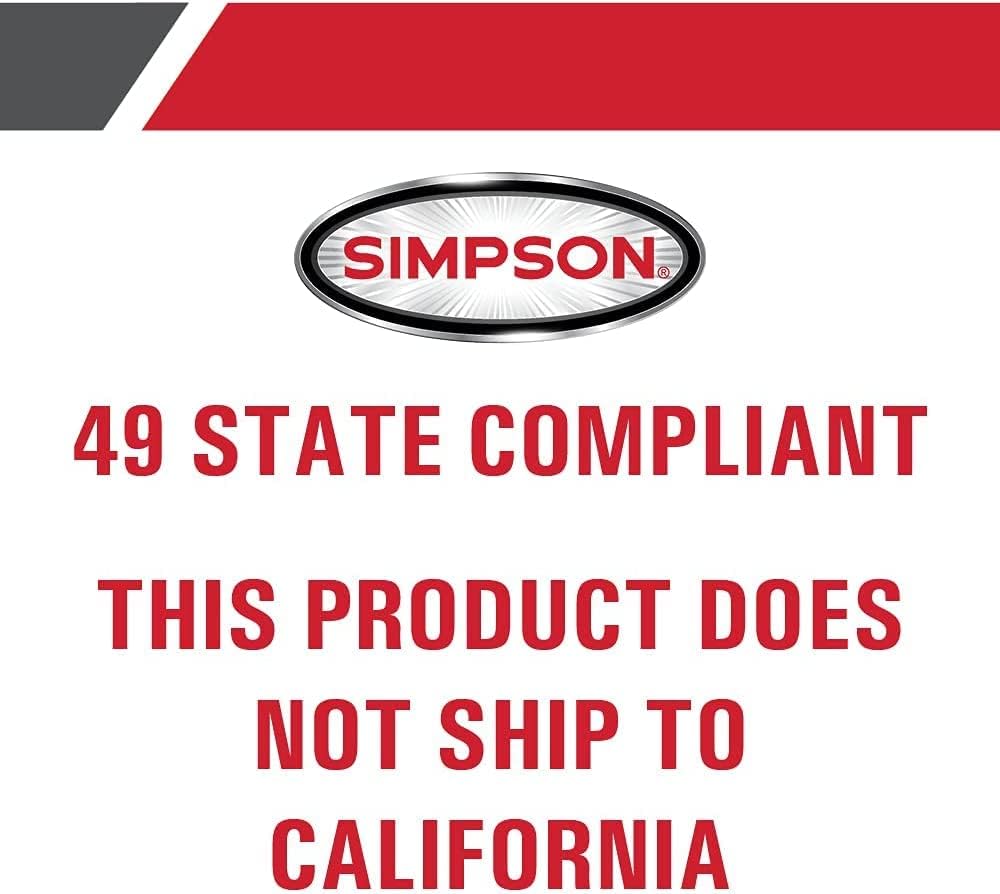
Best for Durability: Kärcher K 5 Premium
The K 5 Premium is the machine you buy when you want the last washer you purchase for a while. The build quality is the reason people pay for it, and the onboard hose reel is worth more than it sounds. Coiling a hose by hand at the end of every job is the small daily annoyance that makes people stop using a machine. A reel turns cleanup into a 20-second job, which means the washer actually gets used.
The honest caveat is flow. It is listed at 1.4 GPM, which is modest, and modest flow means you are working a surface longer. That makes it a car, patio furniture, siding, and maintained-concrete machine. It is not the tool for rescuing a driveway that has not been touched since the house was built. If your surfaces are already in reasonable shape, the trade is a good one.
Two other things to know going in. This is a well-known platform with pricey accessories, so factor that in if you plan to add a surface cleaner or a rotating nozzle later. And treat the hose reel as a feature you are paying for, because you are. If you would rather have raw cleaning speed, spend the money on flow instead.
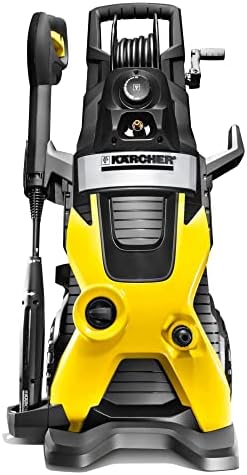
Most Cleaning Power in an Electric: Westinghouse WPX3000e
If you want electric convenience but you do not want to feel underpowered, this is the one to look at. The WPX3000e is rated at 3000 max PSI and 1.76 max GPM, and the induction motor is the detail that separates it from the cheap electrics that scream for ten minutes and then need a rest. Induction motors run quieter and cooler, and they are built to keep going.
The onboard soap tank is the other thing I care about. A washer that cannot draw detergent is a hose with a trigger, and a tank on the machine means you are not running back and forth to a bucket to reload. You get the spray gun and wand and a five-nozzle set, which is enough to cover cars, fences, driveways, patios, homes, and furniture without buying anything extra on day one.
What it will not do is behave like the gas machine. You are still on a cord, you are still on an outlet, and you are still working within the duty cycle of an electric unit. It will keep up with a driveway and a fence if you work in sections and let it breathe. It will not keep up with a full hull and three driveways in one Saturday.
How I judge a pressure washer
Four questions, every time, and none of them involve the biggest number on the box.
First, what is the real flow rate, not the peak PSI? Gallons per minute is the work being done. Pressure is the feeling. A machine rated at a big pressure number with a weak flow rate will make you stand in one place longer, and the results show it in the streaks.
Second, does it draw detergent properly? Soap injection is the difference between washing a car and hosing a car. If the detergent system clogs or dribbles, you will stop using it by the third job.
Third, are the hose and wand worth keeping? A kinking hose is a daily tax. A wand that feels like a toy flexes under pressure and makes accurate work harder.
Fourth, would I use it for a full driveway without cursing? That is the honest test. A machine that wears you out gets used twice and then lives in the garage behind the bikes.
What the specs actually tell you
PSI without GPM is a marketing story. Pressure is how hard the water hits. Flow is how much water is doing the hitting, and volume is what flushes dirt out of the pores of concrete. That is why the gas machine in this group cleans so much faster while the best electric picks still handle a normal house.
Duty cycle separates gas from inexpensive electric. A gas washer will run as long as you feed it fuel. A cheap electric will overheat and force a break. An induction motor electric like the Westinghouse sits between the two, and for a homeowner that middle ground is usually where the value is.
Nozzles are not accessories, they are the setup. The wrong tip either under-cleans the surface or etches a stripe into it. Color-coded quick-connect tips exist to keep you from making that mistake. If you buy one upgrade for any machine here, make it a surface cleaner attachment rather than a bigger washer.
Hose and wand quality decide whether you enjoy the machine. A flexible 25-foot hose and a rigid wand make more difference to a Saturday than another 200 PSI ever will.
Pressure washer comparison table
These are the four machines, sorted by what they are actually for. Ratings below come from the listings. Nothing here is a substitute for walking your own yard and counting how much flat concrete you own.
| Washer | Power | Rated PSI | Flow | Best for | Price |
|---|---|---|---|---|---|
 Visit on Amazon → Visit on Amazon →Sun Joe SPX3000 |
Electric | 2500 max | 1.76 GPM | Most homes, dual detergent tanks | Check current Amazon price |
 Visit on Amazon → Visit on Amazon →SIMPSON MegaShot MSH3125 |
Gas, Honda GC190 | 3200 | 2.5 GPM | Big concrete, boats, weekly jobs | Check current Amazon price |
 Visit on Amazon → Visit on Amazon →Kärcher K 5 Premium |
Electric | See listing | 1.4 GPM | Cars, maintained surfaces, longevity | Check current Amazon price |
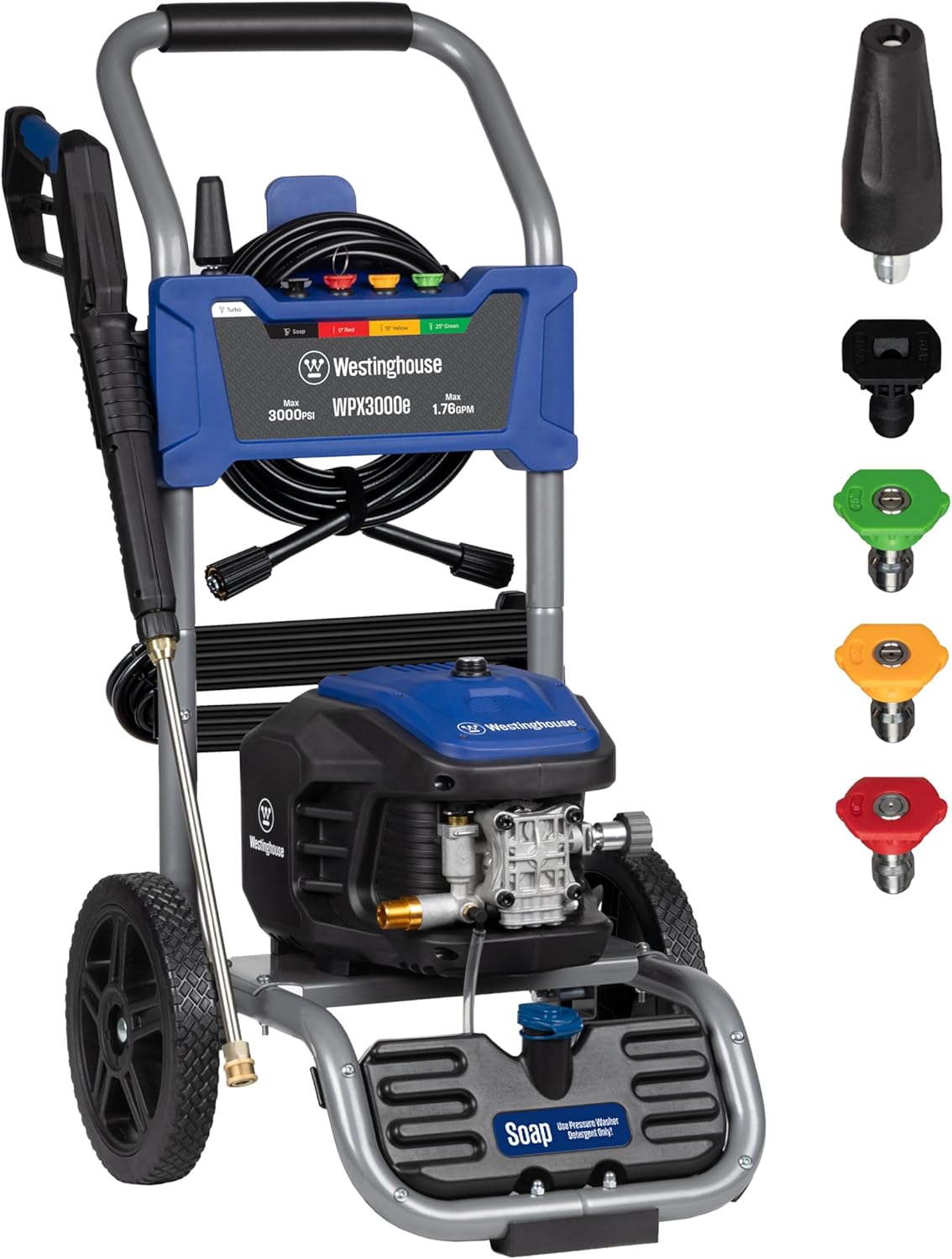 Visit on Amazon → Visit on Amazon →Westinghouse WPX3000e |
Electric, induction motor | 3000 max | 1.76 max GPM | Driveways and fences with cord power | Check current Amazon price |
The nozzle is the machine
A mediocre washer with the right tip beats a strong washer with the wrong one, every single time. The zero-degree tip is a pencil of water that will etch concrete and strip paint if you hold it still, and the 40-degree tip is the one most people should be reaching for on a car. Read the tip chart on the machine, tape it inside the lid, and stop guessing.
Detergent draw is the quiet dealbreaker
If you have to fight the soap system, you will stop using soap, and your car will never look as good as it could. Two machines here solve this differently. The Sun Joe uses dual tanks, so you can switch products without emptying anything. The Westinghouse mounts a tank on the machine. The gas SIMPSON draws through the system the way gas machines normally do. The Kärcher platform supports its own line of accessories, which is useful and expensive in equal measure.
Should you buy the Sun Joe SPX3000?
Yes, for most people reading this. It is the sane middle of the market: electric simplicity, a real flow rate for a homeowner-sized driveway, and dual detergent tanks that you will use more often than you expect. Standing in the driveway switching between a car soap and a concrete cleaner with a twist of a bottle is a small thing that makes a machine pleasant to own.
Should you buy the SIMPSON MegaShot MSH3125?
Yes, if the work is big and repeated. The Honda GC190 engine, 3200 PSI, and 2.5 GPM make it the fastest machine of this group on flat concrete, and the nozzle set and 25-foot hose cover you out of the box. Accept the noise, the weight, and the fuel, and check the 49-state note if you are in California.
Should you buy the Kärcher K 5 Premium?
Yes, if you value durability and a tidy garage over speed. The hose reel alone changes how often you use it. Just go in knowing that 1.4 GPM is modest flow, which puts it in the car-and-maintained-surfaces lane rather than the neglected-driveway lane, and price the accessories before you commit.
Should you buy the Westinghouse WPX3000e?
Yes, if you want electric convenience with more headroom. The induction motor, 3000 max PSI rating, 1.76 max GPM, onboard soap tank, and five-nozzle set make it the most capable corded machine here for driveways, fences, patios, and cars. It is still an electric, so work in sections and let it breathe.
The bottom line is the one I keep repeating to customers who ask what to type into a search bar: pick the flow rate that matches the surfaces you own, check that it draws soap, and check that the hose will not fight you. Do that and you will not need the biggest number on the shelf.