Over the years, I’ve burned through more nozzles and fought more kinked hoses than I care to count. But the single best upgrade I ever made wasn’t a new engine or a bigger pump. It was an ~$80 attachment that turned a six-hour driveway job into a thirty-minute one.
Related: Best Pressure Washer for Driveways: The Surface Cleaner Test
The best pressure washer accessory you can buy is a surface cleaner, and the Ryobi RY31SC01 15 in. 3300 PSI Surface Cleaner is the best one I’ve tested for the money.
If you own a pressure washer and you’re still bent over a wand with a 25-degree tip, you’re doing this the hard way. I did it that way for years. I’ve got the sunburn and the sore back to prove it. This thing paid for itself in the first weekend I owned it.
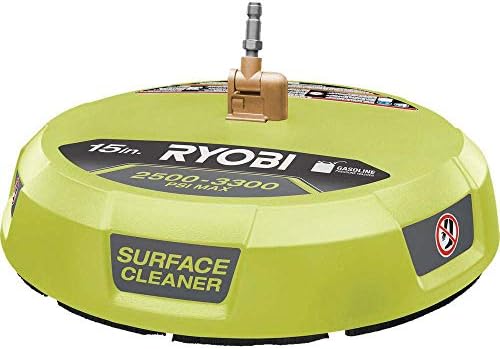
Ryobi RY31SC01 15 in. 3300 PSI Surface Cleaner for Gas Pressure Washer
Even, streak-free cleaning on concrete, solid brass fittings, dual bars take the grunt work out
Visit on Amazon →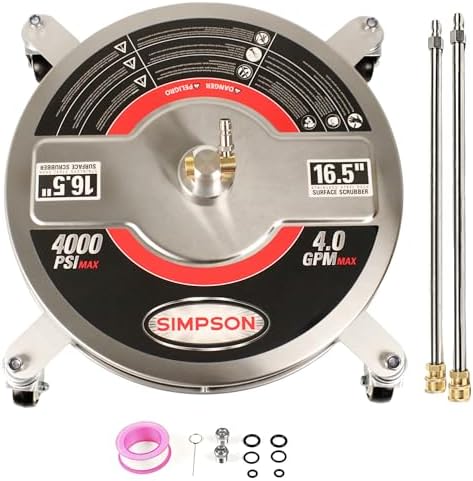
Simpson 16.5" Stainless Steel Pressure Washer Surface Cleaner, 80625
The SIMPSON pressure washer surface cleaner is used for cleaning driveways, patios, decks, sidewalks and more. Its 16.5" diameter provides 10X more coverage to clean more efficiently for big jobs. For
Visit on Amazon →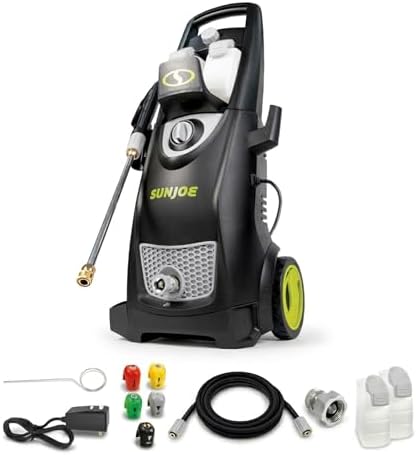
Sun Joe Pressure Washer, Electric Power Washer, 2500 Max PSI, SPX3000
The SIMPSON pressure washer surface cleaner is used for cleaning driveways, patios, decks, sidewalks and more. Its 16.5" diameter provides 10X more coverage to clean more efficiently for big jobs. For
Visit on Amazon →I’ve owned three pressure washers and rebuilt more pumps than I want to admit. When I tell you a surface cleaner is the first accessory you should buy, it’s because I spent a decade hunched over a wand before I wised up.
Pros:
- Cuts driveway cleaning time from hours to minutes
- Leaves an even, streak-free finish on flat concrete
- Brass fittings, not the plastic junk you see on cheaper models
- Works with my Simpson Megashot and most gas units over 2800 PSI
Cons:
- The stock hoses are a bit stiff and can kink if you're not careful
- Doesn't reach into tight corners, you'll still need a wand for edges
- At 15 inches, it's not the biggest cleaning path out there
Compared to the Alternatives
The Simpson 16-inch unit is the natural rival. It's a heavier, more industrial piece of equipment that pairs perfectly with my 3200 PSI Megashot. It costs about ~$25 more, and you're getting a slightly bigger cleaning path and a frame that feels like it could survive being run over.
But the wheels are stiff, and on a rough, pitted driveway, the Ryobi glides smoother. The Ryobi's dual-arm design spins more freely, which means less chatter and vibration in your hands.
The Sun Joe SPX-SC15 is the budget pick at ~$52. It works. I've used one on a small patio and it did the job. But it's got plastic fittings where the Ryobi has brass, and after a season of heavy use, that plastic is going to crack. I've seen it happen. If you're washing a tiny concrete pad once a year, save the ~$28. If you're doing a driveway or a boat ramp, the Ryobi is worth the extra cash.
Design and Build
The Ryobi 15-inch is a simple machine, and that's what I like about it. It's a disc with two spinning spray bars underneath, housed in a plastic shroud. The shroud is thick and feels solid, not like the cheap, brittle plastic you see on some units. The fittings where your gun connects are brass. That's a big deal to me. I've snapped plastic fittings off in two weeks. Brass doesn't do that.
 Visit on Amazon →
The handle is a simple loop on top, and it's comfortable to push. It's not a heavy unit, coming in at around 8 pounds, but it feels substantial enough to stay planted on the concrete. The wheels on the side are small, but they're positioned well for rolling along a flat surface.
Visit on Amazon →
The handle is a simple loop on top, and it's comfortable to push. It's not a heavy unit, coming in at around 8 pounds, but it feels substantial enough to stay planted on the concrete. The wheels on the side are small, but they're positioned well for rolling along a flat surface.
The whole thing is about 15 inches in diameter, which is the sweet spot for covering ground without being so wide that it's awkward to maneuver.
The one thing I'll warn you about is the hoses. The unit comes with a short section of hose that connects to your wand, and it's a bit stiff. If you're not careful, it can kink and cut off the water flow. I replaced mine with a short, flexible whip hose within a week of buying it. That's a ~$10 fix and it makes the whole thing work better.
Performance and Cleaning Power
This is where the Ryobi shines. I ran it on my own driveway first, which had two years of grime and mildew baked into it. With my Simpson Megashot putting out 3200 PSI and 2.5 GPM, the Ryobi stripped it clean in a single pass.
No pre-treating, no scrubbing, no going back over the same spot. The dual spinning bars work the surface evenly, which means you don't get the tiger stripes you get from a single wand if you're not perfectly consistent with your passes.
The best part is the lack of overspray. When you're using a wand, you're spraying water everywhere, including up into your face if the wind catches it. The surface cleaner's shroud contains the spray, keeping it down on the concrete. You stay dry, and you're not blasting water up under your siding or into your flower beds.
It also cuts down on the fatigue. I spent six hours on a driveway once with a wand, and my arms and back were shot. With the Ryobi, I did the same driveway in about 40 minutes, and I felt like I could have done another one. It's not about the pressure, it's about the even distribution and not fighting the kickback. The wand pushes back at you; the surface cleaner just glides.
One buyer on Amazon noted in May that it "cut my cleaning time in half" on a 600-square-foot patio. That matches my experience. Another owner, using it with a 2300 PSI Ryobi gas unit, said it "worked perfectly and left no streaks." The only complaints I see in the reviews are about the stiff hoses and the fact that it doesn't do edges, which is true of every surface cleaner on the market.
Durability and Maintenance
I've had my Ryobi 15-inch for about a year now, and it's been through a lot. It's cleaned driveways, a boat ramp, a section of sidewalk, and a concrete pad under a deck. It's been banged around in the back of my Sprinter with Rosie and a bunch of other gear. It's held up.
The brass fittings are still solid. The plastic shroud has a few scuffs but no cracks. The spinning bars underneath are easy to clean out if you pick up a pebble or some grit. There's a small filter on the inlet that catches debris before it gets to the nozzles, which is a nice touch.
I've had to replace the nozzles on surface cleaners before, and they're cheap and easy to swap out. The Ryobi uses standard nozzles, so you're not locked into a proprietary system.
The one thing you need to do is flush it out after use, especially if you've been cleaning with detergent or you've picked up any sand. A quick rinse with the wand after you're done will keep the nozzles from clogging. That's basic maintenance, and if you can't handle that, you shouldn't own a pressure washer.
Should You Buy It?
If you own a pressure washer and you've ever spent more than an hour cleaning a flat surface, yes. Buy it. It's the difference between a job you dread and a job you knock out before lunch. If you're only washing your car and cleaning a few patio chairs, you don't need this.
But if you've got a driveway, a sidewalk, or any kind of concrete that needs regular cleaning, this is the first accessory you should buy, before any fancy nozzles or foam cannons.
It's not perfect. The hoses are stiff, and it won't do corners. But for the ~$80 price tag, it's the best value in pressure washer accessories I've found. My Simpson Megashot is the workhorse, but the Ryobi surface cleaner is the tool that makes me look good.
I'm currently testing a couple of other 15 and 16-inch units to see if anything can beat it, and I'm always on the lookout for a foam cannon that doesn't lie about how long the foam lasts. I'll update this when I find something worth the space in the van. For now, this is the one I tell everyone to buy.