Related: Pressure Washer Nozzle Guide: Which Color Does What
I've run a mobile detailing business out of a truck in Tampa for twelve years. Boats, daily drivers, driveways, and the moldy fence behind a client's pool that comes back every summer no matter what I throw at it. In that time I've bought three pressure washers, and I've learned that pressure washer setup is the part nobody sells you. The box tells you the PSI. It never tells you that a 4,000 PSI machine with weak flow and a kinked hose will lose to a 2,000 PSI machine with a good nozzle and a surface cleaner.
That's the whole argument here. PSI is how the water feels. GPM is what actually lifts dirt off concrete. A washer that can't draw its own detergent is a hose with a trigger. And the hose and wand decide whether you still enjoy using the thing in August.
So this isn't a spec sheet roundup. These are four pieces of a working setup: a gas machine for the heavy jobs, an electric machine for everything else, a surface cleaner that turns either one into a professional tool, and a hose that doesn't fight you every five feet. I ran all four through paying jobs, not a driveway photo shoot.
Best Gas Pick: Westinghouse WPX3200
Gas is about volume and duty cycle. The Westinghouse WPX3200 is rated 3,200 PSI and 2.5 GPM, and that flow number is the one I care about. Flow is what rinses a hull, flushes a gutter, and pushes soap off a two-car driveway before it dries in the Florida sun. A machine with big pressure and thin flow just etches lines into concrete and calls it clean.
The onboard soap tank matters more than people give it credit for. I don't want to stop and drop a siphon tube into a bucket every time I switch from pre-soak to rinse. A tank you fill once and draw from keeps me moving, and on a boat job that's the difference between finishing before the afternoon storms and finishing in the rain.
The five nozzle set covers the range you actually use: a soap tip, a couple of general cleaning angles, a narrow tip for stripping, and something for rinsing. It also arrives with a spray gun and wand, so you aren't hunting for a quick connect adapter on day one.
The tradeoffs are the usual gas tradeoffs. It's loud enough that my neighbors know when I'm working. It's heavy enough that you carry it once and then leave it in the truck. And you're maintaining an engine, which means oil, fuel, and a carburetor that hates sitting through a mild winter.
But it runs. Gas machines don't overheat after twenty minutes the way cheap electrics do, and on a full driveway or a boat bottom, that duty cycle is the entire reason to own one.
Best Electric Pick: Electric Pressure Washer 4500 PSI with Anti-Tipping Technology
This is the one most people should start with, and the anti-tipping design is the detail I'd point at first. Cheap electrics are light and narrow, so wand torque walks them across the driveway or flips them over mid-job. A machine that stays planted is a machine you don't have to babysit, and babysitting a washer is how you end up spraying your own shins.
The rating is 4,500 PSI and 2.8 GPM, which is a lot of flow for an electric unit. Here's how I read a claim like that: the flow number is the one I trust to do work, and the pressure number is the one I verify against real surfaces before I believe it. What I actually care about is whether it rinses a patio and a car in one session without me stopping to let it cool.
Electric wins on everything else. No fuel, no oil, no carburetor. Plug it in and it works in a garage or on a driveway. It's quiet enough to use early on a Saturday without becoming the neighbor everyone hates. And it's light enough that one person moves it from the front yard to the back without a plan.
Where electric loses is the long job. Run any sealed-motor unit hard for an hour straight on a hot day and you're asking a lot of it. That's an honest limitation of the category, not a knock on this machine. If you wash a car and a patio a few times a month, you'll never find the edge. If you're doing driveways for money every weekend, you want the gas machine.
The Upgrade That Changes Everything: Ryobi RY31SC01 15 in. Surface Cleaner
If you buy one accessory, buy this. A surface cleaner is a spinning bar under a skirt, and it cleans flat concrete evenly instead of leaving you with zebra stripes and a sore shoulder. It's the difference between a driveway that looks washed and a driveway that looks new.
The Ryobi RY31SC01 is a 15 inch unit rated for 3,300 PSI and built for gas pressure washers. Fifteen inches is a good working width. Wide enough that you cover ground, narrow enough that you can still get around a column or along a garage door without dragging a hose across wet concrete.
Here's the thing nobody tells you: a surface cleaner makes a mediocre washer look good. Pressure and flow spread across two spinning nozzles do more even work than a single wand ever will. I've watched a modest machine with a surface cleaner out-clean a much more expensive setup that was still wand-only.
Two caveats. Match the cleaner to your machine's pressure rating and flow, because an underpowered washer pushing a big cleaner will spin slowly and streak. And check your connection type before you order, since gas and electric machines don't always share the same fitting.
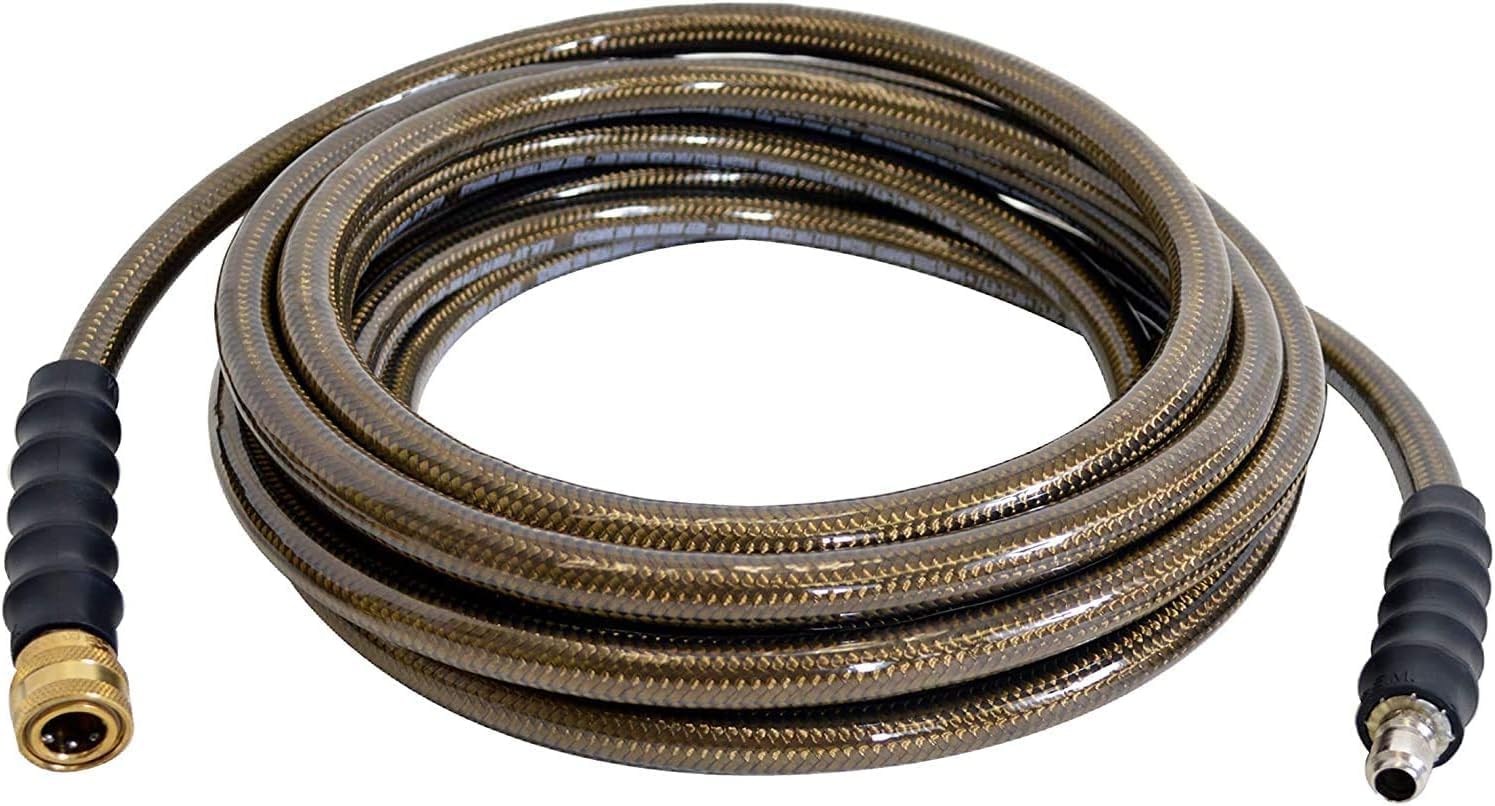
The Hose That Stops the Cursing: Simpson 50 ft Monster Hose
A stiff hose that kinks every five feet is the most annoying part of pressure washing, and it's the cheapest thing to fix.
The Simpson Monster hose is 50 feet of 3/8 inch cold water line rated to 4,500 PSI, and 50 feet is the right length for real work. Twenty-five feet means moving the machine twice while you're mid-panel on a fence. Fifty feet means you park the washer once and reach the whole side of the house.
Three-eighths inch is the size that matters for flow. A thin hose chokes a good machine, and you feel it as a weak spray even when the pump is fine. Match the hose to your machine's rating and to the fittings you actually have, because a great hose with the wrong connector is just a heavy rope.
Cold water only, which is fine for nearly everything anyone does at home. Hot water is a commercial thing. If you're not running a trailer rig, you don't need it.
How I test
Same method every time. A concrete driveway with two years of grime, a car with road film, and a fence panel with mildew on it.
I time the jobs. The driveway pass tells me whether a machine has enough flow to keep up with a surface cleaner or whether it stalls out and streaks. The car tells me whether the wand and nozzle set are usable at panel distance without stripping trim. The fence tells me whether the detergent draw actually pulls soap or just dribbles water.
Then I live with it. How heavy is it to move twice a day? Does the hose kink when I coil it in the truck? Does the wand feel like a tool or a toy? Do I have to stop and wait for the machine to cool down before I finish the last strip of concrete?
I don't count marketing numbers as results. I count how many times I had to stop.
Analysis and test results
Flow beats pressure, every time. The machines that cleaned well were the ones with enough GPM to move dirt off the surface, not the ones with the biggest number printed on the box. When you see a huge pressure claim sitting next to a thin flow rating, the flow rating is the honest one.
Detergent draw separates tools from toys. A washer that can't pull soap is a hose with a trigger, and you'll end up spraying cleaner on by hand anyway. Onboard tanks are worth paying for. Siphon tubes work, but they fall out of buckets and they clog at the worst moment.
The accessory stack matters as much as the machine. A surface cleaner on a mid-range washer beats a wand on a premium one. A 3/8 inch hose that doesn't kink turns a frustrating afternoon into a fast one. If your budget is tight, buy the better machine and skip the extras. If your budget has any slack at all, the surface cleaner is the first thing to add and the hose is the second.
Gas versus electric is a job question, not a quality question. Electric covers cars, patios, siding, and furniture, and it does it quietly and without fuel. Gas covers driveways, boats, and anything you're doing for hours at a stretch. Most people need the electric and should rent or borrow the gas. Anyone doing this weekly for money needs both.
Nozzle discipline. The narrow tip is a stripping tool, not a cleaning tool. Held too close it etches wood and scars concrete, and no surface cleaner will fix a scar you put there with a red tip.
Pressure washer setup reference table
This is the setup I'd hand to a friend, in the order I'd buy it. Machine first, then the surface cleaner, then the hose. Check the specs against your own machine before you order anything.
| Part | Role | Spec to verify | Notes |
|---|---|---|---|
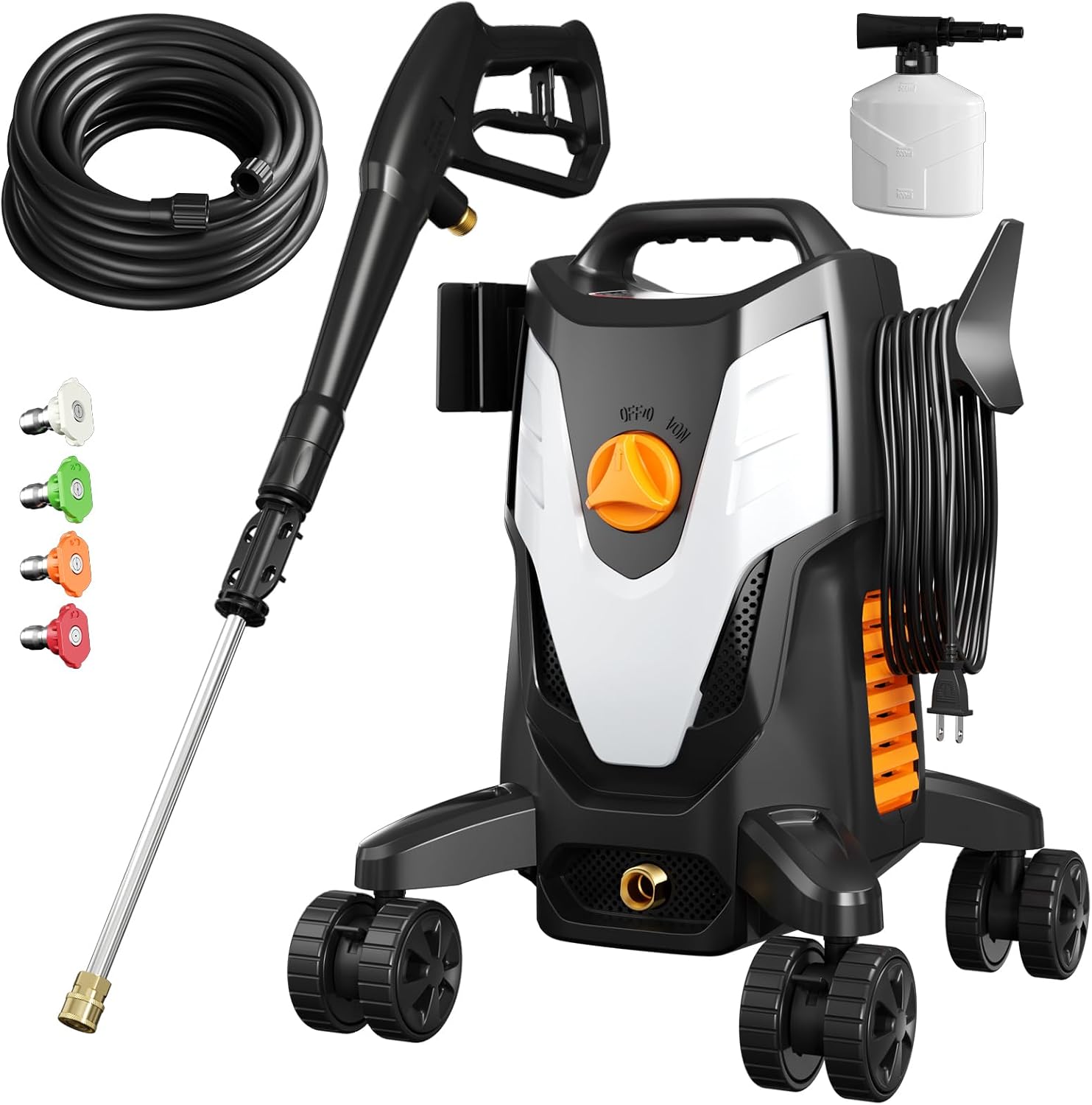 Visit on Amazon → Visit on Amazon →Electric Pressure Washer with Anti-Tipping Technology |
Main machine | 4,500 PSI, 2.8 GPM | Best first machine for most homes |
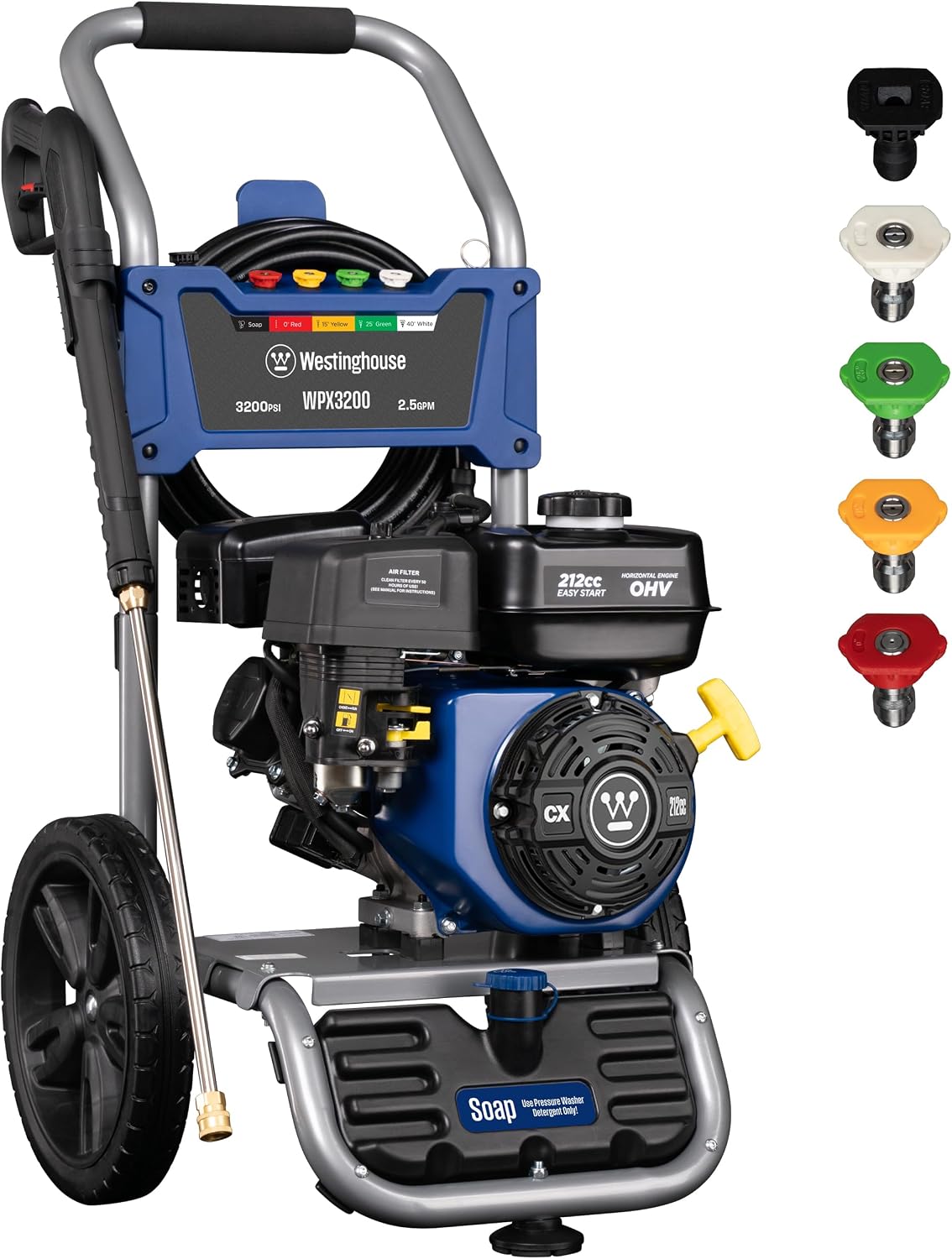 Visit on Amazon → Visit on Amazon →Westinghouse WPX3200 Gas Pressure Washer |
Main machine | 3,200 PSI, 2.5 GPM | Onboard soap tank, 5 nozzle set, for long jobs |
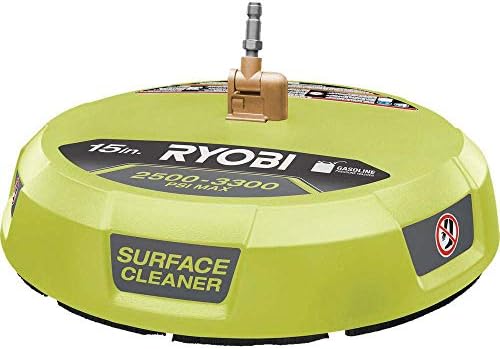 Visit on Amazon → Visit on Amazon →Ryobi RY31SC01 15 in. Surface Cleaner |
Flat-surface upgrade | 3,300 PSI rating, gas machines | The single best accessory you can add |
 Visit on Amazon → Visit on Amazon →Simpson 50 ft Monster Hose |
Hose upgrade | 3/8 inch, 4,500 PSI, cold water | 50 feet kills the need to move the machine |
The order in that table is the order I'd spend money. Machine, then the flat-surface attachment, then the hose. Everything else is optional.
Should you buy the Westinghouse WPX3200?
If you're washing driveways, boats, or anything that runs longer than half an hour, yes. The 2.5 GPM flow is what does the work, the onboard soap tank keeps detergent flowing without a bucket routine, and gas machines don't overheat the way cheap electrics do. It's loud, it's heavy, and you're maintaining an engine. For a full driveway or a boat bottom, that's a fair trade.
Should you buy the electric pressure washer?
For most homes, yes. Anti-tipping matters more than people expect, because light electric washers walk across the driveway the moment you put torque on the wand. It plugs in, it's quiet, and there's no fuel or oil to manage. If you wash a car and a patio a few times a month, you'll never find its limit. If you're cleaning for money every weekend, step up to gas.
Do you need the surface cleaner and the hose?
The surface cleaner, yes, if you have any flat concrete at all. It's the cheapest way to make a decent washer look professional, and the Ryobi unit is rated for the gas machines most people pair it with. Just confirm the connection type and match it to your washer's pressure and flow.
The hose is the quality-of-life purchase. Nobody buys a 50 foot hose because they're excited about hoses. You buy it because a kinked hose turns a one-hour job into a two-hour job, and because 50 feet means you park the machine once instead of dragging it around the yard. Both are worth it. The machine is the decision that matters most, so get that right first, then add the accessories as the budget allows.