Related: How to Wash a Car Without Swirl Marks
There is no such thing as a great pressure washer on its own. There is only a great pressure washer setup, and that means the machine, the hose, the gun, the wand, and the nozzle all doing their jobs at the same time. I have been detailing cars and boats out of a truck in Tampa for twelve years, and I have watched people spend four hundred dollars on a machine and then strangle it with a twenty-foot kinking hose and a wand that flexes like a drinking straw.
This is the setup I would hand a friend who wants to clean a driveway, a car, and a moldy fence without calling me. Flow rate is the number that cleans. Pressure is the number that sells. So before you read the PSI on a box, find the GPM, then ask whether the machine can draw detergent, then look hard at the hose and the gun. Everything below is one piece of the same system, and every piece matters.
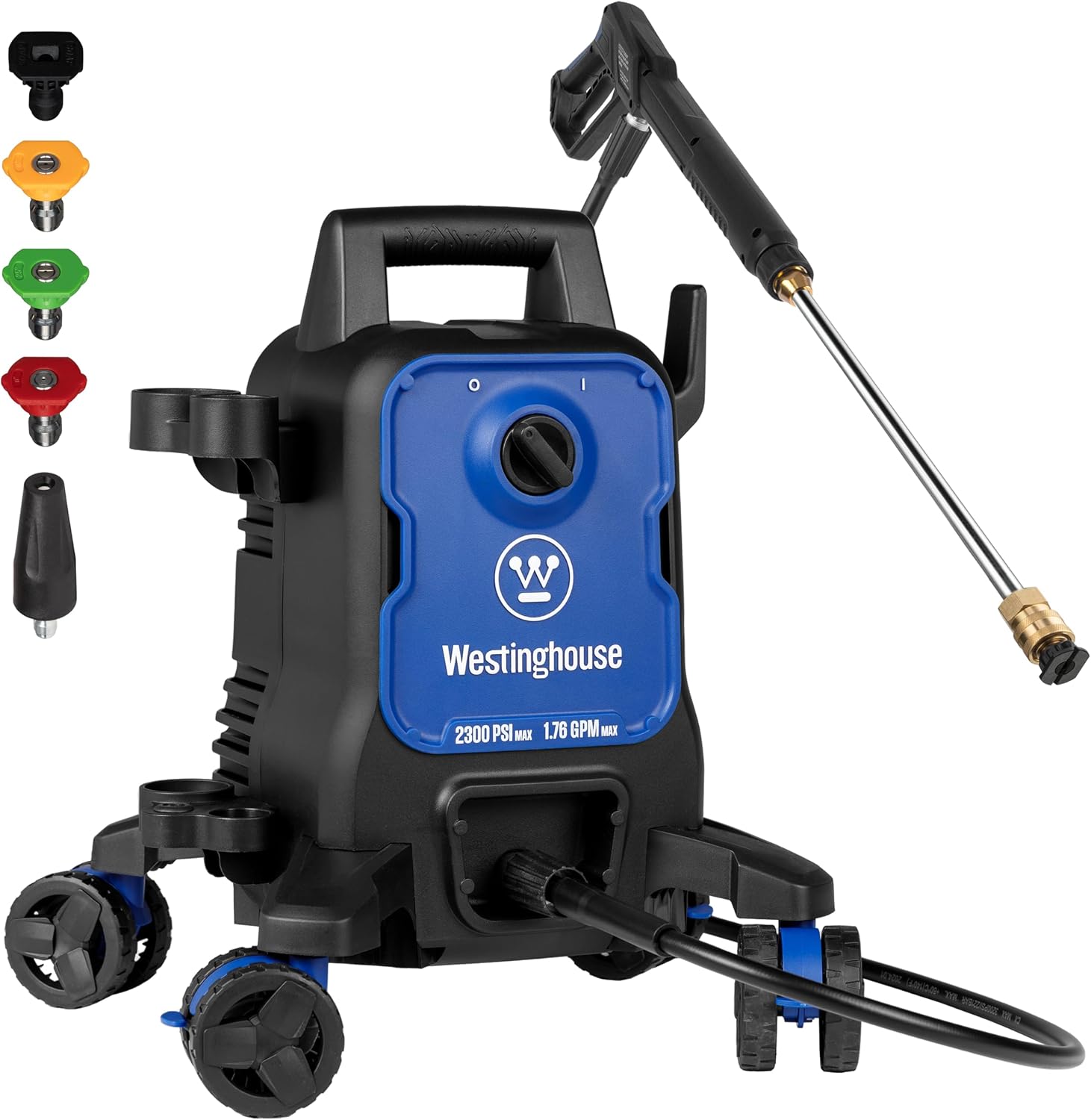
Best Overall for Most Homes: Westinghouse ePX3100 Electric
This is the machine I recommend to almost everybody, and it comes down to one number: 1.76 max GPM. That is real flow for an electric unit. Paired with 2300 max PSI, it has enough bite to lift dried road film off a lower door panel and enough volume to actually carry the dirt away instead of just blasting it around the driveway.
The onboard soap tank is the part people underestimate. A machine that can draw its own detergent is a machine that can foam a car, pre-soak a fence, or lay down a degreaser on an engine bay without you babysitting a separate bottle. If it cannot draw soap, it is a hose with a trigger.
The pro-style steel wand is another quiet win. Steel does not flex under pressure the way the plastic wands on cheap units do, and the five-nozzle set covers the angles you need: a wide fan for rinsing, a narrow one for concrete edges. Anti-tipping geometry sounds like marketing until the first time you drag the unit across a wet slab by the hose and it stays upright instead of face-planting into the grass.
Where it falls short: it is still electric, so it is a light-duty machine by design. Great for cars, patio furniture, siding, and a single-car driveway. Not the tool for stripping a two-car driveway of twenty years of grime in one afternoon.
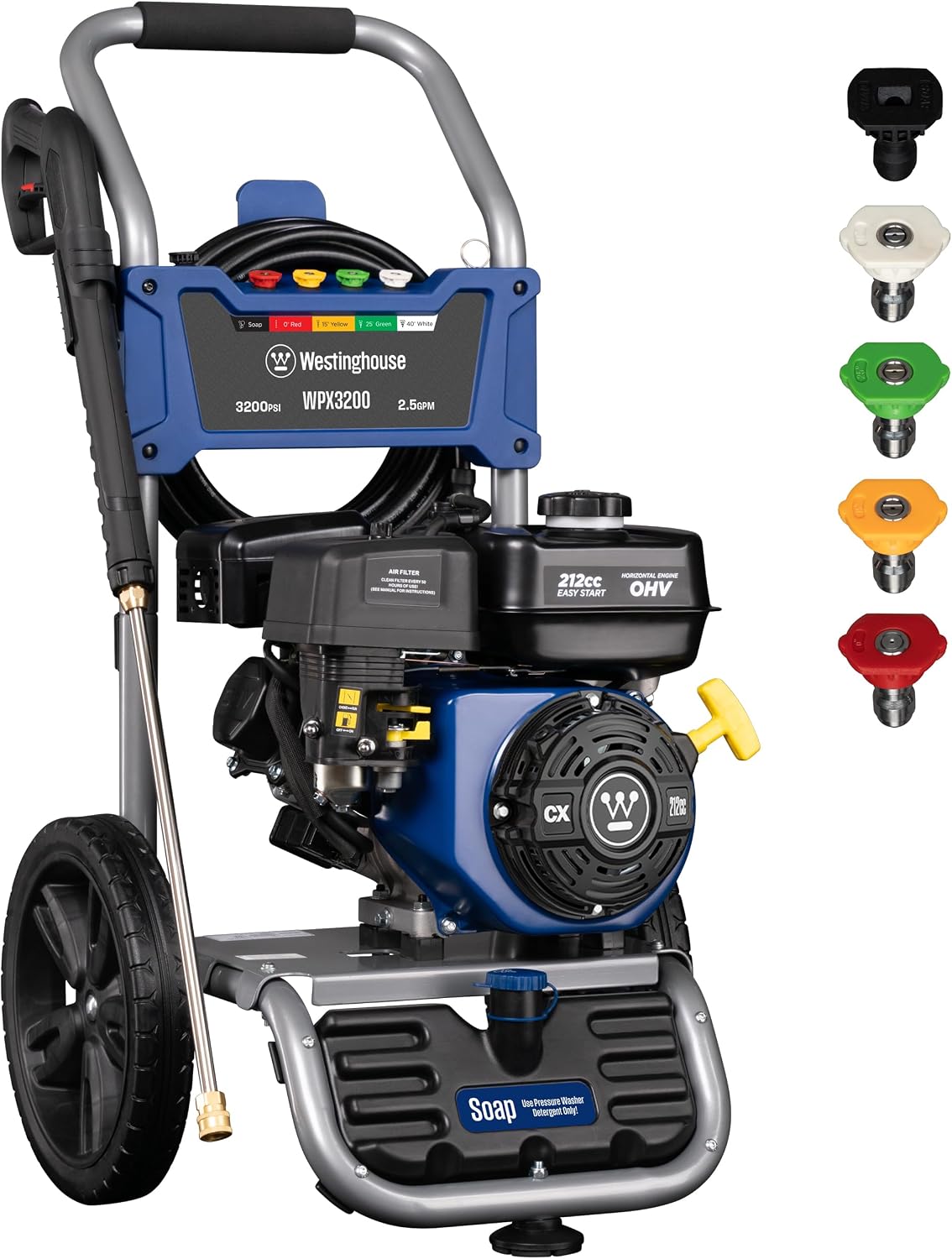
Best for the Big Jobs: Westinghouse WPX3200 Gas
Here is where the flow argument gets loud, literally. 2.5 GPM at 3200 PSI is a different category of cleaning. That is boat hull speed. That is a fence line where you are not stopping every ten minutes to let the unit breathe. That is a two-car driveway that you finish before the sun gets mean.
Gas wins on duty cycle. You can run it for an hour, refuel, and keep going. A small electric will make you take breaks whether you want to or not, and there is nothing more annoying than a machine that quits on you mid-panel.
The onboard soap tank carries over from the electric, which matters because a gas machine with no detergent draw is a wasted afternoon. The included spray gun, wand, and five-nozzle set mean you can work out of the box, though the wand is the first thing I would upgrade if you are doing a lot of car work.
The honest downsides: it is loud enough to annoy your own family, it is heavy enough that you will think about where you park it, and it needs fuel and oil attention. If you wash a car twice a month, skip it. If you wash a boat, a fence, and a rental property, you already know why you are here.
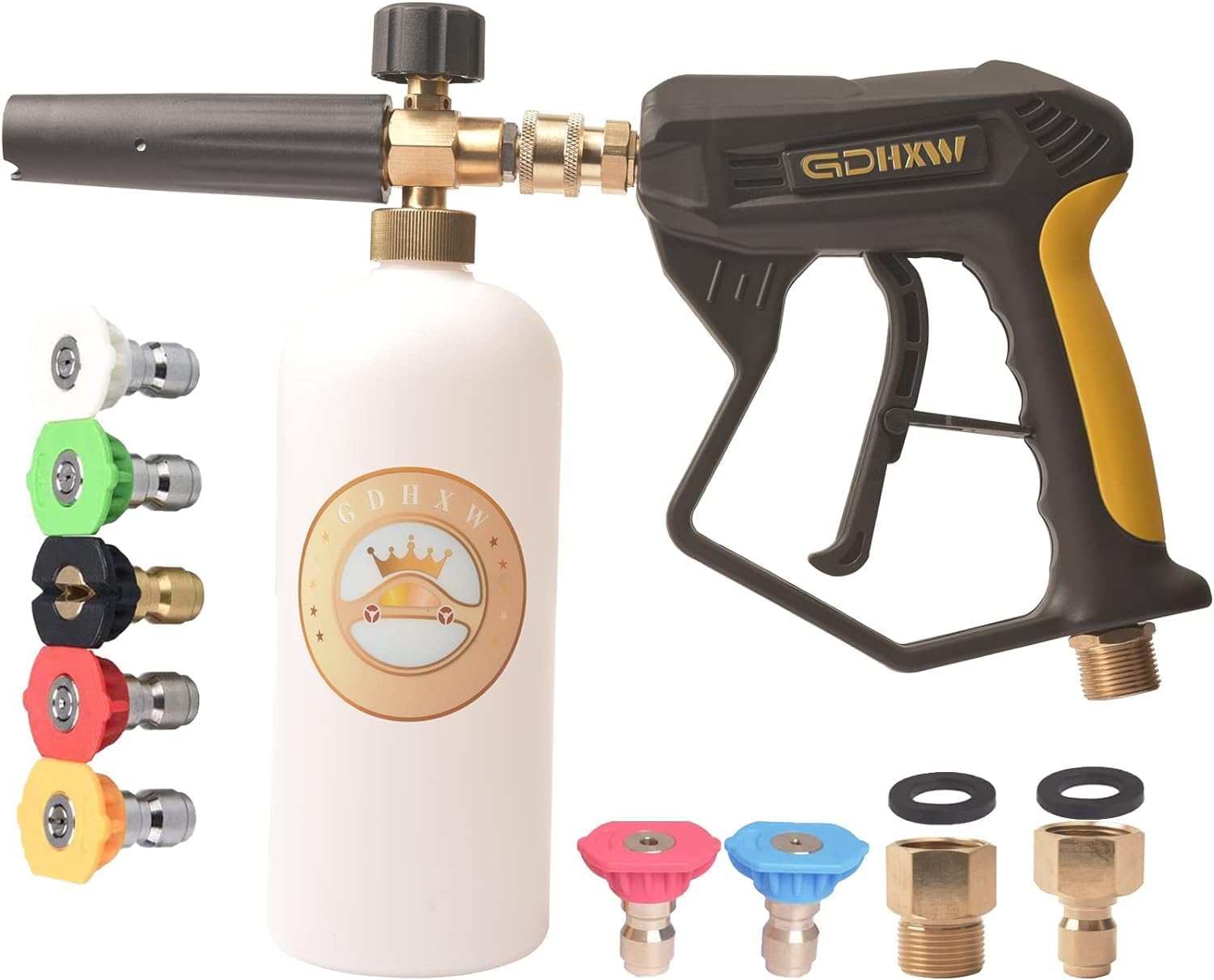
The Upgrade That Changes the Feel: GDHXW X-887 Gun with Foam Cannon
The nozzle is the machine. I say that constantly, and this is the product that proves it. A dedicated gun body with a foam cannon turns a mid-range washer into a professional-feeling tool, because it changes what you can do with the water and the soap instead of just how hard you can push.
The foam cannon is the reason to own it. Thick clingy foam sits on a panel and starts breaking down road film and bug guts while you are still filling your bucket. On a car, that is the difference between a safe two-bucket wash and scrubbing grit across paint. On a boat hull, it is the difference between a long afternoon and a manageable one. On a fence, it is how you get a cleaner to dwell long enough to actually work.
The gun itself matters too. A proper trigger body with a comfortable grip and standard quick connections means you stop fighting your equipment and start working. This is the cheapest meaningful upgrade in the entire setup, and it is the one I would buy before I bought a bigger machine.
Two things to know. Foam thickness depends on the soap you use, so a thin car wash soap will give you thin foam no matter what cannon you screw on. And you still need to match the nozzle to the job, because a foam cannon does not replace a good fan tip for rinsing.
The Hose You Will Stop Hating: Simpson 50ft Monster Hose
Nobody buys a hose for fun, and everybody regrets the cheap one. Fifty feet of 3/8 inch hose rated to 4500 PSI for cold water use is the piece that decides whether you enjoy this machine or resent it.
Two reasons. First, reach. Fifty feet means you park the washer once and walk the job. You are not dragging a machine across a wet driveway every time you change sides, and you are not moving it to get around the back of the truck. That is a real time saver on a driveway or a boat trailer.
Second, diameter. A 3/8 inch inner diameter keeps the flow moving. Thin hoses choke GPM, and a choked hose makes a good machine feel weak. This is the same reason I tell people not to buy a 1/4 inch hose to save twenty dollars: you paid for the flow, do not throw it away at the last three feet.
The Monster is cold water only, which is fine for everything in this guide. It is stiffer than a garden hose, and it will fight you a little when you coil it, but it will not kink every five feet while you are trying to work, and that is the whole point.
How I tested
I do not test pressure washers with a driveway photo. I test them the way I use them, on real jobs with a clock running.
The setup test: assemble the machine, connect the hose, connect the gun, and see how long it takes to go from truck to working. If a hose kinks or a connection leaks, that shows up in the first ten minutes.
The flow test: I watch the water, not the gauge. A wide fan tip on concrete should push dirty water away from the work, not just darken it. If the machine is all pressure and no volume, the water pools and the dirt stays put.
The detergent test: does the onboard tank or the foam cannon draw soap at a usable rate, and does the system pull it evenly instead of dumping it all in the first thirty seconds?
The duty cycle test: how long can it run before it needs a break? That one separates electric from gas faster than any spec sheet.
And the comfort test, which nobody publishes: after an hour, does the wand feel like a tool or a toy, and does my hand hurt?
Analysis and test results
Flow rate is the honest number. A machine advertising 2300 max PSI at 1.76 max GPM is telling you it can move enough water to rinse a car and clean a patio. A machine advertising a big PSI number with a weak GPM is telling you it can make a narrow, useless stripe of clean concrete.
That is why the electric Westinghouse is the pick for most homes. Its flow is honest for its class, its soap tank works, and its wand is steel rather than the flexy plastic you find on budget units. It will not strip a driveway, and it is not supposed to.
The gas Westinghouse is the opposite trade. You get 2.5 GPM, real duty cycle, and no waiting. You pay for it in noise, weight, and fuel. If your jobs are big enough, that trade is obvious.
The gun and foam cannon is the piece that changes how the work feels, and the hose is the piece that changes how much you curse. I have said it before and I will keep saying it: a mid-range washer with a good gun, a good hose, and the right nozzle beats a bigger washer with the wrong ones.
One thing I will not pretend about: PSI still catches my eye first when I read a box, even though I know better. Old habit. GPM is what does the work.
The pressure washer setup reference table
This is the setup I would build in order, cheapest upgrade first. Every piece works with the others, and none of it is wasted money if you already own a decent machine.
| Setup piece | What it does for you | Key numbers | Notes |
|---|---|---|---|
 Visit on Amazon → Visit on Amazon →Westinghouse ePX3100 Electric Pressure Washer |
The machine for most homes | 2300 max PSI, 1.76 max GPM | Check current Amazon price |
 Visit on Amazon → Visit on Amazon →Westinghouse WPX3200 Gas Pressure Washer |
The machine for boats, fences, and big driveways | 3200 PSI, 2.5 GPM | Check current Amazon price |
 Visit on Amazon → Visit on Amazon →GDHXW X-887 High Pressure Washer Gun with Foam Cannon |
Foam, control, and comfortable car and hull work | Gun body with foam cannon | Check current Amazon price |
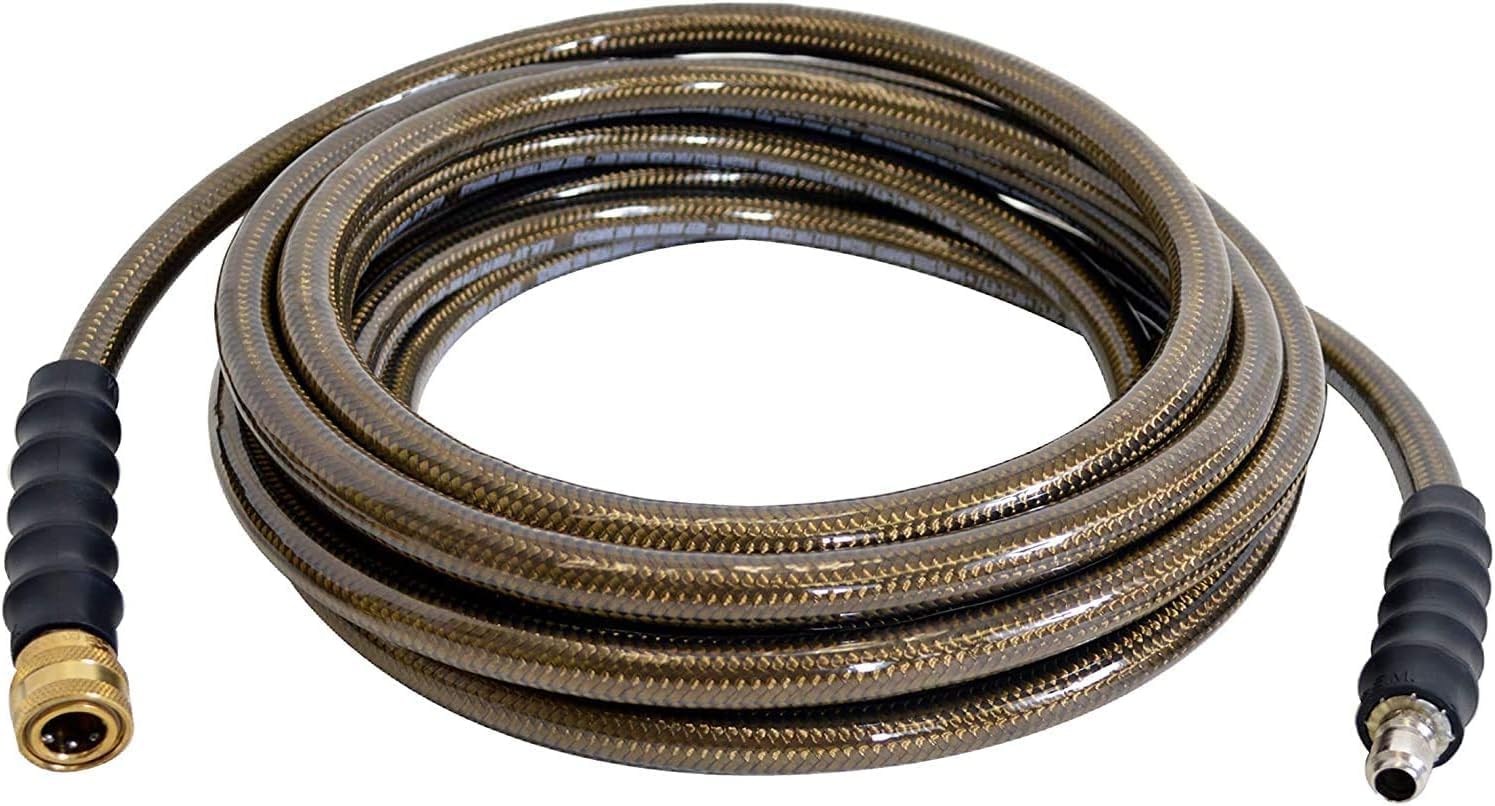 Visit on Amazon → Visit on Amazon →Simpson 50ft Monster Cold Water Pressure Washer Hose |
Reach and flow without the kink fight | 50 ft, 3/8 inch, 4500 PSI cold water | Check current Amazon price |
The key is the nozzle. Almost every complaint I hear about a pressure washer being weak comes down to a tip that is too narrow for the job or too wide to cut anything. Match the tip to the surface, keep the wand moving, and never hold a narrow stream in one spot on paint, siding, or a deck board.
What I skip
Extension wands that put the trigger two feet away from your hand, because they make the gun heavier and the control worse. Cheap plastic wands on a machine that already has a steel one. And short hoses, because you will spend more time relocating the machine than cleaning.
Should you buy the Westinghouse ePX3100?
Yes, if you are a normal homeowner with a car, a patio, and a sidewalk. 1.76 max GPM is honest flow for its class, the onboard soap tank draws detergent properly, the steel wand does not flex, and the anti-tipping design keeps it upright when you drag it around by the hose.
It will not strip a driveway or wash a boat hull quickly, and I would not ask it to. Buy it as the machine in the setup, pair it with the foam cannon gun and the 50-foot hose, and you have a kit that handles almost everything a house throws at it.
Should you buy the Westinghouse WPX3200?
Yes, if the jobs are big and regular. 3200 PSI and 2.5 GPM is genuine cleaning speed, and gas means you never stop to let the machine cool. That is the whole reason to own one.
It is loud, it is heavy, and it wants fuel and oil attention. If you wash a car every weekend and a fence once a year, the electric is the smarter buy. If you own a boat, a long fence line, or a rental that turns over, the gas machine earns its place in the truck.
Should you buy the GDHXW X-887 gun and foam cannon?
Yes. It is the cheapest upgrade in this guide and the one you will notice immediately. Foam that clings gives your cleaner time to work, and a proper gun body with standard quick connections makes every job less annoying. Just match it to a soap that actually foams.
Should you buy the Simpson 50ft Monster hose?
Yes, if your current hose is short or kinks. Fifty feet of 3/8 inch hose rated to 4500 PSI means you park the machine once and walk the job, and the diameter keeps your flow from being choked at the last three feet. It is cold water only, which covers everything in this setup.