Related: Gas vs Electric Pressure Washers: What Actually Cleans a Driveway
I have spent twelve years washing other people's property for a living, and the question I get most is which machine to buy. That is almost never the right question. The pressure washer hose and nozzle you pair with the machine decide whether a driveway takes forty minutes or two hours, and whether your forearm is still attached to your elbow when you are done.
Here is the short version. Flow rate does the cleaning, not pressure. A unit moving 2.5 gallons a minute pushes almost twice the water of a 1.4 GPM machine, and moving water is what lifts dirt off concrete. Pressure only tells the water where to go. The second thing is soap. If a washer cannot draw detergent on its own, you are holding a hose with a trigger, and you will be spraying a bucket of suds by hand like it is 1998.
The four pieces of gear below cover that whole conversation: two Westinghouse machines that sit at the electric and gas ends of the market, a Simpson hose that fixes the worst part of every starter kit, and a thirty-dollar nozzle that turns an ordinary garden hose into something that can genuinely clean a patio. I am not going to sell you the biggest number on the shelf. I am going to tell you which of these I would put on my own trailer, and why.
Best for Most Homes: Westinghouse ePX3100 Electric
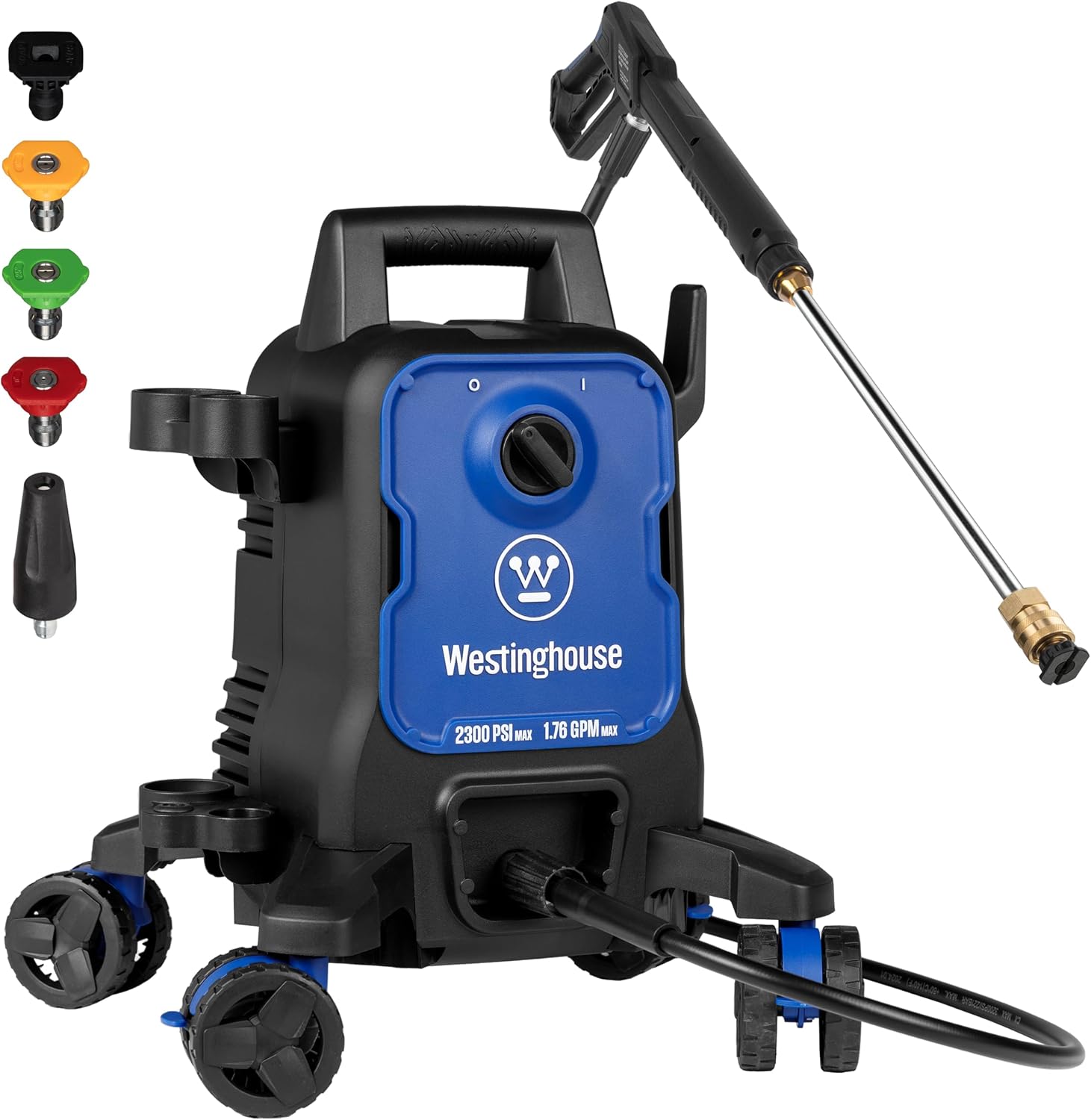
For the vast majority of homeowners, this is the machine. The ePX3100 is rated at 2300 max PSI and 1.76 max GPM, and that flow number is what makes it useful. It will handle a car, a fence, a set of patio cushions, and the average concrete driveway. It runs off a standard household outlet, it needs no oil changes and no trip to the gas station, and it starts with a switch instead of a pull cord.
The anti-tipping design matters more than the marketing suggests. Electric units in this class are top-heavy, and a washer that walks across the driveway under load is a washer that eventually ends up on its side with a cracked housing. The onboard soap tank is the other feature I care about, because it means detergent draw is built in rather than bolted on as an afterthought.
The pro-style steel wand and the five-nozzle set are the parts you will actually judge it by. A steel wand does not flex and rattle the way the plastic wands on cheap units do, and having 0, 15, 25 and 40 degree nozzles plus a soap nozzle in the box means you can go from stripping a concrete pad to rinsing a car without buying anything else. This is the class of machine where people learn that 1.76 GPM at the right angle beats 3,000 PSI through a nozzle that is too narrow.
Where it stops: this is not the tool for washing a boat hull every week or running a surface cleaner across a two-car driveway as a side business. Run it hard for an hour and you will feel the duty cycle in your hand. Short of that, it is the sane pick.
Best for Serious Jobs: Westinghouse WPX3200 Gas
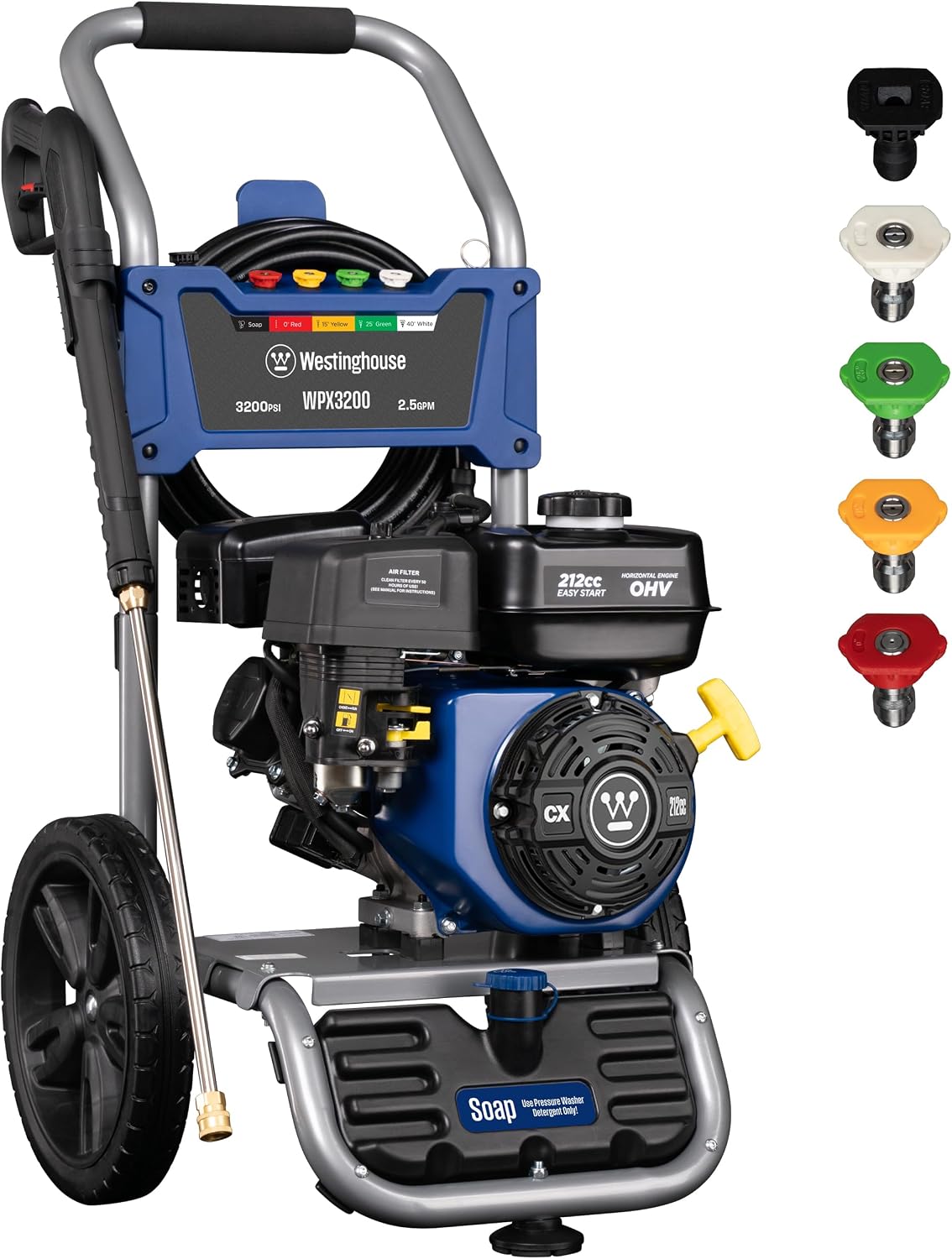
The WPX3200 is the machine you buy when the electric one keeps running out of nerve. It is rated at 3200 PSI and 2.5 GPM, and that 2.5 GPM is the number that changes your Saturday. More flow means a surface cleaner actually spins and floats instead of stalling, which means a driveway gets cleaned in passes rather than in a slow grid of overlapping stripes.
The onboard soap tank is a real one, not a decorative reservoir. A gas machine that can draw detergent at volume lets you do a full fence in one wet-down, one dwell, one rinse cycle, which is how a fence job should go. The spray gun and wand that come with it are serviceable, and the five-nozzle set gives you the same range as the electric unit: soap, 0, 15, 25 and 40 degrees.
The trade-offs are honest ones. It is loud, it is heavy, and it needs fuel, oil and a little seasonal maintenance. You will not want to drag it out for a single muddy car in the winter. But if you own a boat, a long fence line, or a two-car driveway you want to keep genuinely clean, the flow is worth every ounce of noise. This is the machine that turns pressure washing from a chore into a service you could charge for.
The Upgrade That Fixes Every Starter Kit: Simpson Monster Hose
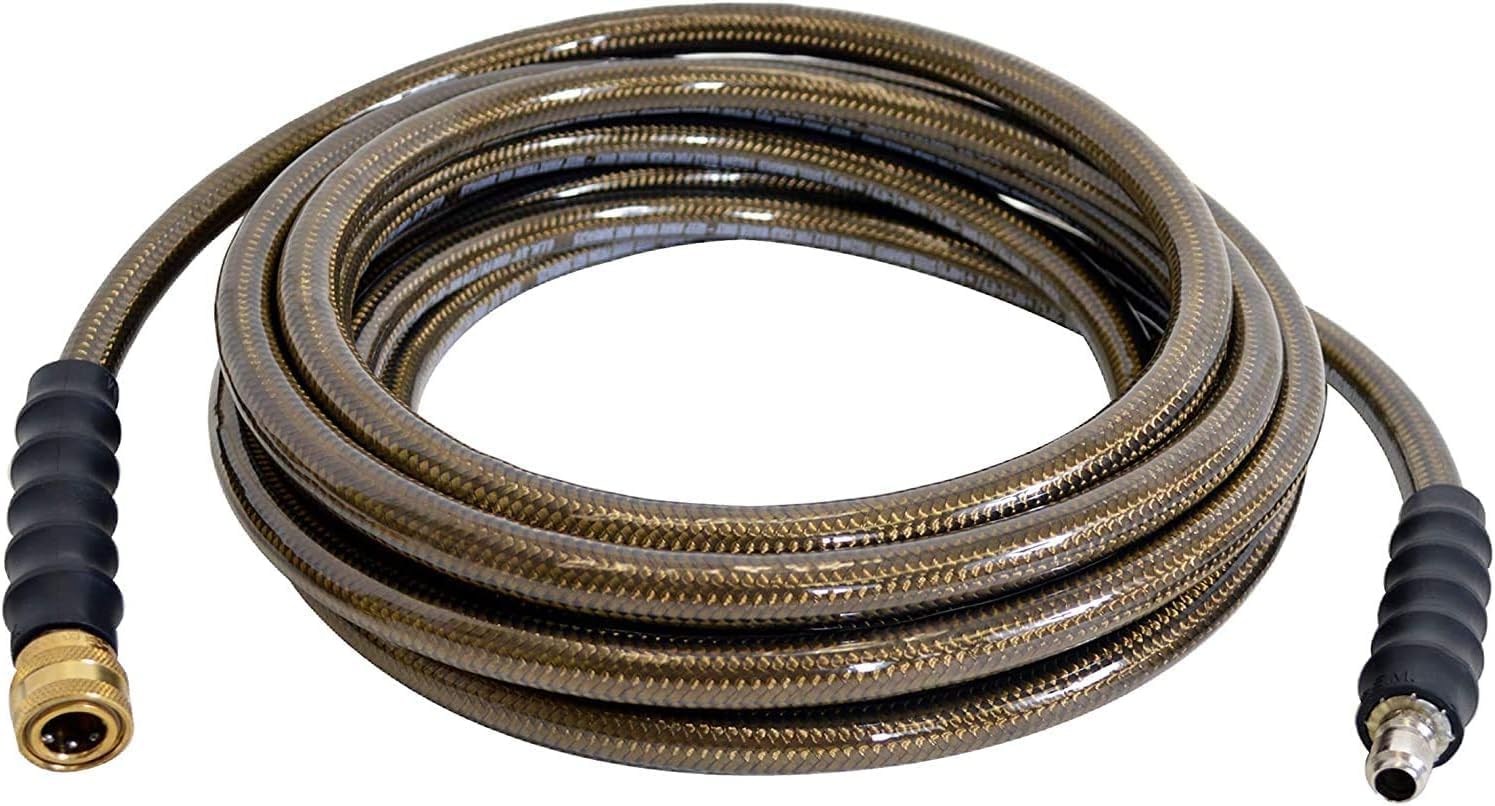
The hose that ships with a pressure washer is almost always the weakest part of the package. It is short, it is stiff, and it kinks every five feet, which means you stop washing, walk back, straighten it out, and start over. Fifty feet of quality hose solves a problem you did not know was a problem until you stop solving it every three minutes.
This Simpson hose is 3/8 inch inside diameter and rated to 4500 PSI, which is more headroom than either machine above will ever ask for. The size matters for flow: a fatter hose creates less restriction, so the pump's 2.5 GPM actually arrives at the nozzle instead of being throttled on the way there. If you have ever wondered why your machine feels weaker than its specs, a thin, kinked hose is often the answer.
Fifty feet also changes how you work. You can leave the machine parked at the garage and reach the far end of a driveway, or walk around a car without dragging the unit along with you. That is the difference between a job that flows and a job that fights back. If you only make one upgrade this year, make it the hose.
The Thirty-Dollar Fix: Upgraded Jet Nozzle for Garden Hose
Not every job justifies dragging out a machine. For rinsing a walkway, knocking mud off patio furniture, cleaning a wheel, or blasting pollen off a fence, a jet nozzle on a garden hose does the work in a fraction of the setup time. The hose is already out. You are already standing there.
The reason to pick a proper jet nozzle rather than the $6 plastic one at the hardware store is the same reason I care about nozzles on real machines: the orifice. A well-machined nozzle holds a tight, coherent stream instead of spraying a fan of water everywhere, and the difference in felt power is dramatic. This one is built to thread onto a standard garden hose wand and gives you the reach and concentration that a bare hose end never will.
It is also the tool that keeps you from making a mistake. Too many people reach for the gas machine and a zero-degree nozzle to clean a car, and then wonder why the paint has stripes. A garden hose with a good jet nozzle is the right first tool for anything delicate, and it is the one I grab before I even think about starting an engine.
How I judge pressure washer gear
I do not care what the box says. I care about four things, in this order.
First, the real flow rate. GPM is the work. A 2.5 GPM machine with a matched nozzle will out-clean a 3,200 PSI machine that only moves 1.4 GPM, every time, on every surface. If a listing shouts pressure and whispers flow, that is a signal.
Second, detergent draw. A washer that cannot pull soap out of a tank on its own is a hose with a trigger. Onboard soap tanks are not a luxury feature, they are the difference between a one-pass job and spraying a bucket by hand.
Third, the hose and wand. This is the part nobody evaluates in the store and everybody resents in the driveway. A stiff hose that kinks is a daily annoyance. A wand that flexes like a toy will not hold a consistent angle under load.
Fourth, duty cycle. Gas runs all day. Electric runs until the motor tells you it has had enough. Knowing where a machine stops is more useful than any peak number.
What the specs actually tell you
Read the two Westinghouse machines side by side and the pattern is clear. The electric unit moves 1.76 GPM. The gas unit moves 2.5 GPM. That is roughly a 40 percent increase in water volume, and water volume is what lifts dirt off a surface. The gas machine is not better because of the bigger PSI figure on the front. It is better because of the bigger flow figure hiding behind it.
That is also why the Simpson hose earns its place on this list. Flow is only as good as the pipe carrying it. A 3/8 inch hose rated to 4500 PSI removes the restriction and the kink at the same time, so the pump's output reaches the nozzle intact. On a 50-foot run, that is the difference between a machine that feels strong and a machine that feels tired.
And it is why the jet nozzle matters more than its price suggests. The nozzle is the machine. A tight orifice turns modest flow into a cutting stream. A sloppy one turns a good pump into a garden sprinkler. Fifteen dollars of machining changes the result more than a hundred dollars of extra pressure ever will.
If you are choosing between the two machines, do not ask which is more powerful. Ask how often you will use it, on what, and for how long. Weekly driveway and boat work points at gas. Cars, patios, fences and one concrete pad a year points at electric.
The gear at a glance
| Gear | Type | Pressure and flow | Best for | Availability |
|---|---|---|---|---|
 Visit on Amazon → Visit on Amazon →Westinghouse ePX3100 Electric Pressure Washer |
Corded electric | 2300 max PSI, 1.76 max GPM | Cars, patios, fences, one-car driveways | Visit on Amazon → |
 Visit on Amazon → Visit on Amazon →Westinghouse WPX3200 Gas Pressure Washer |
Gas | 3200 PSI, 2.5 GPM | Driveways, decks, boat hulls, weekly jobs | Visit on Amazon → |
 Visit on Amazon → Visit on Amazon →Simpson 50ft Monster Cold Water Pressure Washer Hose |
Replacement hose, 3/8 inch | Rated to 4500 PSI | Replacing a short, kinking stock hose | Visit on Amazon → |
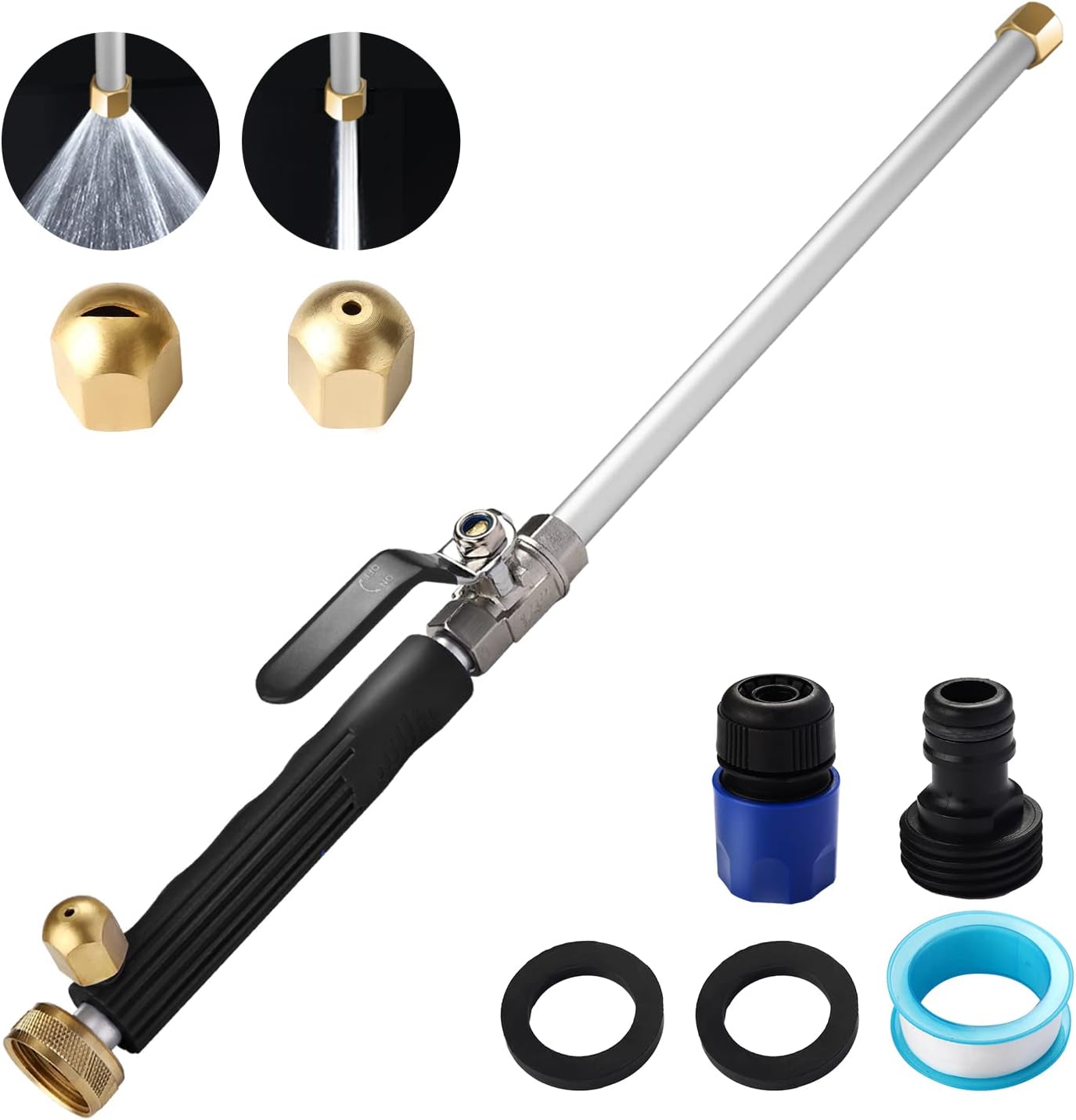 Visit on Amazon → Visit on Amazon →Upgraded Jet Nozzle for Garden Hose Power Washer Wand |
Garden hose nozzle | For hose wands, not machines | Rinsing, light cleaning, delicate surfaces | Visit on Amazon → |
Should you buy the Westinghouse ePX3100?
Yes, if you are cleaning a car, a patio, a fence, or a single concrete pad. The 1.76 GPM flow is genuinely useful, the onboard soap tank means detergent draw is built in, and the steel wand and five-nozzle set are the parts that usually get cheapened and did not get cheapened here. It plugs into a normal outlet and it does not require fuel, oil, or a pull cord.
What it will not do is run a surface cleaner for an hour straight on a commercial schedule. If that is your life, read the next section.
Should you buy the Westinghouse WPX3200?
Yes, if you wash a boat, a long fence, or a two-car driveway often enough that "often" means weekly. The 2.5 GPM flow is the whole argument. It is loud, it is heavy, and it needs maintenance, and none of that matters when a driveway takes one pass instead of three.
If you use a pressure washer four times a year, this is more machine than you need and more machine than you want to maintain. Buy the electric one and put the difference toward the hose.
Should you buy the Simpson hose or the jet nozzle?
Both, and they solve different problems. The Simpson hose is the upgrade that makes whichever machine you own feel better, because flow only counts if the hose lets it through. Fifty feet of 3/8 inch hose rated to 4500 PSI ends the kinking and the dragging in one purchase.
The jet nozzle is the tool for the jobs that do not deserve a machine. It costs less than a tank of gas, it lives on the end of a garden hose, and it keeps you from pointing a zero-degree tip at your car's paint. Between the two, the hose is the bigger quality-of-life change. The nozzle is the one you will use most often.