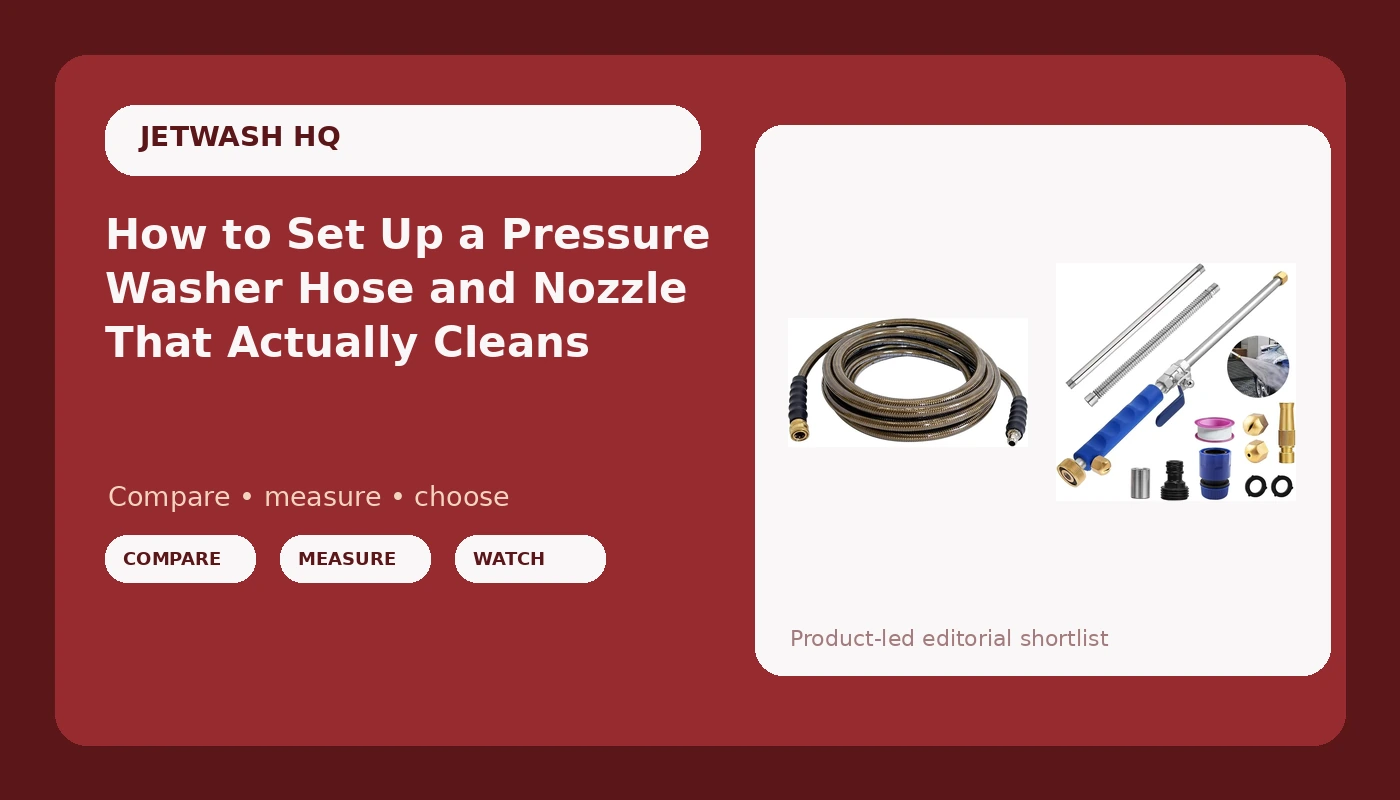
Most people blame the machine. They buy a 3,000 PSI unit, drag it home, and then wonder why the driveway still looks gray after an hour of work. Nine times out of ten the machine is fine. The problem is the pressure washer hose and nozzle hanging off the end of it.
I have been detailing cars and washing houses in Tampa for twelve years, and I have never once seen a job saved by a bigger PSI number. I have seen plenty saved by a hose that does not kink and a nozzle matched to the surface. That is the whole game, and it costs a lot less than a new washer.
Here is how to set yours up right the first time.
Why you should trust me
I run a mobile detailing business out of a truck that carries three pressure washers: an electric unit for cars and light work, a gas unit for driveways and boat hulls, and a cheap one I bought specifically to see how long it would last. It lasted a month.
In twelve years I have washed more driveways, decks, fences, and hulls than I can count, and I have replaced more hoses and wands than I have replaced pumps. The pattern never changes. People upgrade the machine and keep the junk hose that came in the box, then blame the machine.
How I judge gear before it goes on the truck
A hose and a nozzle have to pass four checks before I trust them on a paying job.
The first is flow. Gallons per minute is the number that cleans. A larger inside diameter moves more water to the tip, and more water at the tip is what lifts dirt off concrete. If a hose chokes the flow, the PSI on the box is a story you tell yourself.
The second is kink resistance. A hose that folds every five feet is a daily annoyance. You will spend half the job walking back to untwist it, and a kink under pressure is a weak spot that eventually splits.
The third is the connection. Threads have to match, O-rings have to seal, and quick connects have to lock without leaking. A drip at the gun turns into a soaked glove and a slippery trigger.
The fourth is the nozzle itself. Fan angle, orifice size, and whether it stays on the quick connect when you bump it against a curb. A nozzle that pops off at the wrong moment is how you etch a stripe into a customer's paint.
I do not care what a hose looks like on a shelf. I care what it does after an hour of dragging across asphalt.
The gear that decides the job
You cannot fix a kinking hose with technique, and you cannot fix a mismatched nozzle with a better wand. Get the two pieces below right and the rest of the setup falls into place.
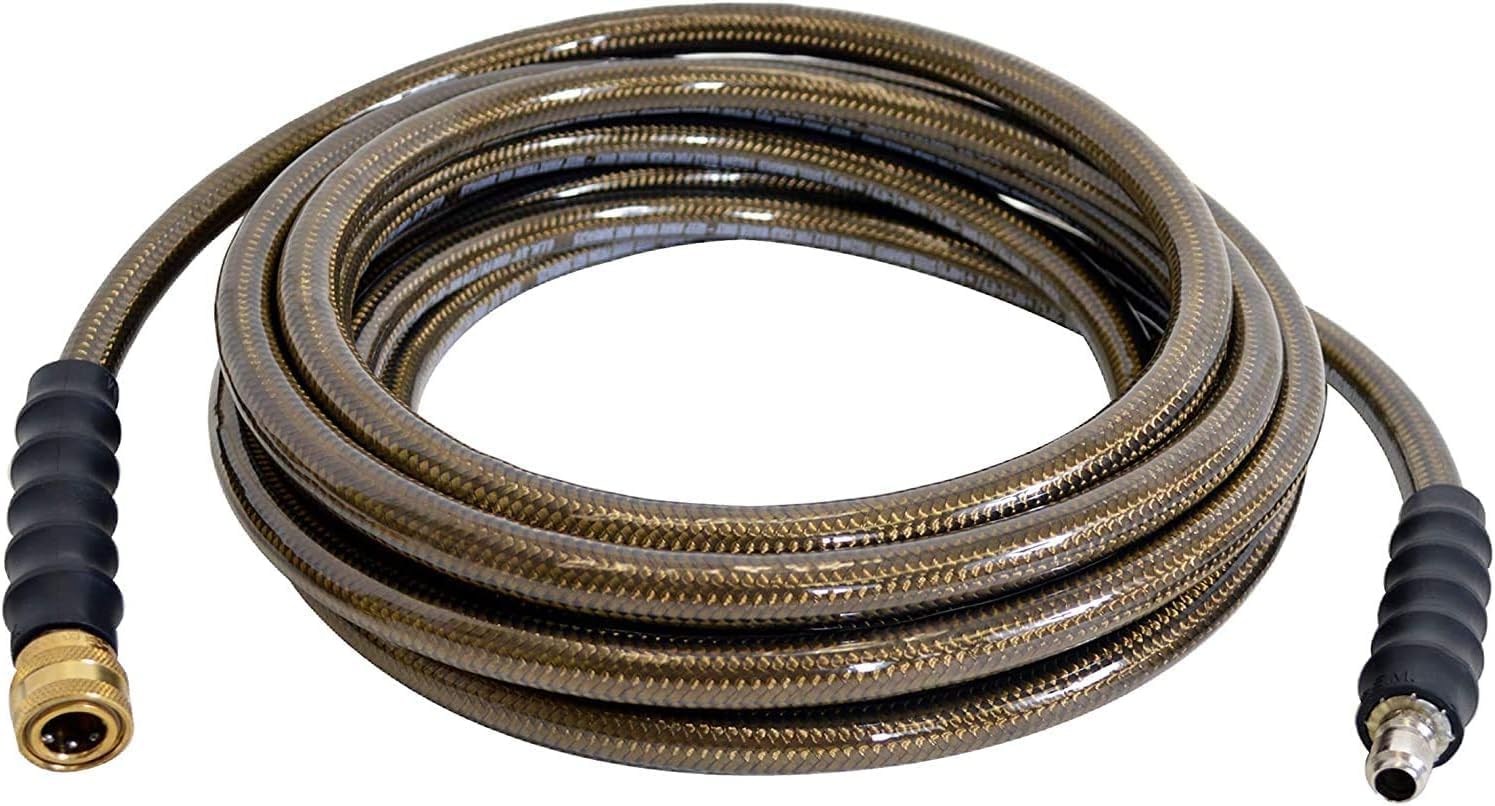
Our pick: Simpson 50ft, 3/8" 4500 PSI Monster Cold Water Pressure Washer Hose, 41028
 Visit on Amazon →
The hose that ships with most consumer washers is twenty to twenty-five feet and about as stiff as a garden snake in January. This one is fifty feet with a 3/8 inch inside diameter, rated to 4500 PSI for cold water, which means it will not be the weak link on any machine you are likely to own.
The inside diameter is the part that matters. A 3/8 inch hose moves noticeably more water than the skinny 1/4 inch hose on a budget unit, and that extra volume reaches the nozzle as cleaning power. Fifty feet also means you can leave the machine at the curb and still reach the back fence, which saves you dragging a running engine across a lawn.
A verified buyer noted the fittings are the standard M22 style that matches most gas and electric machines, so it is a straight swap on the common brands.
Flaws but not dealbreakers: It is cold water only, so do not buy it for a hot water skid. And a 3/8 inch hose full of water is heavy. If you are washing cars in a tight garage and dragging it around corners, the weight is real, but the flow is worth it.
Anyone running a gas machine or a serious electric unit who is tired of the stock hose will feel the difference on the first pass.
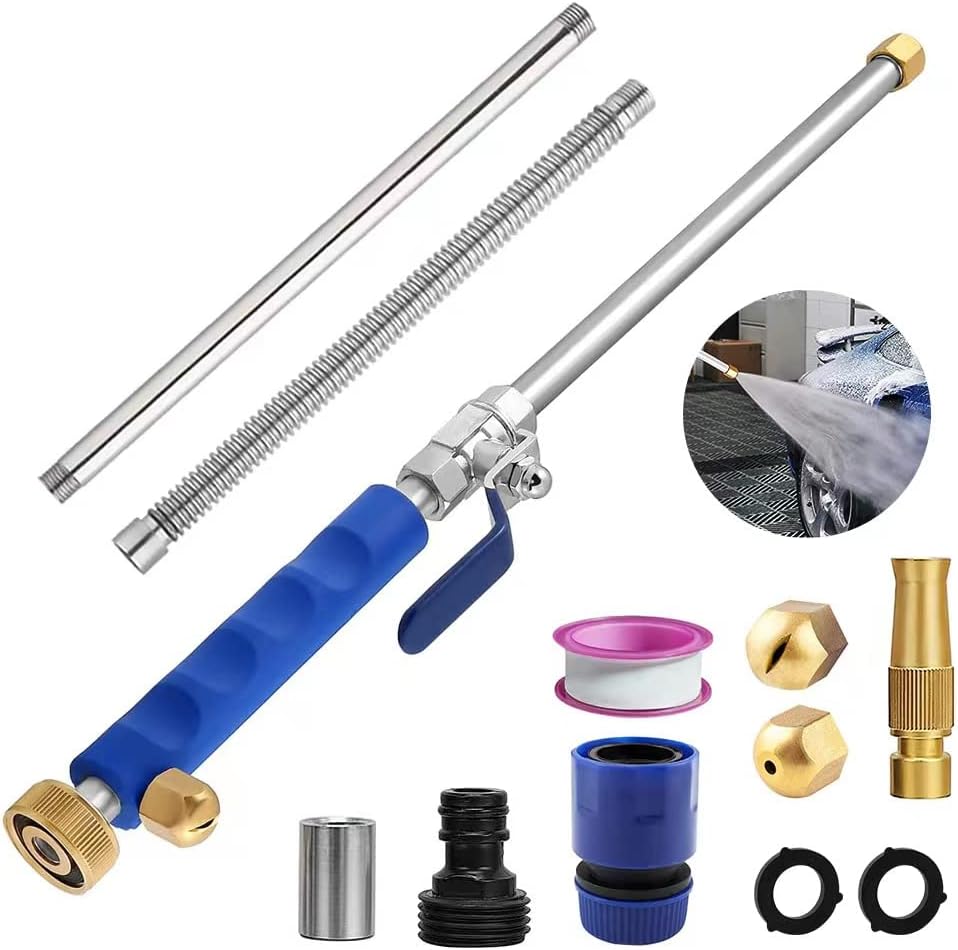
The garden hose pick: Jet Nozzle 2-in-1 High Pressure Power Washer, Watering Sprayer Cleaning Tool, Hydro Jet Nozzle Power Washer, Tool Pressure Washer Extension Wand with 3 Hose Nozzles for Garden Hose and Car Washing
 Visit on Amazon →
Not every job deserves a gas engine and a fifty foot hose. This is a 2-in-1 wand that threads onto a standard garden hose and gives you an adjustable spray for rinsing plus a concentrated jet for knocking loose dirt off wheels, siding, patio furniture, and gutters. It comes with three hose nozzles, so you can swap the tip to match the job instead of fighting one fixed pattern.
I keep something like this on the truck for the last five minutes of a detail. Rinsing wheel wells, flushing soap out of a wheel arch, hosing down a driveway apron after the machine is already packed. It is also the right tool for anyone who does not own a pressure washer at all and just wants more bite than a plain hose end.
Be honest about what it is. A garden hose delivers a fraction of the pressure a real machine does, so this lifts loose dirt and rinses soap. It does not strip mildew that has bonded to concrete or blast paint off a deck. For that you need the machine.
Flaws but not dealbreakers: The spray pattern is adjusted by twisting the head, which takes a little practice to hit the setting you want. And the reach is limited by your garden hose, so plan on moving the spigot or adding a length.
Anyone who wants a quick rinse tool without pulling out the pressure washer, or who is cleaning a car with a bucket and a hose, will get real use out of this.
The actual setup, step by step
This works on any machine, gas or electric, and takes about ten minutes.
Step one: Shut it down and bleed the line. Kill the machine, close the water supply, then squeeze the trigger with the wand pointed somewhere safe. You are dumping the residual pressure so the fittings come apart by hand instead of by surprise.
Step two: Know your threads before you buy anything. Most consumer machines use an M22 fitting, but the exact size varies by brand, and some pro rigs run 3/8 inch quick connects. Look at the outlet on your machine and the inlet on your gun, write down what you see, and buy adapters to match. Guessing costs you a return shipment and a wasted weekend.
Step three: Uncoil the whole hose before you connect it. A hose that comes off the spool in tight loops will kink the first time it sees pressure. Lay it out straight across the driveway, then connect.
Step four: Snug the fittings, do not gorilla them. Hand tight plus a quarter turn is plenty. The O-ring inside the fitting makes the seal, and you can crush or dislodge it by over-tightening with a wrench. If it drips, check the O-ring before you crank harder.
Step five: Pressure test before the wand comes out. Turn the water on, leave the gun closed, and watch the connections for a few seconds. Then squeeze the trigger and watch again. A leak shows up at idle far more politely than it does at full pressure with your hand in the way.
Step six: Pick the nozzle for the surface, not for the fun of it. Zero degree is for stripping and for nothing else, and never on paint, wood, or a car. Fifteen degree for concrete that has real grime on it. Twenty-five degree is your general purpose tip. Forty degree for siding, fences, and anything you do not want to scar. Soap tip for detergent. Match the tip to the surface before you pull the trigger, not after.
Step seven: Test on a hidden spot. Always. Behind the downspout, under the bumper, on the side of the fence nobody looks at. Two seconds of testing saves you an apology.
Step eight: Work top down and overlap your passes. Start high and wash downward so the dirty water carries grime away instead of back over what you already cleaned. Overlap each pass by half a fan width for an even finish with no stripes.
Step nine: Detergent goes on low, dwells, then rinses high. Apply soap at low pressure so it stays where you put it. Give it a few minutes to work. Then rinse at full pressure from the top down. A washer that cannot draw its own detergent is a hose with a trigger, and you will feel the difference the first time you try to clean a moldy fence without it.
Step ten: Store it right. Drain the hose, coil it loose in big loops, and keep it out of direct sun. UV kills rubber faster than any job will.
What I skip and why
The twenty-five foot hose in the box is the first thing to go. It is thin, it kinks, and on a long driveway you will be moving the machine twice.
Plastic wands and cheap quick connects are the second thing to go. A wand that flexes like a toy transfers that flex into your wrist all day, and a bargain quick connect that pops off at pressure is a hazard, not a convenience.
I also skip anything that promises huge PSI with a small GPM. If the flow rate is weak, no pressure rating will save the job. The water does the work. The pressure just makes it feel dramatic.
What this all costs
The hose is the bigger ticket of the two, and the garden hose nozzle is the cheap add-on. Check current Amazon price on both before you commit, because both move around.
Do the math over seasons, not over the checkout screen. A hose that lasts five years costs you less per year than replacing a cheap one every spring, and the cheap one costs you hours of untangling in between. Same story with the nozzle. A ten dollar tip that pops off at the wrong moment can cost you a paint correction.
That is the whole setup. Match the threads, buy a hose with real inside diameter, keep the tip matched to the surface, and store it out of the sun. Your machine was never the problem.