Most people buy a pressure washer, unbox it, and then spend the next two years fighting the two parts they actually touch. The pressure washer hose and wand are where a job either feels easy or feels like a punishment, and they are the cheapest parts of the whole rig to replace.
I have been detailing cars and boats around Tampa for twelve years. In that time I have replaced one pump. I have replaced a dozen wands and more hoses than I can count. The machine is almost never the problem. The stiff hose that kinks every five feet and the plastic wand that sprays a crooked fan are what turn a two-hour driveway into a four-hour one.
This is the order to do it in: match your fittings, pick the two parts, then set them up so they last. No new machine required.
Why you should trust me
Twelve years of mobile detailing, from daily drivers to boats that sit in salt water year round. I own three pressure washers. There is an electric unit for light work, a gas unit for the serious jobs, and a cheap one I bought to review that died inside a month. That last one taught me more about build quality than the other two combined.
My rule is simple: show me the GPM and the nozzle. The PSI number on the box is for people who do not clean for a living. Flow rate does the cleaning, pressure is just how it feels in your hand. A hose and a wand are the delivery system for that flow, and any restriction in that line is a restriction on the whole job. That is why I care about a wand and a hose more than I care about a sticker.
I also judge a rig by its weakest part. If the wand feels like a toy and the hose fights you on every pass, the machine underneath does not matter much.
How I picked and what I checked
Two questions decide whether an accessory is worth buying. Does it fit your machine, and can it handle what your machine puts out.
Fit first. Hoses and wands connect in a few different ways, and the wrong end turns a purchase into a paperweight. Before you order anything, look at the outlet on your machine and the inlet on your wand or gun, and match them.
Then capacity. A hose rated below your washer's output is a hose that fails in a client's driveway, usually at the worst possible moment. A wand built for light rinsing is not a tool you point at concrete and expect miracles from.
Then the feel. A wand that is all plastic flexes under pressure. A hose that is stiff when the weather turns cold is a hose you will resent by the end of the season.
Last, the boring stuff. Replaceable o-rings, standard threads, and a hose that coils without remembering every kink you ever put in it.
The two parts that touch your hands
Everything below is an accessory, not a machine. If your washer runs fine and the experience is miserable, this is the section that fixes it.
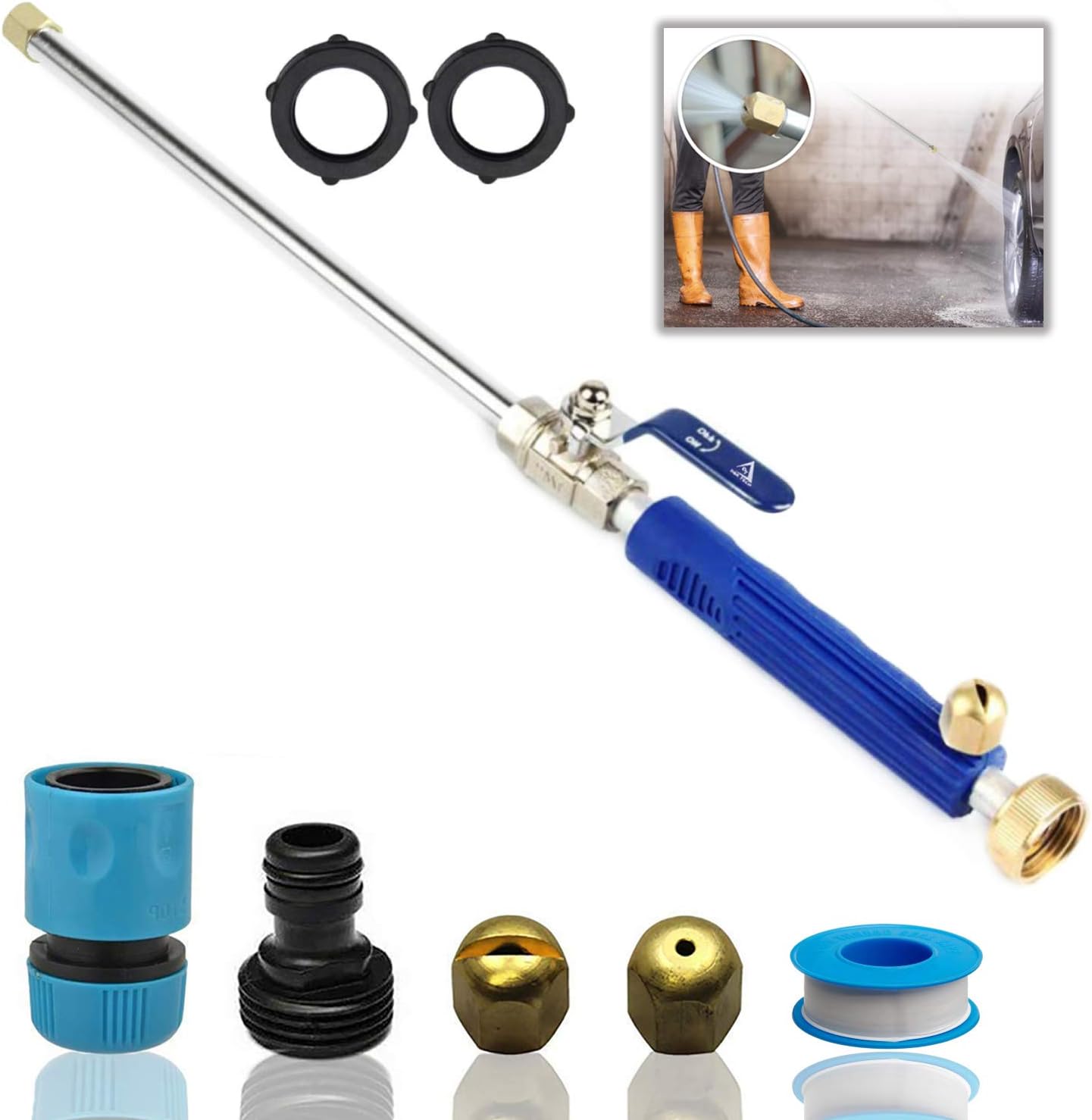
The wand upgrade: Hydro Jet High Pressure Power Washer Wand for Car Washing or Garden Cleaning, Heavy Duty Metal Watering Sprayer with Universal Hose End, Hydrojet Water Power Nozzle, Fan and Jet Stream
 Visit on Amazon →
This is the wand I keep on the truck for the jobs that do not need a pressure washer at all. It is a metal-bodied hand wand with a universal hose end, and the tip twists between a fan and a jet stream. Think of it as a controlled nozzle rather than a pressure tool.
Where it earns its place: rinsing soap off a car after a wash, knocking dust off wheels and wheel wells, cleaning windows, siding, and gutters where a full pressure fan would peel paint or drive water into places it should not go, and watering the garden when the hose is already out. The fan setting is gentle enough for a clear coat. The jet setting is what you use on a fence panel or a set of steps.
Where it does not: stripping a driveway, blasting a deck clean, or pulling years of grime out of concrete. It runs on household water pressure, and it is honest about that. It is a rinsing and light cleaning tool.
The build is the part that matters. A metal body does not flex or crack the way the plastic wands that come in the box do, and the universal hose end means it works with the hose already on the side of your house.
Flaws but not dealbreakers: Your arm does the work and your patience sets the pace. If you expect pressure washer results, you will be disappointed. Buy it for what it is.
Anyone who washes a car by hand, keeps a garden, or wants a gentler tool for siding and windows should start here.
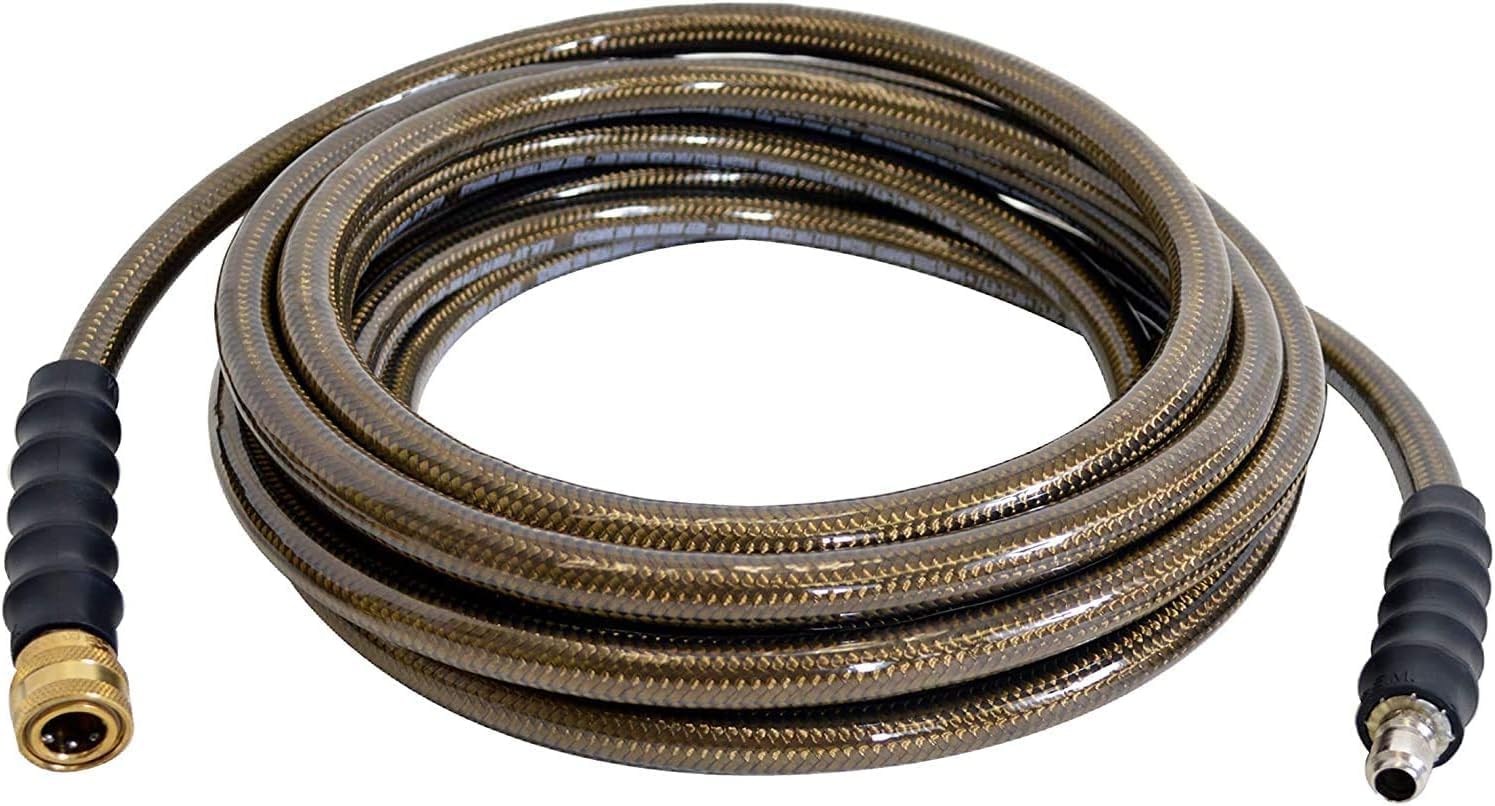
The hose upgrade: Simpson 50ft, 3/8" 4500 PSI Monster Cold Water Pressure Washer Hose, 41028
 Visit on Amazon →
If your stock hose is 20 or 25 feet, you spend half the job dragging the machine around the driveway. That is not a technique problem, it is a hose problem. This Simpson hose is 50 feet of 3/8 inch cold water line rated to 4500 PSI, which clears every gas machine I run and leaves headroom.
The 3/8 inch bore is the part most people skip over. A wider inside diameter moves more water to the nozzle, and flow is what cleans. A longer, fatter hose is also the difference between walking the machine around a two-car driveway and standing in one spot.
Match the ends to your machine before you order. Look at the outlet on your washer and the inlet on your wand or gun, then confirm the hose will connect to both. That check takes two minutes and saves a return.
Flaws but not dealbreakers: Fifty feet of hose is fifty feet to coil and carry. If you wash one car in a tight garage, this is more hose than you need. It is built for driveways, fences, and boats, where reach is the whole point.
Anyone with a gas machine, a long driveway, or a boat on a trailer should put this on the list before anything else.
The step-by-step setup
Here is the order I do it in. It works the same on an electric machine and a gas one.
Step one: Read your connections before you buy. Find the outlet on the machine and the inlet on your wand or gun. Note the thread and whether there is a quick connect on either end. Everything else in this guide depends on getting this right.
Step two: Kill the machine. Engine off or unplugged, water off, trigger locked. You are about to work on a line that holds pressure. Do not skip this because you are in a hurry.
Step three: Disconnect and drain the old hose. Unthread it from the machine and the gun or wand, then tip it to drain. Water will come out. Do it on the grass, not on the driveway you just cleaned.
Step four: Inspect the o-rings. Every connection has one, and a worn or missing o-ring is the number one cause of a leak at the fitting. If it is flattened or nicked, replace it. They cost almost nothing and they solve most drips.
Step five: Connect the new hose to the machine first. Thread it hand tight, then snug it. Do not gorilla it. Overtightening crushes the o-ring and creates the leak you were trying to avoid.
Step six: Flush the line before you attach the wand. Point the open end at the grass, turn the water on, and let it run for a few seconds. Any debris or grit sitting in a new hose gets pushed out before it reaches your nozzle. This is also how you push air out of the line.
Step seven: Attach the wand and bleed it. Connect the wand, then squeeze the trigger with the machine still off and the water on. You will hear the air sputter out. Keep going until the stream is steady. Air in the line is what makes a wand chatter and spray unevenly.
Step eight: Pick your stream and test on a safe surface. With the Hydro Jet wand, start on the fan setting and twist toward the jet only after you have tested on a spot you do not care about. With any pressure washer gun, start with the widest nozzle you have. You can always go narrower. You cannot unpeel paint.
Step nine: Work top to bottom, and rinse as you go. Gravity is your friend. Soap and dirt run down, and a rinse pass keeps them from drying on the surface.
Step ten: Coil it properly when you are done. Loop the hose in big, loose circles rather than wrapping it around your elbow. Tight wrapping is what trains a hose to kink. Store it out of direct sun and out of the path of the garage door.
When something goes wrong
Water drips at the fitting. O-ring, nine times out of ten. Pull the connection, look at the o-ring, replace it if it is flattened, and reconnect hand tight.
The wand sputters and sprays unevenly. Air in the line. Trigger it with the water on and the machine off until the stream runs steady.
The hose kinks when you pull it around a corner. Straighten the kink by hand before you pull, and change how you coil it when you put it away. A hose learns its shape.
The spray pattern is weak or lopsided. Check the nozzle and the inlet screen for grit. Flushing the line before you attach the wand prevents most of this.
Everything works but the job takes forever. That is usually flow, not pressure. Check the hose bore, check the nozzle, and check that nothing in the line is pinched.
What I left out of this guide
A surface cleaner, a foam cannon, and the gas versus electric argument all deserve their own articles, and they are not this one. This is about the wand and the hose, the two parts you touch on every single job.
If you are still choosing a machine, start there. If you already own one and the experience is frustrating, start here.
What this all costs
Both of these are accessories, and both cost a fraction of what a new machine runs. The wand is the cheapest upgrade on the rig and the one that gets used most often. The hose is the bigger spend, and it is the one that changes how a full driveway feels.
I am not going to quote prices because they move. Check current Amazon price on each listing and do the math against what you paid for the washer. If the accessory is a small fraction of the machine and it fixes the thing you complain about every weekend, it is not a close call.
That is the whole job. Match the fittings, flush the line, bleed the air, and coil it right. Your hands will notice the difference on the first pass.