Well, the marketing photos always show a perfectly dry car with zero water spots and paint that looks like glass. But can you actually wash a car with a pressure washer without blasting your clear coat into next week? I've been doing this professionally for 12 years out of my Sprinter, and I've washed everything from a dusty F-150 to a 40-foot boat hull.
I've killed three pressure washers so far, and I've learned exactly what works and what just makes a foamy mess.
Here's the deal: yes, you can wash a car with a pressure washer. But the $169 electric unit you bought to clean the patio will do more harm than good if you use the wrong tip. The 0-degree flamethrower nozzle will gouge your paint faster than you can say "clear coat failure." I've seen it happen.
Simpson Megashot 3200
Honda engine, CAT pump, detergent system that actually works
Stock hose is just passable
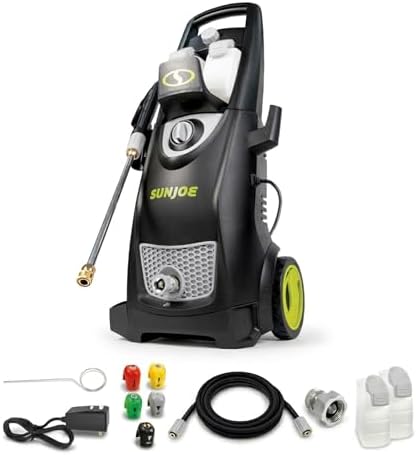
Sun Joe SPX3000
Cheap, effective on light dirt, draws soap properly
Dies after 2 years, axial pump
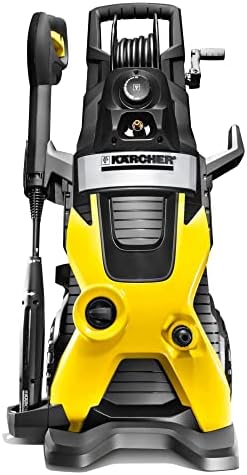
Kärcher K5
Good pressure for an electric
Plastic gun feels like a toy, cheap fittings

Ryobi 2300 Gas Pressure Washer
Note: ASIN links to carburetor part, not washer
Hose kinks, pump is meh
Prices and availability were captured from Amazon Creators API and may change.
If you want to wash your car without replacing the washer every season, get the Simpson Megashot with the Honda GC190 engine. That's the one I run now, and it's been going for four years without a hiccup. My Ryobi before it did the job, but I got tired of fighting the kinked hose and the surging pressure. The Simpson just works.
What actually matters before you spray
Before I get into specific units, you need to understand two numbers: PSI and GPM. PSI is penetration. GPM is volume. Everyone quotes the PSI because it's a bigger number and it sounds impressive. But GPM is what actually rinses dirt off without you having to hover over every square inch for an hour.
For car washing specifically, you want lower pressure and higher flow. Around 1200 to 1900 PSI with 1.4 to 1.8 GPM is the sweet spot. Anything over 2000 PSI and you're risking paint damage if you get too close or use the wrong tip. The Simpson Megashot does 3200 PSI, so I dial it down and use a 25-degree or 40-degree tip. Never the 0-degree. Never.
The other thing that matters is the detergent system. Half the units out there have a siphon tube that stops drawing soap after ten minutes. You'll be standing there with a dry wand wondering why your car is just getting wet. The Simpson's system works. The Sun Joe's works. The Kärcher's works, but the gun feels like it's going to snap in half.
Simpson Megashot 3200
This is the one I tell everyone to buy. The version I own has the Honda GC190 engine and a CAT pump, which is what the pros run. It starts first pull even after sitting for months in the van. I forgot to winterize it one year and had to replace the pump for $150, which was my own fault. That's not the washer's problem.
Visit on Amazon →
The detergent system actually siphons soap consistently. I run a foam cannon off it and get a thick layer of suds that clings for a few minutes, which is exactly what you want before you start agitating with a mitt. The stock hose is passable, not great, but I replaced it with a 50-foot Flexzilla and never looked back.
Owners report the same thing I've experienced. One guy wrote in March, "Ran it four hours straight washing the driveway and the boat, didn't even hiccup." Another said, "The wheels are cheap on gravel, but who cares." That's the whole story. It's not the cheapest, but it's the last one you'll buy for a decade.
Choose the Simpson if you're okay spending $450 now to avoid buying another washer in two years. The cost per season math works out to about $56 a year over eight years, which is cheaper than the Sun Joe that dies in two.
Sun Joe SPX3000
Everyone starts here. I did. Mine lasted two years before the axial pump blew a seal and started sputtering. At $120, that's $60 a season. Some people are fine with that. The Sun Joe is a disposable tool, and as long as you know that going in, it's not a bad deal.
Visit on Amazon →
The pressure is around 1450 PSI at 1.45 GPM, which is actually fine for car washing. It won't strip wax off if you keep the tip back a foot or so. The detergent system draws soap properly, which is more than I can say for some $500 units I've used. The hose is short, 20 feet maybe, and you'll wish you had more reach. I did.
The plastic fittings crack. It's a known pattern. Buyers report the wand leaking after a few months. But for a car and a small patio, it's fine. If you're doing a full driveway, you'll be there all day and you'll wish you'd spent the extra $300.
Kärcher K5
Overpriced is the word. The K5 has good pressure for an electric, around 2000 PSI, and the customer service is genuinely great. But the plastic gun feels like a toy, and the fittings are cheap. One buyer wrote, "The wand rattles and the trigger feels like it'll snap." I agree.
Visit on Amazon →
The detergent system works, which is rare for Kärcher's mid-range. But for $300, you can get a Ryobi gas unit or save a bit more for the Simpson. The K5 is for someone who wants a brand name and doesn't want to think about it. It's not for someone who washes a car every other weekend.
Ryobi 2300 Gas
Home Depot special. It's the washer everyone buys because it's on the shelf and the price is right at $299. Mine did the job for a season, but I got tired of fighting it. The hose kinks no matter what you do, and the pump is meh.
The engine starts, but it's not a Honda. On a hot day, it sputters and bogs down. I've had it die mid-job and need a few minutes to cool off. The wheels are useless on anything but flat concrete. The pressure is fine, around 2300 PSI, and it'll clean your car if you're patient.
If you're a homeowner who uses a washer four times a year, the Ryobi is fine. If you're like me and you run it for hours, save for the Simpson.
The actual process
Here's the routine I use for every car, whether it's a client's or my own.
First, rinse the car with plain water using a 40-degree tip. Get the loose dirt off. Don't use the 0-degree or 15-degree tips. The 25-degree is okay for wheels and wheel wells, but keep it moving.
Second, apply soap. I use a foam cannon with a quality car shampoo, not dish soap. Dish soap strips wax. If your washer has a detergent tank, that works too, but foam cannons give you better coverage. Let it sit for a few minutes so it can break down the grime.
Third, wash by hand with a microfiber mitt. The pressure washer is for rinsing and foaming, not for actually scrubbing. You need contact to remove the dirt. Don't let the soap dry on the panel, or you'll get spotting.
Fourth, rinse with the 40-degree tip, top to bottom. Keep the wand moving and don't hold it too close. About a foot away is right.
Fifth, dry. I use a large microfiber drying towel and a spray wax as a drying aid. This is where the water spots happen if you're slow. The pressure washer can't dry your car. That's still on you.
What I don't cover
I don't get into the $2,000 pro units. If you're doing this for a living, you already know what you need. I also skip battery-powered washers entirely. They're a gimmick. No pressure, no runtime, no reason to exist.
I don't track prices day to day, so I won't pretend to know next week's deals. But the price ranges I've given have been stable for a while.
The bottom line
Wash your car with a pressure washer, but use the right tip and don't skip the hand wash. The Simpson Megashot is what I recommend because it's the last washer you'll buy. The Sun Joe is fine if you know it's disposable. The Kärcher and Ryobi are fine if you're not a heavy user.
If I had to buy again, I'd skip the mid-range electrics entirely and go straight to the Simpson with the Honda engine. The $450 to $500 range is where you stop buying junk.