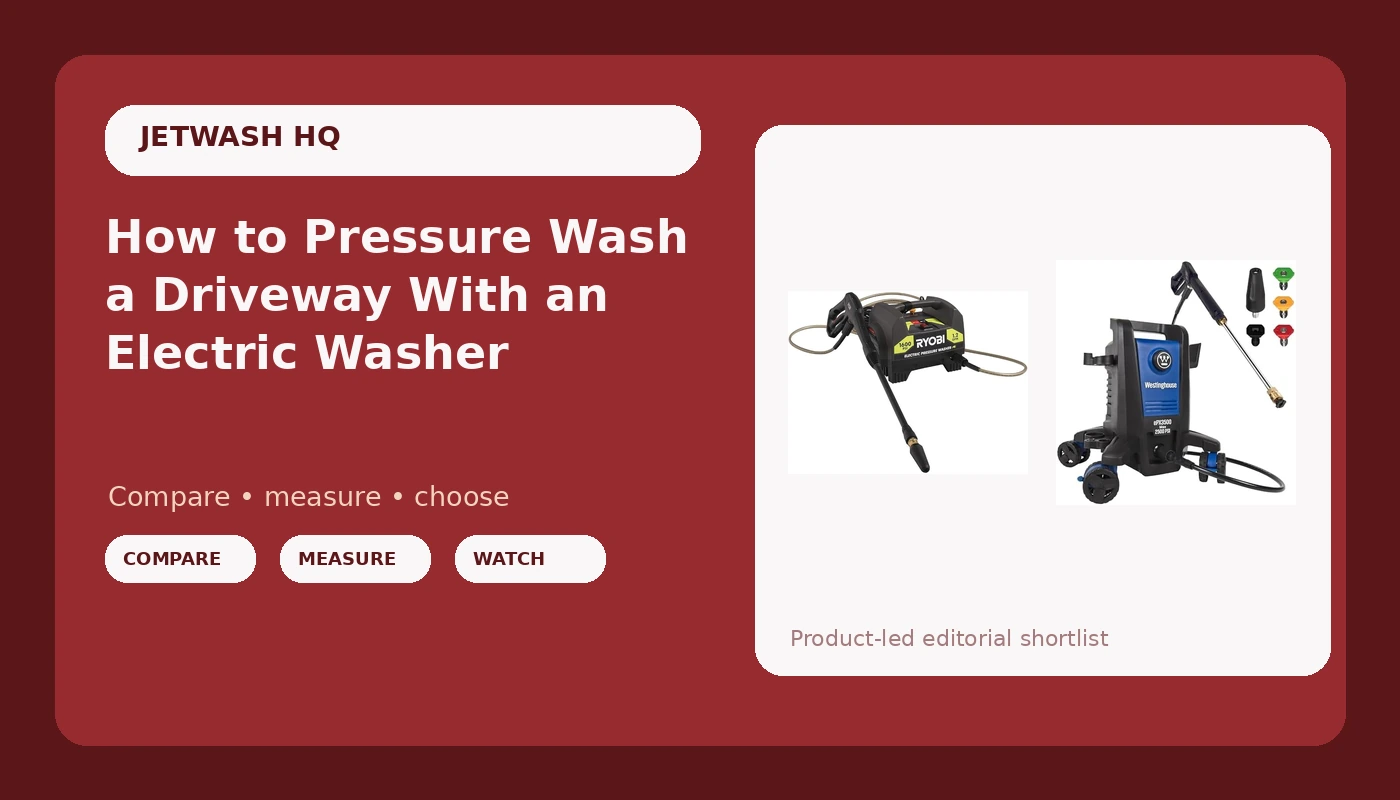
An electric pressure washer is the least glamorous tool in the garage and the one that saves you the most money. A 2,500 PSI machine and a 1,600 PSI machine can both leave a driveway looking new, and the difference between a good job and a bad one is almost never the number printed on the box.
I have been detailing cars in Tampa for 12 years, running a mobile business that handles everything from daily drivers to boats. In that time I have pressure washed more driveways, decks, fences, and hulls than I can count, and I have watched homeowners ruin a concrete slab with a machine they did not understand. The tool is not the problem. The technique is.
This is the workflow I use, plus the two electric machines I would tell a friend to buy, and the reasons I would skip everything else.
Why you should trust me
I am not a guy with a hose and an opinion. I run a mobile detailing business out of Tampa, which means every machine I own gets used on paying jobs, not on my own driveway once a season. I own three pressure washers: a small electric for light work, a gas unit for the serious jobs, and a cheap one I bought to review that died inside a month.
That dead machine taught me more than the good ones did. It had a big PSI number on the box and a flow rate so weak that the water barely carried grit off a wheel. I have been checking GPM before PSI ever since, and I have been judging every washer on the same four questions: what is the real flow, does it draw detergent properly, are the hose and wand worth keeping, and would I use it for a full driveway without cursing.
How I picked these two
This is not a list of every washer on the market. It is the short list I would hand to a homeowner who wants to wash a car, a patio, and a concrete driveway without buying a gas engine.
I kept both picks electric on purpose. Electric is fine for about 90% of people. It starts with a switch, it does not need oil changes or a carburetor cleaning every spring, and it will not wake the neighborhood at 7 a.m. Gas is for when you are washing a boat or a two-car driveway every week, and it comes with noise and maintenance you have to want.
The two machines below sit at different points on the power scale, and both clear the bar I care about: real flow, a detergent system that works, and a wand that does not feel like a toy.
Two electric machines worth your money
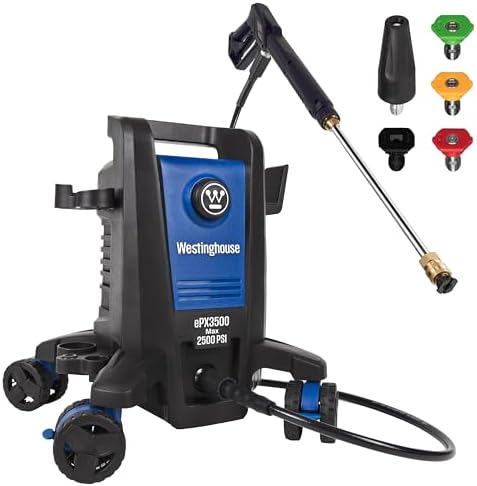
The do-most-things pick: Westinghouse ePX3500 Electric Pressure Washer
 Visit on Amazon →
This is the electric washer I would point most homeowners toward, and the reason is the flow rate, not the headline number. It runs 1.76 max GPM at 2500 max PSI, which puts it above the 1.5 GPM floor I refuse to go under. Flow is what actually carries dirt off a surface. Pressure is just how it feels against your hand.
The onboard soap tank matters more than people expect. A washer that cannot draw its own detergent is a hose with a trigger, and you end up spraying soap from a pump sprayer and racing the sun before it dries. Having the tank on the machine means you can lay down detergent, let it dwell, and rinse in one continuous pass.
The pro-style steel wand is the other thing I like here. Wands that flex and rattle make every job feel cheap, and a steel wand with a five-nozzle set gives you the range to go from a red tip on concrete to a wide fan on a car panel without hunting for adapters.
Flaws but not dealbreakers: It is still an electric machine, so it has a duty cycle and it will not out-run a gas unit on a two-hour job. It also needs a decent outlet. Do not run it off a long skinny extension cord and then complain about the motor.
Anyone with a concrete driveway, a fence, and a car to keep clean will get years out of this one.
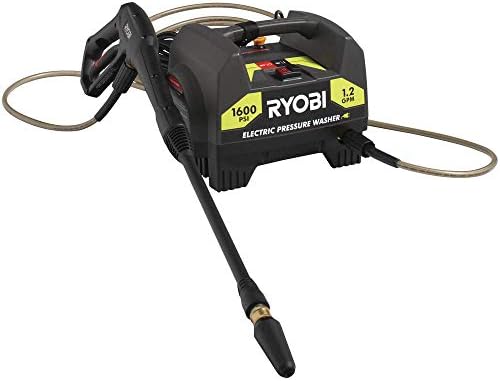
The light-duty pick: Ryobi 1,600-PSI 1.2-GPM Electric Pressure Washer (Model RY141612)
 Visit on Amazon →
This is the small-job machine. At 1,600 PSI and 1.2 GPM it is right at the edge of what I would recommend, and I am telling you that up front because the box will not. It will wash a car, rinse patio furniture, clean a set of garbage cans, and knock pollen off a porch. It will not strip a driveway in an afternoon, and that is honestly a feature if you are new to this.
Here is the case for it anyway. A 1.2 GPM machine is hard to hurt yourself with. You can hand it to a teenager to wash a car and not worry about them etching paint or blasting the clear coat off a bumper, because there is not enough flow behind the water to do serious damage fast. If you have never owned a pressure washer, that margin for error is worth something.
Flaws but not dealbreakers: The low flow rate means patience. On a big slab you will be moving slowly and watching your overlap, and you will spend real time waiting for the water to do its job. If your main goal is a driveway that looks new, jump to the Westinghouse instead. If your main goal is a clean car and a tidy patio, this one is plenty.
Anyone in an apartment, a townhome, or a first house with a small concrete pad and one car will be happy here.
Before you pull the trigger: setup that keeps you out of trouble
Most pressure washer injuries and most ruined surfaces come from setup, not technique. Get these right first.
Water before power. Connect the hose, turn the water on, and squeeze the trigger until water runs steady out of the wand before you flip the switch. Running an electric pump dry for even a short stretch is how you kill it.
Use a GFCI outlet. You are standing on wet concrete with a cord in your hand. Plug into a GFCI-protected outlet, and keep the connection up off the ground. If you must use an extension cord, use a short, heavy-gauge one and keep it out of puddles.
Never point the wand at a person or a pet. A 1,600 PSI stream at close range will break skin. Treat it like a cutting tool, because at the tip it is one.
Know your nozzle colors. Red is a zero-degree pencil stream for spot work on concrete only. Yellow is 15 degrees. Green is 25 degrees, which is your general-purpose cleaning tip. White is 40 degrees, which is what you use on cars and painted wood. Black is the soap tip. Using a red tip on a car panel is how you learn what a repair bill looks like.
The actual pressure washing workflow
This works on a driveway, a patio, a deck, or a car. The order matters more than the machine.
Step one: clear and pre-treat. Move the car, sweep the leaves, and pull the weeds out of the expansion joints. Then lay down your detergent with the black soap tip, working in sections you can finish before it dries. Detergent does the heavy lifting on organic stains. Water just rinses it away.
Step two: let it dwell. Give the soap five to ten minutes. Do not let it dry on the concrete. In Tampa heat, that means working in the shade or in the early morning, and it means not soaping the whole driveway and then starting at the far end.
Step three: start with the general tip. Switch to the green 25-degree tip and work in straight, overlapping strips. Keep the nozzle about 12 to 18 inches off the surface and move at a steady pace. If you are leaving zebra stripes, you are moving too fast and your overlap is too narrow.
Step four: chase the stubborn spots. Rust, oil, and tire marks get the yellow tip at a closer distance, but keep it moving. Holding a narrow tip in one spot is how you etch a permanent line into concrete that no amount of rinsing will fix.
Step five: rinse top down. Work from the highest point toward the street or the drain so you are not washing dirt back over what you just cleaned. On a fence or siding, always rinse downward. Spraying up under a board is how water gets behind the wall.
Step six: do the car last. By now the wand is wet and the driveway is clean, so switch to the white 40-degree tip and keep a good two feet of distance. Foam, dwell, rinse top down, and never get close to a wheel bearing or a seam with a narrow tip.
Step seven: shut down in the right order. Water off, then trigger the wand to bleed the pressure out of the line, then power off. Coil the hose without kinks and drain the soap tank.
Step eight: respect the duty cycle. If the motor starts sounding different, stop. Cheap electrics overheat and the pump seals pay for it. Ten minutes of downtime costs you less than a replacement unit.
Nozzles, soap, and the mistakes that cost you a weekend
The nozzle is the machine. A cheap washer with the right tip beats an expensive washer with the wrong one, and I mean that literally. If you take nothing else from this, take that.
The other upgrade that changes everything is a surface cleaner, the spinning bar attachment that cleans flat concrete evenly in wide passes. It is the single best add-on you can buy for a driveway, and it turns a mediocre washer into a professional-looking result.
The mistakes I see most often:
- Spraying a wood deck with a narrow tip. You will fuzz the grain and raise splinters. Use the widest tip you have and keep it moving.
- Using soap that dries on the surface. Dried detergent leaves a film that looks like a stain and does not rinse off. Work in shade or work small.
- Letting the hose kink. A kinked hose starves the pump, and a starved pump runs hot. Buy a hose that stays flat or learn to manage the loops.
- Skipping the pre-rinse on windows and screens. High pressure near a window seal will push water where you do not want it. Rinse glass from a distance or skip it.
- Assuming more pressure equals cleaner. It does not. It equals more damage potential.
What I left off this list
Gas machines are not on here, and that is deliberate. A gas washer has real advantages on flow and it will run all day, but it is loud, it is heavy, it needs fuel and oil, and it is overkill for the person washing one car and one patio. If you are doing boats every week or running a two-car driveway on a schedule, gas earns its keep. Otherwise you are buying maintenance.
I also left off the cheap electrics that advertise a big PSI number with a flow rate under 1.5 GPM. Those are the machines that make people think pressure washing does not work. It does. The washer just was not moving enough water.
And I left off the accessory kits that bundle a foam cannon, a brush, and three adapters you will never use. Buy the surface cleaner, buy a decent hose, and skip the rest.
What this all costs
Both machines here are in the same general range as a single professional driveway cleaning, which is the math that matters. Pay someone once, or buy the tool and own the result for years. Check current Amazon price on each and do that comparison yourself, because it changes.
Then add the two things that actually improve the job: a surface cleaner for flat concrete and a replacement hose if the stock one kinks on you. Neither is expensive next to the machine, and both do more for your results than upgrading the washer would.
Run the numbers per year and it stops being close. A washer you use twice a season for five years costs you less than two visits from a pro, and you still have the machine.
That is the job. Your driveway is not dirty, it is just waiting for enough flow and the right tip.