I have been detailing cars, boats, and driveways around Tampa for 12 years, and I have made every soap mistake there is. I have watched detergent sheet off a panel because the machine could not draw it, and I have scrubbed a hull by hand because an applicator clogged twenty minutes into the job. Getting a pressure washer soap and wash setup right is not glamorous work, but it is the difference between a car that looks detailed and a car that looks rinsed.
Related: PSI Vs GPM: Why Flow Rate Cleans And Pressure Just Feels Fast
The short answer: for most homes, the right pair is the Kärcher Pressure Washer K1900PSB Cube feeding the KÄRCHER Vehicle Wash and Wax, with the Greenworks High Pressure Soap Applicator handling soap delivery at the wand. If you wash a boat, a fence, or a full two-car driveway every week, the Simpson Water Blaster 4400 PSI Gas Pressure Washer is the machine that will keep up with you.
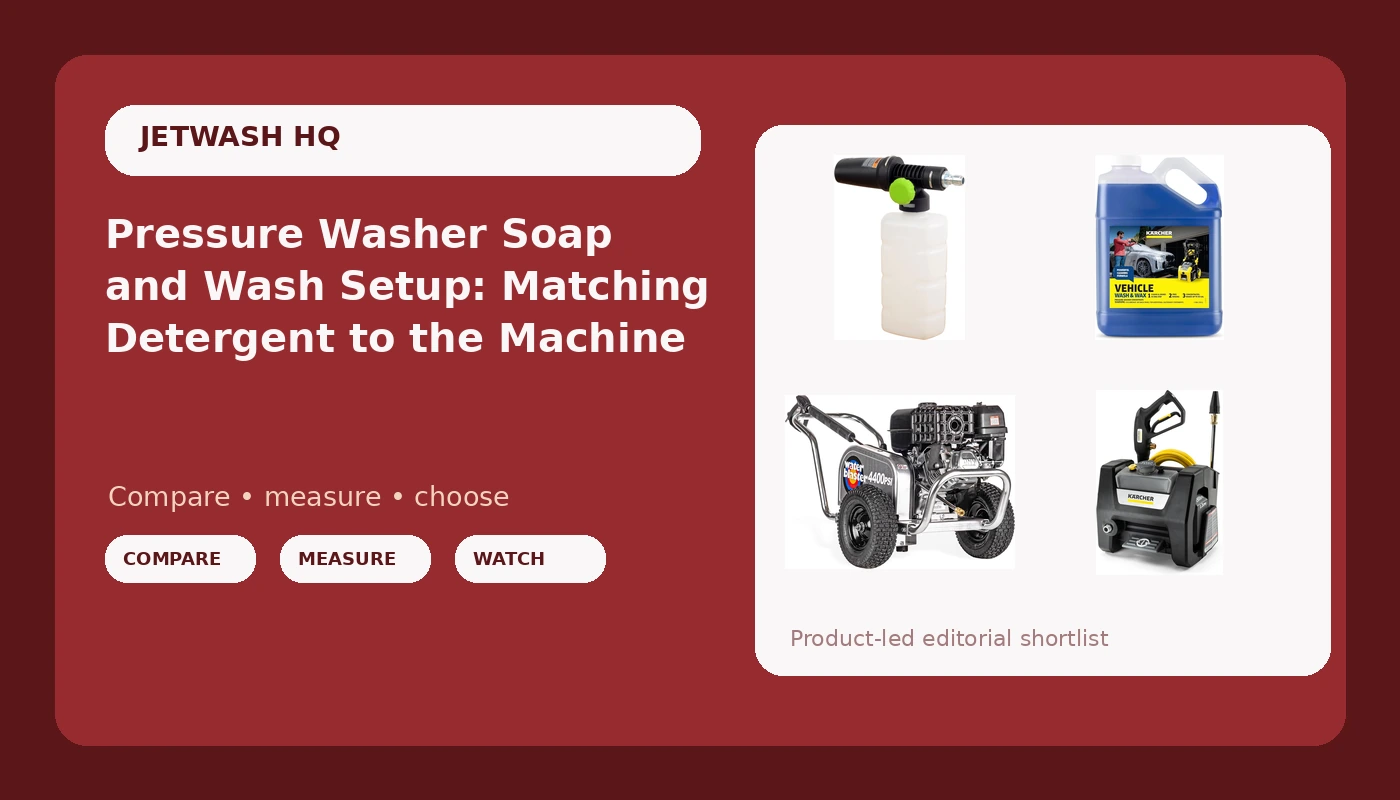
Greenworks High Pressure Soap Applicator Universal Pressure Washer Attachment
Cheapest way to turn a bare wand into a real detergent system, and it works on machines that have no onboard soap tank
Universal fit still means checking your connector, and the bottle is small for a full driveway
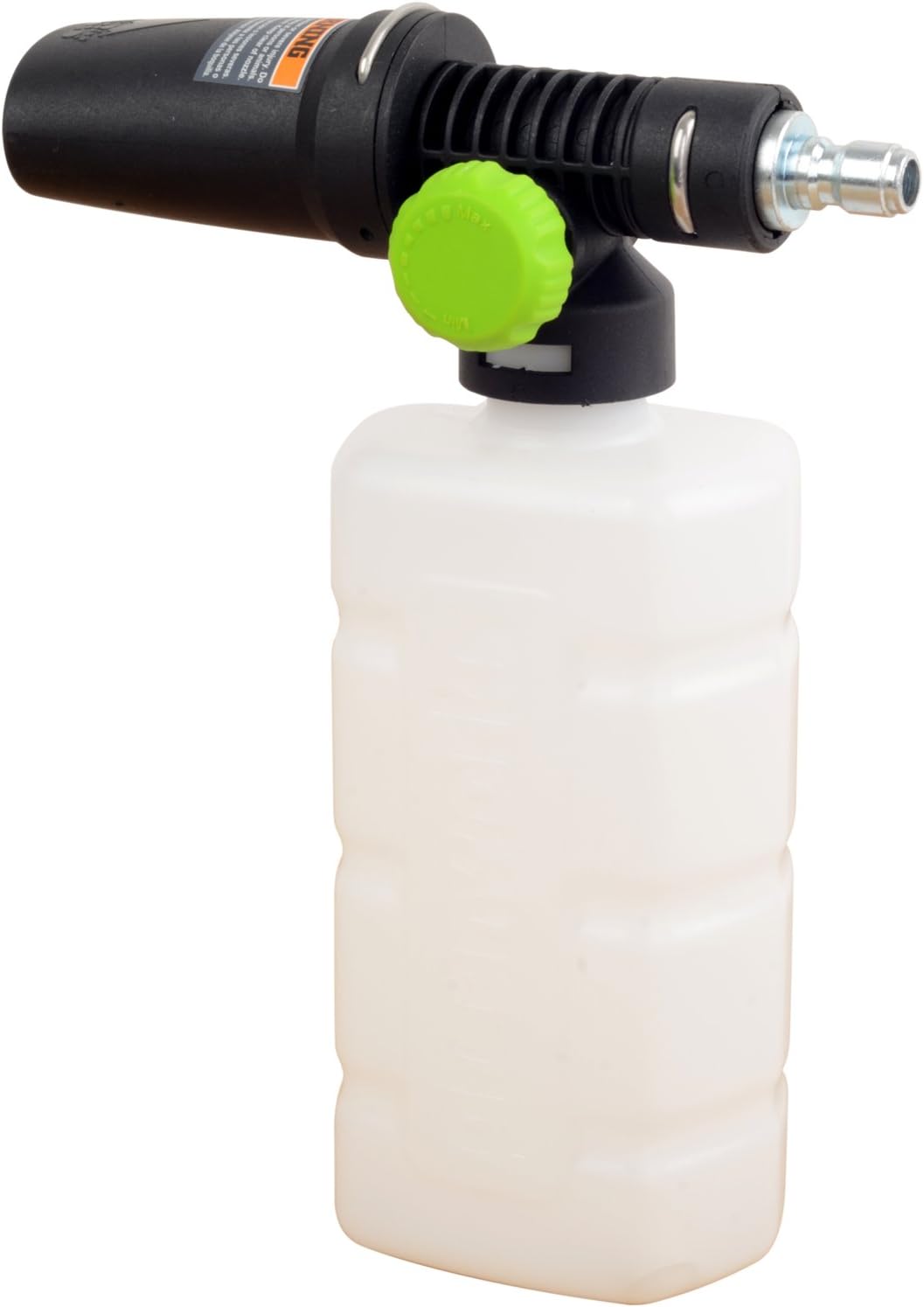
KÄRCHER Vehicle Wash and Wax, Pressure Washer Detergent
One bottle that washes and leaves wax behind, which saves a whole step on a daily driver
It is a maintenance product, not a degreaser, and it wants a machine that draws detergent evenly
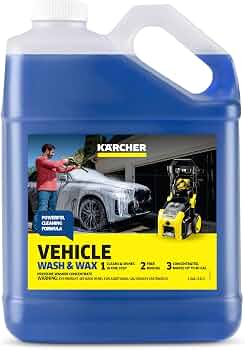
Simpson Water Blaster 4400 PSI Gas Pressure Washer, 4.0 GPM, CRX 420 Engine
Real flow at 4.0 GPM, so a hull or a driveway moves fast and the detergent rinses clean
Loud, heavy, needs fuel and maintenance, and it is far more machine than a sedan needs
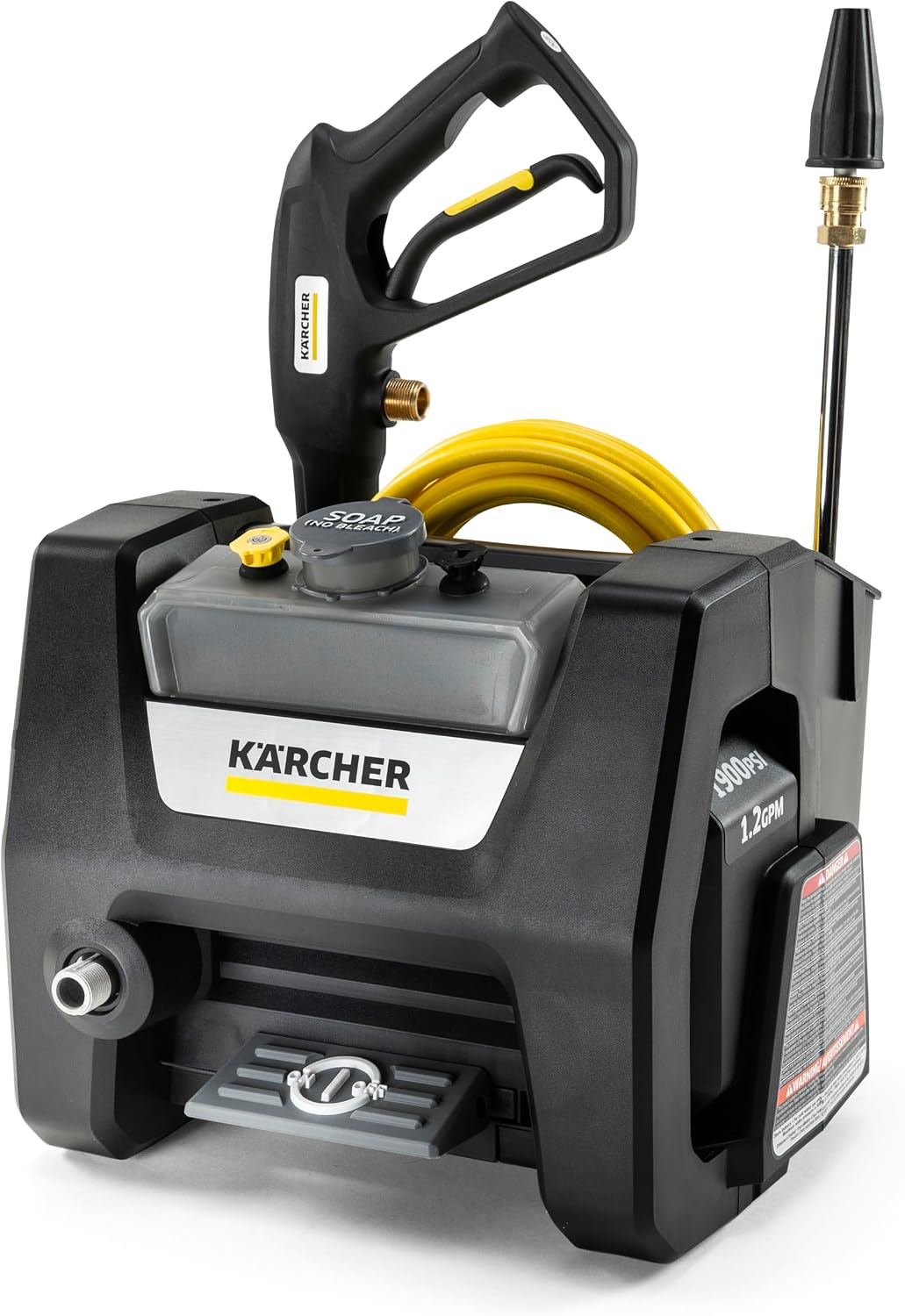
Kärcher Pressure Washer K1900PSB Cube, CETA Certified
Compact cube footprint, certified performance claims, and enough machine for cars, patios, and siding
Electric duty cycle and lower flow mean long jobs take patience
Prices and availability were captured from Amazon Creators API and may change.
What I look for before I trust a soap setup
Three things decide whether a washer and a detergent work together: flow, detergent draw, and the nozzle at the end of the wand.
Flow is gallons per minute, not the PSI number printed on the box in the biggest font. PSI is how the water feels on your hand. GPM is how much water is actually carrying dirt off the surface. A machine rated at 4.0 GPM like the Simpson Water Blaster moves twice the water of a typical homeowner electric unit, and that is why it rinses a hull in one pass while a weaker machine leaves a soap film you have to chase.
Detergent draw is the second thing. If a washer cannot pull soap from a bottle or tank on its own, it is a hose with a trigger, and you will spend the job dipping a brush into a bucket. Some machines have an onboard tank. Some have nothing, which is exactly why an inline applicator exists.
The nozzle is the third. Soap wants a wide, low-pressure fan, because high pressure atomizes detergent into mist that drifts away before it touches the panel. Rinsing wants a narrower tip with more bite. A setup that only includes one nozzle is a setup you will fight.
The applicator is the piece everyone skips
The Greenworks High Pressure Soap Applicator Universal Pressure Washer Attachment is the least expensive item in this comparison and the one that changes the most jobs. It clips between the wand and the nozzle, holds detergent in a bottle, and meters it into the stream so the soap arrives as foam instead of a dribble.
If you already own a washer with no soap tank, this is the upgrade. You fill the bottle, dial the mix, spray the panel, let it dwell for a minute, then swap to a rinse tip. That is a proper two-step wash instead of a pressure rinse with wishful thinking.
The honest limits: universal fit is not truly universal, so check the connector on your wand before you commit, and the bottle empties quickly on a full-size SUV. For a driveway or a boat, plan on refilling, or run a machine with an onboard tank and use this as a second soap line for wheels and lower panels. It is an attachment, not a chemistry set. Treat it that way and it earns its place in the bucket.
The detergent: KÄRCHER Vehicle Wash and Wax
Most people use dish soap in a pressure washer and then wonder why the trim goes chalky and the wax disappears. Dish soap is a degreaser, and it does not care what it takes off. The KÄRCHER Vehicle Wash and Wax, Pressure Washer Detergent is built for the job: it lifts road film and leaves a wax layer behind so the rinse water beads instead of pooling.
For a daily driver, that saves a step. Wash and dry, and the paint has protection without a separate hand-wax session. It is also mild enough to use on a regular basis without stripping everything you put on last month.
The catch is that it is a maintenance product. If your panels have months of baked-on grime, or your wheels are caked in brake dust, this is not the bottle that fixes it. Pre-treat the heavy stuff, then let the wash and wax do the finish work. It also performs best with a machine that draws detergent at a steady rate, which brings us back to the applicator and the pump behind it.
The electric machine: Kärcher Pressure Washer K1900PSB Cube
For a normal household, this is the sensible anchor of the setup. The Kärcher Pressure Washer K1900PSB Cube, CETA Certified is a compact cube unit, which matters more than people admit: it stores on a shelf, it rolls out without a second person, and it does not dominate the garage the way a gas machine does.
The CETA certification is worth more than a marketing sticker. It means the pressure and flow claims were verified against a standard rather than measured on a good day in a lab with the wind behind them. When a manufacturer hides a weak flow rate behind a big pressure number, certified testing is the antidote.
Electric is also the right answer for the majority of jobs: one car, a patio, a set of outdoor furniture, the siding on a small house. It starts every time, it is quiet enough to use on a Sunday morning without a neighbor complaint, and there is no fuel to stabilize or oil to change.
The trade-off is duty cycle and flow. Electric units want breaks on long jobs, and lower GPM means a big driveway takes patience. If your list is a car and a walkway, that is not a problem. If your list is a boat hull and a fence line, keep reading.
The gas machine: Simpson Water Blaster 4400 PSI Gas Pressure Washer
The Simpson Water Blaster 4400 PSI Gas Pressure Washer, 4.0 GPM, CRX 420 Engine is the serious tool in this group. The 4.0 GPM figure is the one I care about, because flow is what moves dirt and rinses detergent. Pair that with a surface cleaner attachment and a driveway stops being an afternoon and becomes a job you can finish before lunch.
The CRX 420 engine is the reason this machine exists in the lineup: gas engines run all day without the duty-cycle breaks that electric motors need, so you can wash a hull, a deck, and the driveway in one session without waiting for anything to cool.
What it costs you is everything else. It is loud, it is heavy, it wants fresh fuel and regular oil changes, and it will happily strip paint or etch concrete if you put the wrong tip on it. That is a safety feature and a hazard at the same time. It is also overkill for a sedan in a driveway. Buy it if you have recurring, large, dirty work. Rent it if you have one boat and one weekend.
Matching detergent to the machine
The pairing rules are simpler than the marketing suggests.
If your machine has an onboard detergent tank, use it and skip the inline bottle. If it does not, the Greenworks applicator is the fix, and you should test the draw rate with plain water before you commit a full bottle of soap.
Dilute according to the bottle, then dilute a little more if your applicator meters aggressively. Foam that runs off the panel in ten seconds is wasting product. Foam that clings for a minute is working.
Never let detergent sit in a tank or bottle between jobs. Soap residue is what clogs injection lines, and a clogged detergent system is the single most common reason a perfectly good washer stops drawing soap. Rinse the bottle and run clean water through the line after every session.
And match the product to the surface. Wash and wax on paint. A dedicated degreaser on engines and wheels. Nothing but water on wood you care about, because detergent plus pressure is how fence boards get fuzzy.
Who should buy which
If you wash one car and a patio, buy the Kärcher Pressure Washer K1900PSB Cube and the KÄRCHER Vehicle Wash and Wax, then add the Greenworks applicator if your wand has no soap path. That is a complete, sane setup for a normal house.
If you wash a boat, a long driveway, or a client's property on a schedule, the Simpson Water Blaster is the machine that will not slow you down, and the applicator becomes a backup soap line rather than the primary one.
If you already own a gas or electric washer and the only thing missing is soap, skip the machines entirely and buy the applicator and the detergent. That is the cheapest real improvement available, and it is the one most people should make first.
What I'm watching next
I keep a running list of the jobs that expose weak setups: a moldy fence that keeps coming back, a hull with heavy oxidation, a driveway with twenty years of oil. Those jobs sort machines quickly, and they are the reason I check flow rate before I check anything else on a spec sheet. The next round of testing is focused on surface cleaners and nozzle kits, because the attachment usually matters more than the badge on the housing.
For now, the setup above is the one I would hand to a neighbor: a certified electric cube for everyday work, a gas machine when the work is real, a detergent that does two jobs in one bottle, and an applicator that makes sure the soap actually reaches the surface.