Most people point a pressure washer at a car and land on one of two failures. They baby it from ten feet away with a fan tip and nothing comes off, or they lean in at six inches with a narrow tip and etch a permanent stripe into the clear coat. A pressure washer car wash is not complicated, but it has an order to it, and it has one rule that keeps you out of trouble: the nozzle does the damage, not the machine.
I have been detailing cars and boats around Tampa for twelve years, and I have watched more paint get ruined by a $90 electric washer than by anything else in a home garage. The machine was almost never the problem. The tip, the distance, and the soap were.
So here is the whole job, in the order I run it on a client car, with the two pieces of gear that actually change the outcome.
Why you should trust me
I run a mobile detailing business out of Tampa. That means driveways, decks, boat hulls, and a long line of daily drivers that had never seen a proper wash before I got to them. I own three pressure washers: an electric unit for light work, a gas unit for boats and big concrete jobs, and a cheap one I bought to see what the bottom of the market actually does. It died inside a month. Cheap lesson, permanently learned.
I do not recommend a washer without checking the flow rate, the detergent system, and the quality of the hose and wand. The PSI number on the box is a feeling. The flow rate is the work. If you take one thing out of this article, take that, because it is the difference between a machine that cleans and a machine that just gets things wet.
What you need before you start
You do not need a gas machine for a car. You need a machine that draws soap, a wide nozzle, and a soap that is built for paint. The short list:
- A pressure washer with a working detergent draw
- A wash and wax detergent made for pressure washers
- The widest nozzle you own, plus a soap tip
- Two buckets, one wash mitt, one wheel brush
- A drying towel or a blower
- Shade, or at least a cool panel
That last one matters more in Florida than anywhere. Soap and water on a hot hood in direct sun will dry before you can rinse it, and dried soap leaves spots that you will chase for a week.
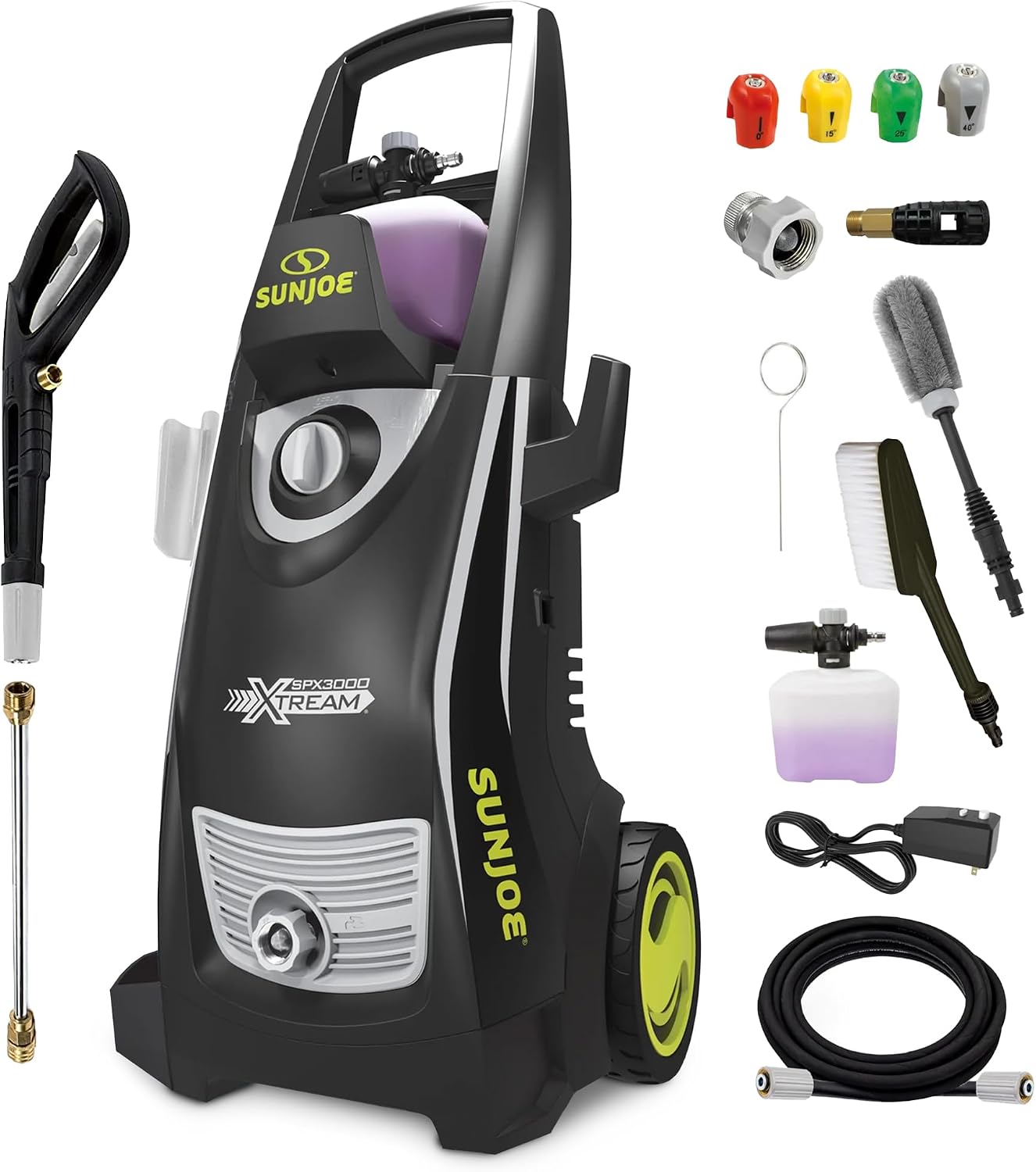
Our pick: Sun Joe XTREAM 2,200 PSI Pressure Washer, SPX3000-XT1
 Visit on Amazon →
This is the electric machine I point homeowners to when they ask what to buy for a car, a patio, and a fence. The XTREAM line carries a 2,200 PSI rating, and honestly that is the least interesting number on the box. What I care about is whether the machine holds steady flow while you are holding a wand for forty minutes, and whether the soap side actually pulls detergent instead of dribbling it.
For a car, an electric washer is the right answer for most people. It is lighter than a gas unit, it does not need an oil change or a carburetor cleaning in the spring, and it will strip road film off a daily driver without touching the clear coat. Gas earns its noise when you are washing a boat or a two-car driveway every week. One car a week is electric territory.
Flaws but not dealbreakers: The hose and wand that ship with any consumer electric are the weak link. If the hose in the box kinks every five feet, that is not a machine problem, that is a hose problem, and a replacement hose is the cheapest upgrade you will ever make. Budget for it and you will stop resenting the washer by the third wash.
Homeowners washing one or two vehicles, a patio, and some patio furniture will be happy here for years.
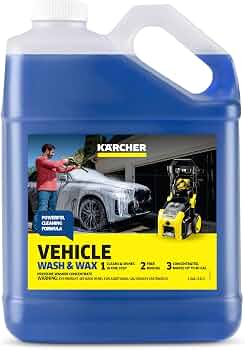
The detergent: KÄRCHER Vehicle Wash and Wax, Pressure Washer Detergent
 Visit on Amazon →
This is the soap that goes in the tank. It is a wash and wax concentrate built specifically to be drawn through a pressure washer detergent system, which means it is mixed to work at the dilution a soap nozzle actually delivers instead of the dilution you would get hand mixing dish soap in a bucket.
The wash and wax part is not marketing filler. A soap that leaves a little protection behind helps the rinse water sheet off the panel, and sheeting water is the difference between a fast dry and chasing water spots with a towel while the sun wins the race. On a maintenance wash, where the car is not filthy, this is the soap I reach for.
Flaws but not dealbreakers: This is a maintenance soap, not a stripper. It will not pull tar, heavy road film, or a winter of neglect off a panel. If the car has not been washed in six months, do a dedicated pre-treatment first and then come back to this for the finish.
Anyone doing a weekly or biweekly wash on a car that is already in decent shape will get exactly what they paid for.
The actual workflow
Now the part you came for. This works on any car with intact paint, and it works with any pressure washer that can draw soap. If your washer cannot draw soap, it is a hose with a trigger and you should fix that first.
Step one: Set the machine up and pick the nozzle. Fill the detergent tank with the wash and wax soap. Fit the widest tip you have, usually the white 40 degree nozzle. The narrower tips, the ones in the 25 and 15 degree range, are for concrete and wheel wells. The red zero degree tip should stay in the box. It is a paint removal tool that happens to look like a nozzle.
Step two: Wheels and tires first, with separate tools. Wheels are the dirtiest part of the car and the part you least want to contaminate your wash mitt with. Hit them with a dedicated brush and a bucket you do not use on paint. Work one wheel at a time, rinse the brush between wheels, and keep the wand moving. This is the one place a narrower tip is useful, because brake dust is stubborn and wheel clear coat is tougher than body paint.
Step three: Pre-rinse from the top down. Start at the roof and work down, keeping the tip at least a foot off the surface. The goal here is to knock off loose dirt and to get the whole car wet so the soap does not dry on contact. Do not linger in one spot. A pressure washer held still on one panel is a pressure washer etching that panel.
Step four: Soap it, bottom to top. Switch to the soap tip and lay detergent on from the rocker panels upward. Working up means the soap that runs down lands on panels that are already coated instead of on dry paint. Let it dwell for a minute, no more. If the soap starts to dry, you waited too long, and dried soap is how you get streaks that need polishing.
Step five: Agitate with the mitt, top down. One panel at a time, straight lines, rinse the mitt in your clean bucket between panels. This is the step that actually removes the film. The pressure washer loosened it, the soap lifted it, the mitt takes it off the paint. Skipping the mitt and relying on pressure alone is how people scratch cars and then blame the washer.
Step six: Rinse from the top down, wide tip, no dwelling. Take the soap off before it dries. Start high and let the water carry the soap down and off. Pay attention to the places soap hides: mirror housings, door handles, the gap between the hood and the fender, the front bumper seams.
Step seven: Dry it properly. A blower is the best tool here because nothing touches the paint. If you are using towels, use a plush drying towel and lay it flat instead of dragging it. Work top down, and get the door jambs and the trunk channel, because that is where water sits and leaves mineral spots.
Step eight: Glass, trim, and a walk-around. Glass last, with a separate towel, because your wash towel has wax and dirt in it. Then walk the car in good light and look for anything you missed. The walk-around is where you catch the soap streak before it becomes a polish job.
Mistakes that cost you a clear coat
The damage almost always comes from one of these, and all of them are avoidable.
Point-blank work. Even a wide tip at two inches will lift paint on a chip or a peeling edge. A foot of distance costs you nothing in cleaning power and saves your clear coat.
The zero degree tip on paint. There is no good reason to use it on a car body. Not one.
Letting soap dry. In the sun, this happens in under two minutes on a dark panel. If you cannot keep up, wash the car in two halves, or move it into the shade.
Dish soap and degreasers. Dish soap strips wax and leaves paint unprotected. Degreasers are for engines and wheel wells, not for a hood. This is what the wash and wax detergent is for.
Blasting the wrong parts directly. Badges, pinstripes, vinyl decals, cracked paint, and peeling clear coat all come off under pressure. So do the seals around older windows and convertible tops. Keep the wand back and let the soap do the work on those areas.
A kinking hose and a toy wand. This is not a paint risk, it is a quality-of-life issue, and it is the reason people stop using their pressure washer. A hose that kinks every five feet and a wand that flexes like a straw will make you hate a machine that is working perfectly.
How long it takes and what it saves you
A maintenance wash on a sedan, done in this order, runs about thirty to forty-five minutes once you have the routine down. A first wash on a neglected car takes longer because you are doing the pre-treatment and the wheels are a job of their own.
Compare that to a drive-through, where you spend twenty minutes in line and drive out with swirl marks from the brushes. Or to a pro detail, which is worth every dollar once or twice a year but is not a weekly habit for most people.
The math that matters here is not the sticker on the washer. It is that the machine plus a bottle of the right soap turns a Saturday afternoon into a car that looks like it just came off a lot, and it does it without adding a single swirl mark. That is the whole point of doing it yourself.
Questions I get on every job
Can I use my gas washer on a car? Yes, with a wide tip and a light hand. Gas machines move more water, which is good, and they are louder, which does not matter to the paint. The nozzle rule is the same.
Do I need a foam cannon? It helps, it is not required. A detergent tank and a soap tip will get you a clean car. A foam cannon gets you more dwell time and a nicer look while you work.
What about the engine bay? Different job, different soap, and you keep the wand moving and away from the fuse box and the intake. Do not use your wash and wax detergent in there.
How often should I wash? Every two weeks for a car that lives outside, and a rinse in between if you park under trees. The more often you wash, the less work each wash is, because you never let the film build up.
That is the job. Wide tip, real soap, keep it moving, dry it properly. Your paint will outlast the machine.