Related: Gas vs Electric Pressure Washers: Which One Fits Your Driveway
A pressure washer setup is not one purchase. It is a machine, a nozzle, a hose, and a way of pulling soap out of a bottle, and the weakest link sets the ceiling for the whole job. I have run a mobile detailing business in Tampa for twelve years, washing daily drivers, boats, driveways, decks, and a client's moldy fence that keeps coming back no matter what I throw at it. The lesson is the same every time: the biggest number on the box is the least useful thing about the tool.
PSI sells machines. GPM cleans with them. A unit rated at 3,200 PSI with weak flow spends more time spraying than cleaning, and your shoulder pays the difference. Flow rate is the work, pressure is the feeling. Everything else in a pressure washer setup, the nozzle, the hose, the wand, the detergent draw, decides whether that flow lands where you want it or just moves dirt in a circle.
These four pieces are the setup I would build first: an electric machine that handles most homes, a gas machine for heavy weekly work, a hose that does not fight you, and the foam cannon that turns a car wash into a two-minute pre-soak.
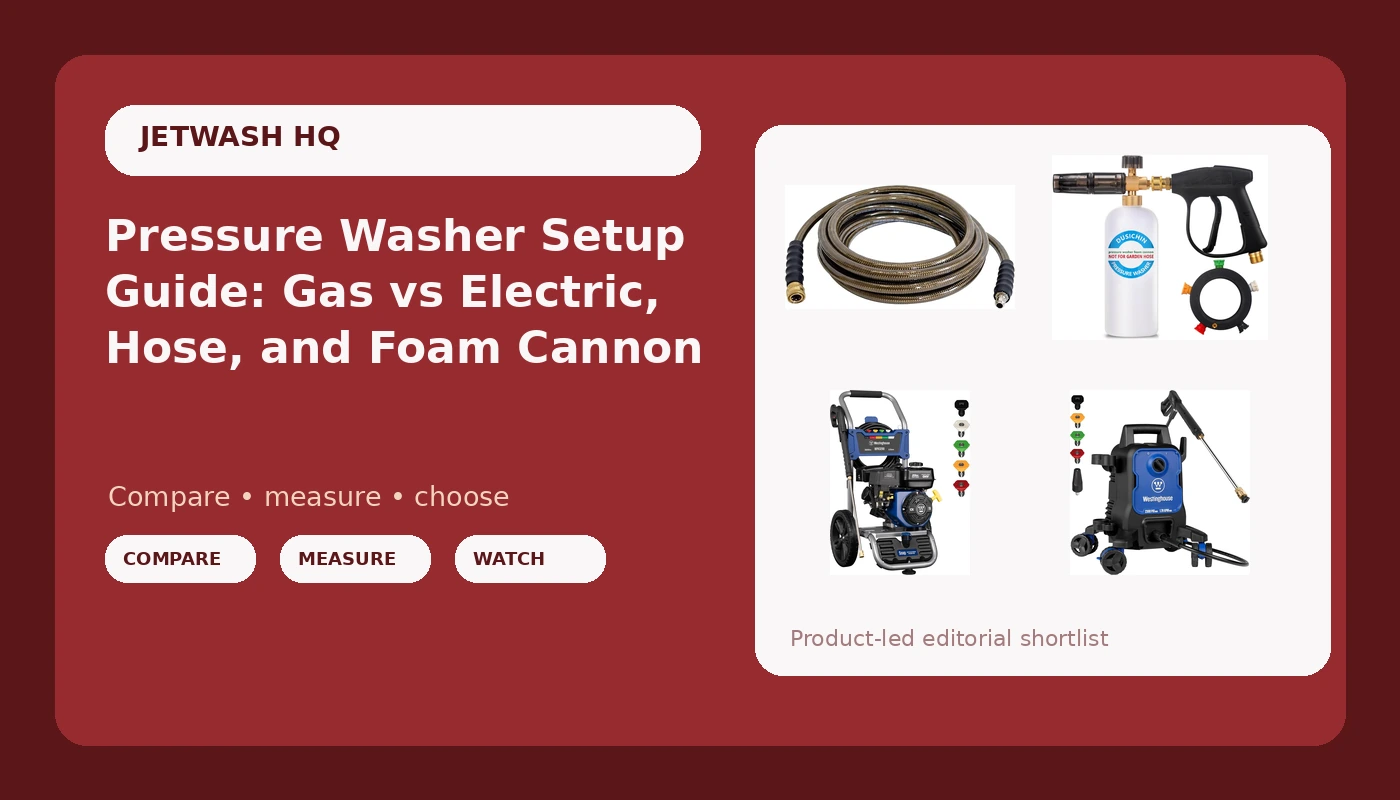
Best Overall for Most Homes: Westinghouse ePX3100 Electric Pressure Washer
If you wash a car, a patio, some outdoor furniture, and the front walk a few times a month, this is the class of machine you want. Electric means no gas can in the trunk, no oil change, no pull cord, and no exhaust in a closed garage. The number that matters here is the flow: 1.76 max GPM paired with 2300 max PSI. That combination is honest for the work most people actually do, and it is the reason I tell homeowners to stop shopping by the PSI figure alone.
The anti-tipping design is the feature I did not know I wanted until I watched a cheap machine get dragged off a curb by its own hose. When the wand is pulling and the hose is tight, a top-heavy washer wants to go over. This one is built not to, which saves you a cracked housing and a bad afternoon.
The onboard soap tank matters more than the spec sheet suggests. A machine that cannot draw its own detergent is a hose with a trigger, and you end up back at the bucket and mitt. Soap on board means you can lay down a layer, let it dwell, and rinse it in one pass instead of running to the bottle every panel.
Then there is the hardware: a pro-style steel wand and a five-nozzle set. A wand that feels like a toy is a daily annoyance, and nozzle choice is how you control pressure at the tip instead of guessing. The white tip for paint, a wider angle for siding, a narrow tip for concrete. Five tips covers all of it.
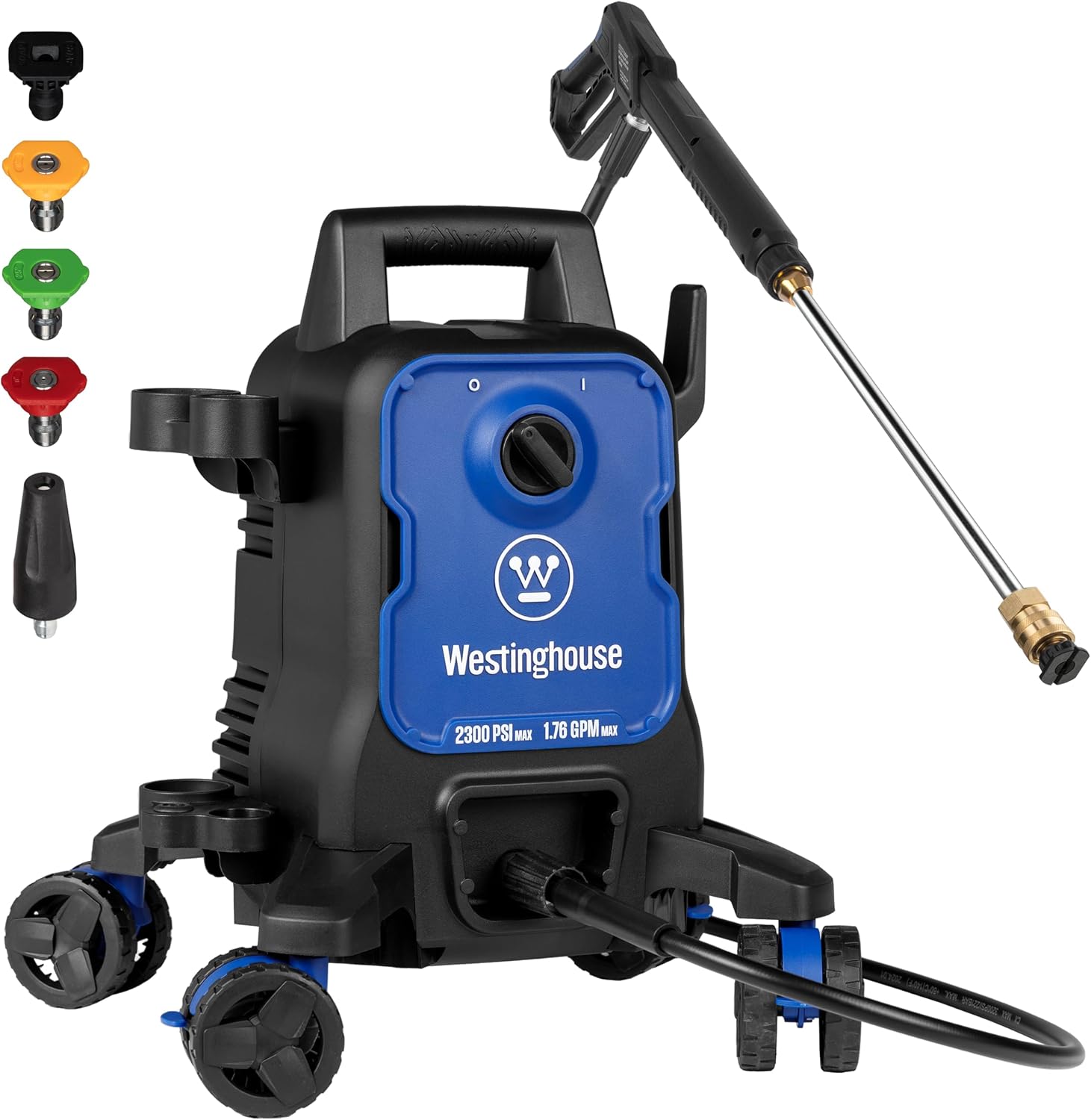
Best for the Heavy Jobs: Westinghouse WPX3200 Gas Pressure Washer
Gas is for the person washing a boat, a two-car driveway, or a long fence line on a schedule. This one is rated 3200 PSI and 2.5 GPM, and the 2.5 GPM is the part that does the work. More flow means the water carries grit off the surface instead of just wetting it, and it means fewer passes to cover a driveway.
It comes with an onboard soap tank, a spray gun and wand, and a five-nozzle set, the same supporting cast as the electric machine. Gas has real advantages: duty cycle, because you can run it for hours without waiting on a motor to cool, and flow, which is the actual cleaning power. It also has real costs. It is loud, it is heavy, it needs fuel and oil, and it wants a little maintenance attention you will not think about until spring.
My honest read: gas earns its place when you have a repeating heavy job. If you wash your own car and patio six times a year, the electric machine will handle it without the noise, and you will not miss the extra flow.
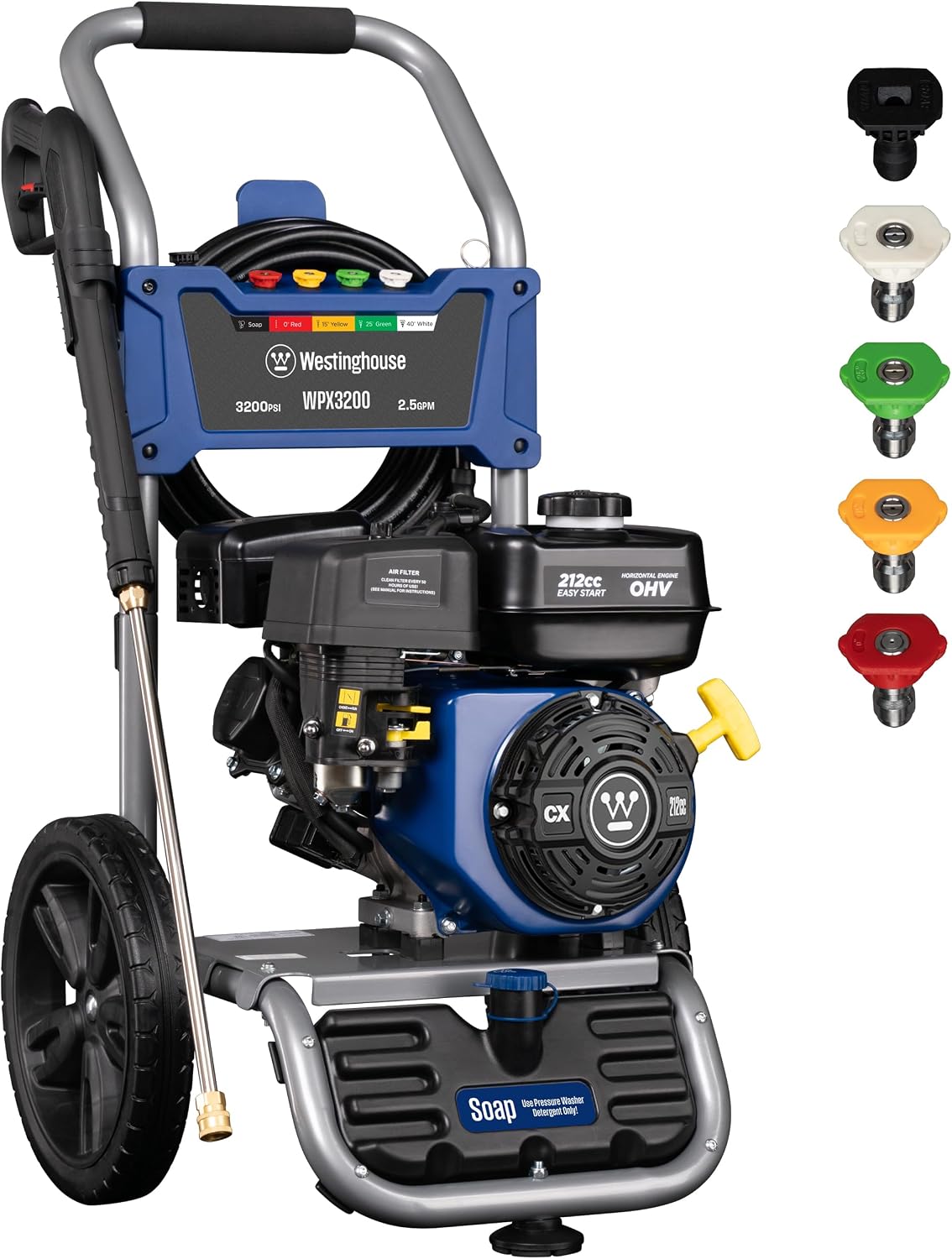
The Hose Nobody Thinks About: Simpson Monster 50 ft
Hose quality decides how much you enjoy owning a pressure washer more than any other accessory. A stiff hose that kinks every five feet turns a twenty-minute job into a fight, and every kink is a pressure drop and a stutter at the wand. This is the part people replace last and should replace first.
This one is 50 feet of 3/8 inch cold water hose rated to 4500 PSI. The length is the practical win: 50 feet lets you walk the perimeter of a driveway or circle a vehicle without dragging the machine behind you, which is also how machines get tipped over. The 3/8 inch bore keeps flow moving, and the pressure rating means it will not be the bottleneck on a gas unit.
It is cold water only, which is fine for car washing, siding, concrete, and decks. Hot water setups are a different conversation and a different price bracket.
The Cheapest Real Upgrade: DUSICHIN Foam Cannon Lance
A foam cannon is the best money you can spend on car washing after the machine itself. Instead of chasing soap around a panel with a mitt, you lay a thick layer of foam over the whole vehicle, let it dwell, and rinse the loose dirt off before you ever touch the paint. That dwell time is what protects the finish: the less grit you drag across the clear coat, the less you have to polish later.
This one is a lance, nozzle tip, and spray gun setup rated to 3000 PSI, which covers the electric machine in this guide and most gas units at the wand. Fill the bottle with soap and water, dial in the ratio, and you get a pre-soak that turns a two-bucket wash into a faster, safer job. On a boat hull or a weathered fence, the same cannon cuts the scrubbing in half.
One caution: a foam cannon needs flow and pressure to foam properly, which is another reason the GPM number matters. Weak flow gives you watery soap, not foam, and you will blame the cannon for a problem that lives in the machine.
How I Evaluate a Pressure Washer Setup
Four questions decide it for me, and none of them is the PSI number printed on the front of the box.
What is the real flow rate? GPM tells you how much water is doing the work. Anything under 1.5 GPM means you are waiting on the water instead of cleaning with it.
Does it draw detergent on its own? An onboard soap tank or a working injection system means you can pre-soak, dwell, and rinse. A machine that cannot draw soap is a hose with a trigger.
Are the hose and wand worth keeping? If you have to replace both in month one, the price was never the price. A kinking hose and a plastic wand cost more in patience than the upgrade costs in dollars.
Would I use it for a full driveway without cursing? That is the real test. If a job makes you dread the next one, the machine is wrong for you, no matter what the box claims.
Analysis: PSI, GPM, and Where the Money Goes
PSI marketing hides weak flow. When you compare two machines, read the GPM first, then the PSI, then the accessories in the box. A 2.5 GPM gas unit moves more water in one pass than a 1.4 GPM electric unit, and that difference shows up on a driveway long before the pressure rating does. If a listing leads with a huge PSI number and buries the flow, treat that as a warning, not a selling point.
Nozzle choice is the cheapest performance upgrade there is. The same machine with a white tip cleans a car panel safely, and with a narrow tip it strips grime off concrete. Getting the nozzle right is free. Getting it wrong is how paint gets damaged and how people decide they hate pressure washing.
Detergent systems clog when they are neglected. Rinse the tank and run clean water through the pickup after every soap job, and the system will keep drawing for years. Skip that step and you get a tank full of gel and a machine that suddenly cannot foam.
Spend in this order: the machine that fits your actual jobs, then the hose, then the nozzle or cannon. The machine sets your ceiling. The hose decides whether you enjoy using it. The cannon decides how much you scrub.
The Pressure Washer Setup Reference Table
This is the same table I keep in my head when I put a kit together. Match the piece to the job, not to the biggest number on the box.
| Setup piece | What it decides | Specs on the record | Where it fits |
|---|---|---|---|
 Visit on Amazon → Visit on Amazon →Westinghouse ePX3100 Electric Pressure Washer |
Daily cleaning and car washing | 2300 max PSI, 1.76 max GPM, onboard soap tank, five-nozzle set | Most homes and garages |
 Visit on Amazon → Visit on Amazon →Westinghouse WPX3200 Gas Pressure Washer |
Flow for heavy, repeated jobs | 3200 PSI, 2.5 GPM, onboard soap tank, spray gun and wand | Boats, long driveways, fences |
 Visit on Amazon → Visit on Amazon →Simpson Monster 50 ft Hose |
How the machine feels to use | 50 ft, 3/8 inch, 4500 PSI rated, cold water | Replacing a kinking stock hose |
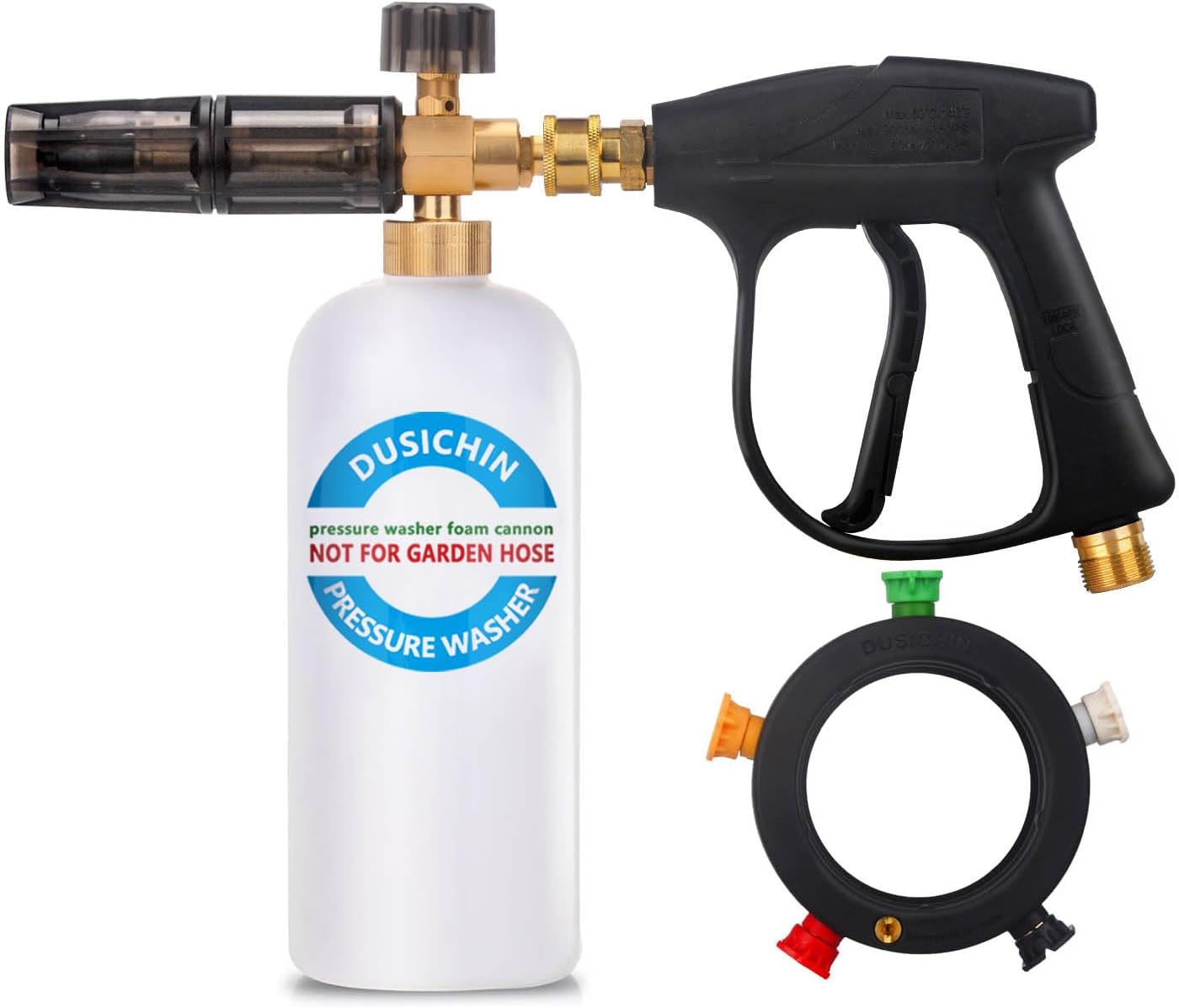 Visit on Amazon → Visit on Amazon →DUSICHIN Foam Cannon Lance |
Pre-soak and dwell time | 3000 PSI rated, lance, nozzle tip, spray gun | Car paint, boats, fences |
| Nozzle choice | Pressure at the tip | White tip for paint, wider angle for siding | Free adjustment, big result |
| Detergent dwell | How much scrubbing you skip | Foam on, wait, rinse before touching | Saves clear coat |
| Hose routing | Whether the machine tips over | Move the machine, not the hose | Prevents the drag-and-tip |
Accessories first, or machine first?
Machine first, always. A great hose on a washer with weak flow still leaves you waiting. But the gap between a stock hose and a 50 foot replacement is wide enough that most people should plan to buy both in the same season, and the foam cannon is a small add that changes how car washing feels.
Gas or electric, in one line
Electric for cars, patios, siding, and furniture. Gas for boats, long concrete runs, and anything you do every week.
Should You Buy the Westinghouse ePX3100?
Yes, for most homes. It is rated 2300 max PSI at 1.76 max GPM, which is honest flow for car washing and patio work, and the anti-tipping design keeps it upright when the hose goes taut. The onboard soap tank means it draws its own detergent, the pro-style steel wand is not a toy, and the five-nozzle set lets you match pressure to surface without buying anything extra.
If you are washing a boat hull every weekend or stripping a long driveway, step up to gas. If you want a machine that starts every time without fuel and oil, this is the one. Check current Amazon price and put the savings toward the hose.
Should You Buy the Westinghouse WPX3200?
Yes, if you have a repeating heavy job. It is rated 3200 PSI and 2.5 GPM, and that flow is what moves dirt off concrete and hulls instead of just wetting them. The onboard soap tank, spray gun and wand, and five-nozzle set give you a complete kit out of the box, and the duty cycle lets you work for hours without waiting on a motor to cool.
It is loud, it is heavy, and it needs fuel and oil. If that tradeoff sounds fine for a boat or a two-car driveway every week, it is the right machine. Check current Amazon price and budget for the hose at the same time.
Should You Buy the Simpson Hose and the DUSICHIN Foam Cannon?
The hose, yes, if your stock hose kinks. Fifty feet of 3/8 inch cold water hose rated to 4500 PSI will outlast the machine it is attached to and stop the tipping problem at the same time. The foam cannon, yes, if you care about your paint or you are tired of scrubbing. It is rated to 3000 PSI, it pre-soaks a whole vehicle in one pass, and the dwell time it buys you is the difference between washing a car and grinding dirt into it.
Neither one is glamorous. Both are the reason a mid-priced setup feels like a professional tool. Check current Amazon price on each and buy them in the order you will use them.