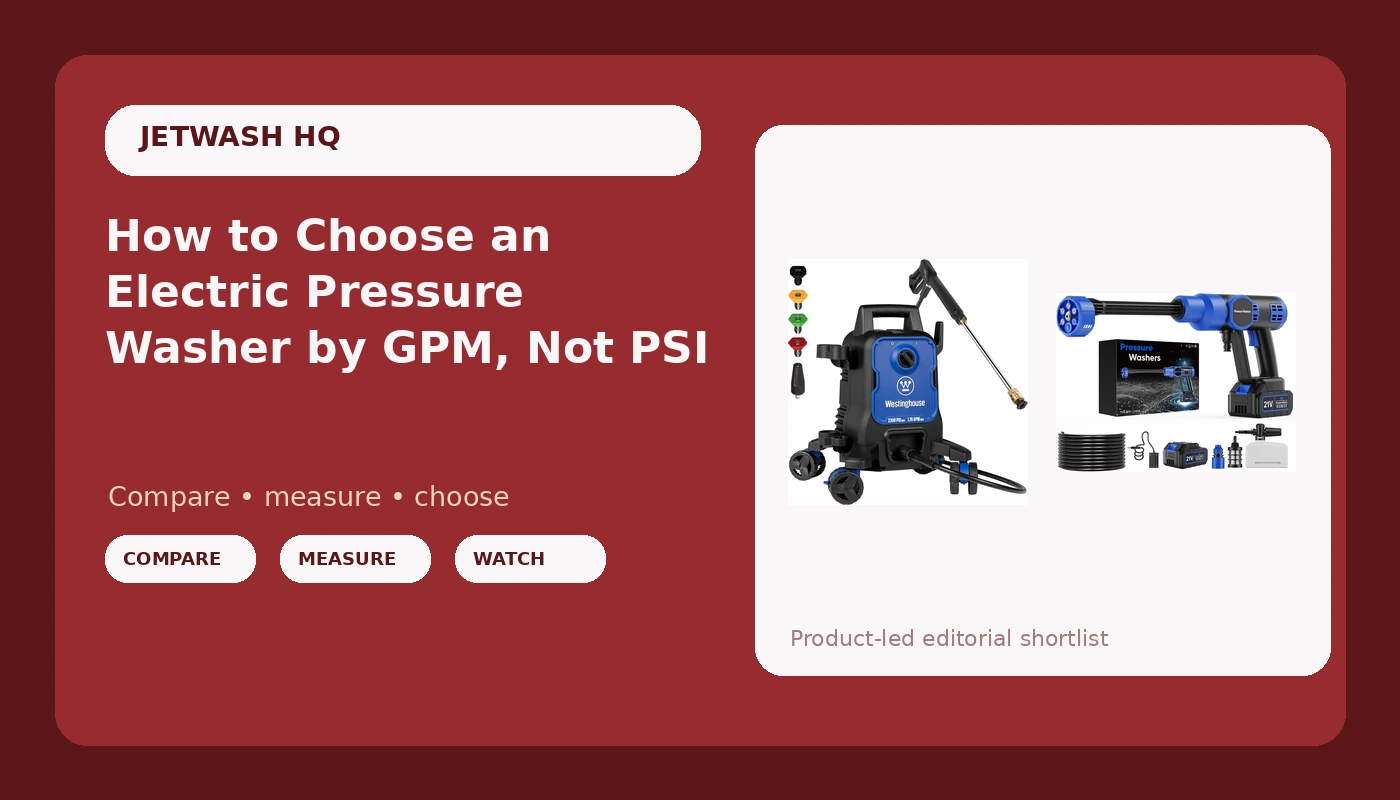
An electric pressure washer is the right tool for about 90 percent of the jobs a homeowner will ever face. A driveway, a fence, a set of patio cushions, a car that has not been washed since spring: all of that comes clean with an electric unit and the right nozzle. The problem is how people buy one. They walk into a store or scroll a listing page, find the biggest number on the box, and take it home. That number is almost always PSI.
Here is the filter I use after more than a decade of doing this for money. Show me the GPM. Show me whether it can draw detergent on its own. Show me the wand and the hose, because those two parts decide whether you enjoy the job or resent it. PSI is how the machine feels. GPM is how the machine works.
The picks below are electric, both of them, and they cover two different jobs. One is a corded driveway machine. One is a battery unit for the small stuff. Learn the difference and you will stop buying washers you do not need.
Why you should trust me
I have run a mobile detailing business out of a van in Tampa for 12 years, which means I have washed more driveways, decks, fences, and boat hulls than I can count, usually in Florida heat with a client standing behind me watching the clock. I own three pressure washers. The electric one does the light work. The gas one handles serious jobs and boat season. The third one was cheap, and it died inside a month, which taught me more about spec sheets than any review ever did.
What I care about is boring and specific: published flow rate, a detergent system that does not clog, a wand that does not flex like a toy, and a hose that does not kink every five feet. Those four things decide whether a washer lasts you ten years or ends up on a curb.
How I picked these two
I am not going to pretend I ran a timed month long test on either of these machines. What I did is read the spec sheets the way I read them before I spend my own money on a job, and I filtered out the claims that do not survive contact with a dirty driveway.
The filter has five questions. What is the real published GPM, not just the peak PSI? Does it draw detergent on its own, or is it a hose with a trigger? Are the wand and hose worth keeping, or will you be shopping for replacements in a month? Can it run long enough to finish a driveway without overheating? And does the nozzle set give you enough control to wash a car and a slab with the same machine?
Two machines passed. One for the flat work, one for everything else.
Match the machine to the job, not the biggest number on the box
The single most common mistake is buying for the worst case instead of the normal case. If your normal case is a car, a patio, some outdoor furniture, and a walkway, you do not need a monster. If your normal case is a two car driveway and a fence line, you need flow and a soap tank, and you need to accept that the wand is going to be in your hand for an hour.
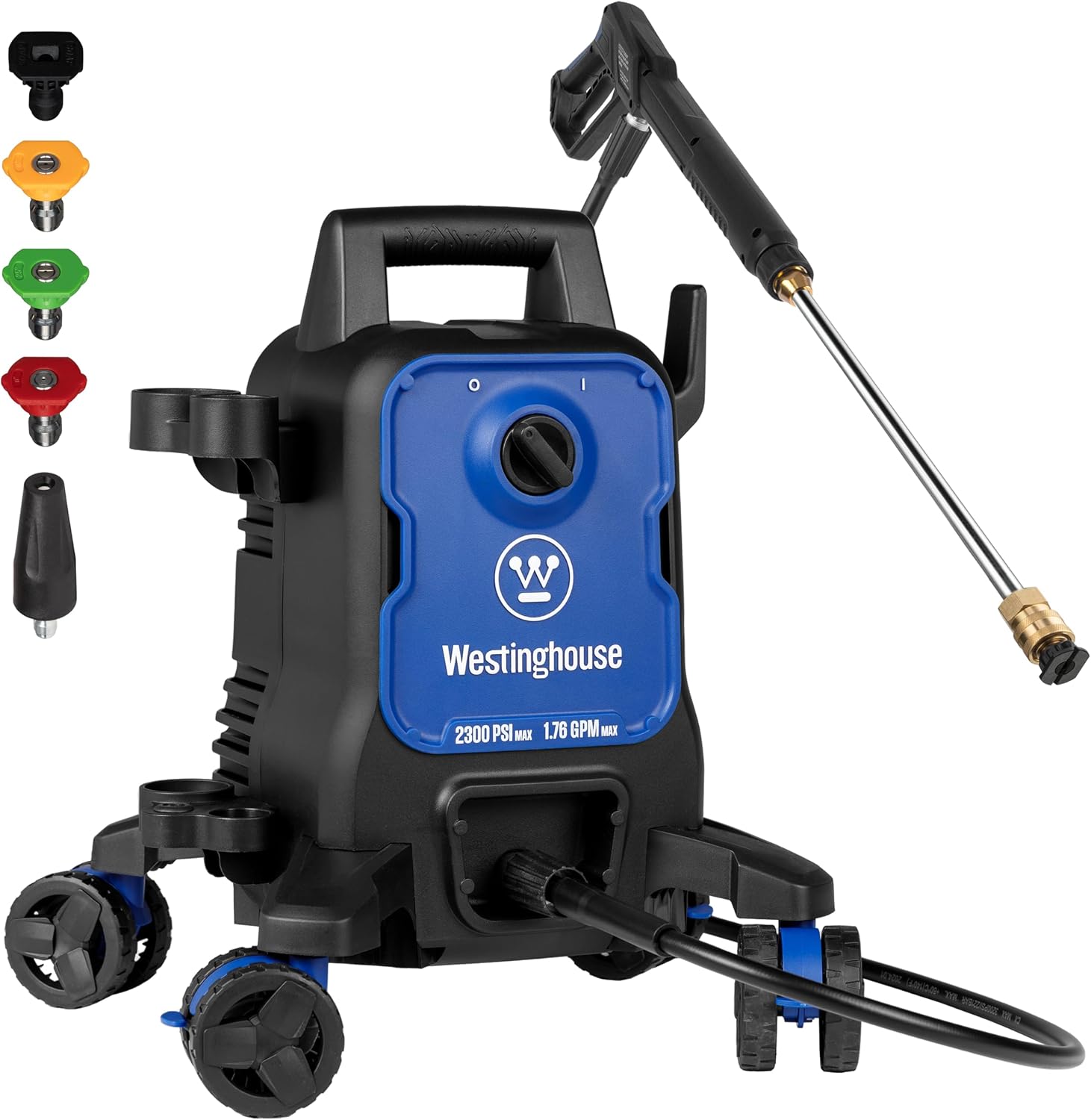
Our pick for driveways, fences, and cars: Westinghouse ePX3100 Electric Pressure Washer, 2300 Max PSI 1.76 Max GPM with Anti-Tipping Technology, Onboard Soap Tank, Pro-Style Steel Wand, 5-Nozzle Set, for Cars/Fences/Driveways/Home/Patios
 Visit on Amazon →
This is the machine I point homeowners to when they want one washer that handles the whole property. The spec that matters is not the 2,300 max PSI figure, it is the published 1.76 max GPM sitting next to it. That is a real flow number for an electric unit, and flow is what carries dirt off concrete. A washer with a giant PSI rating and a thin stream will cut a groove in your driveway and still leave the gray film behind.
Three other details earn it the top spot. The onboard soap tank means the machine draws its own detergent, so you can foam a fence line or a lower panel without hauling a separate sprayer around. The pro style steel wand is the difference between a tool and a toy, and after an hour of flat work you will feel it in your wrist. And the anti tipping design matters more than the marketing suggests, because you will yank the hose around a corner at some point and a narrow base is how these things end up on their side in a puddle.
The five nozzle set gives you the range to wash a car and strip a slab with the same unit, which is exactly what you want if this is your only washer.
Flaws but not dealbreakers: It is still an electric machine, so it has a duty cycle and it will need breaks on a brutal job. Keep it on a GFCI outlet and keep the cord out of standing water. If you are washing a two car driveway every single weekend, you are in gas territory, and that is a different article.
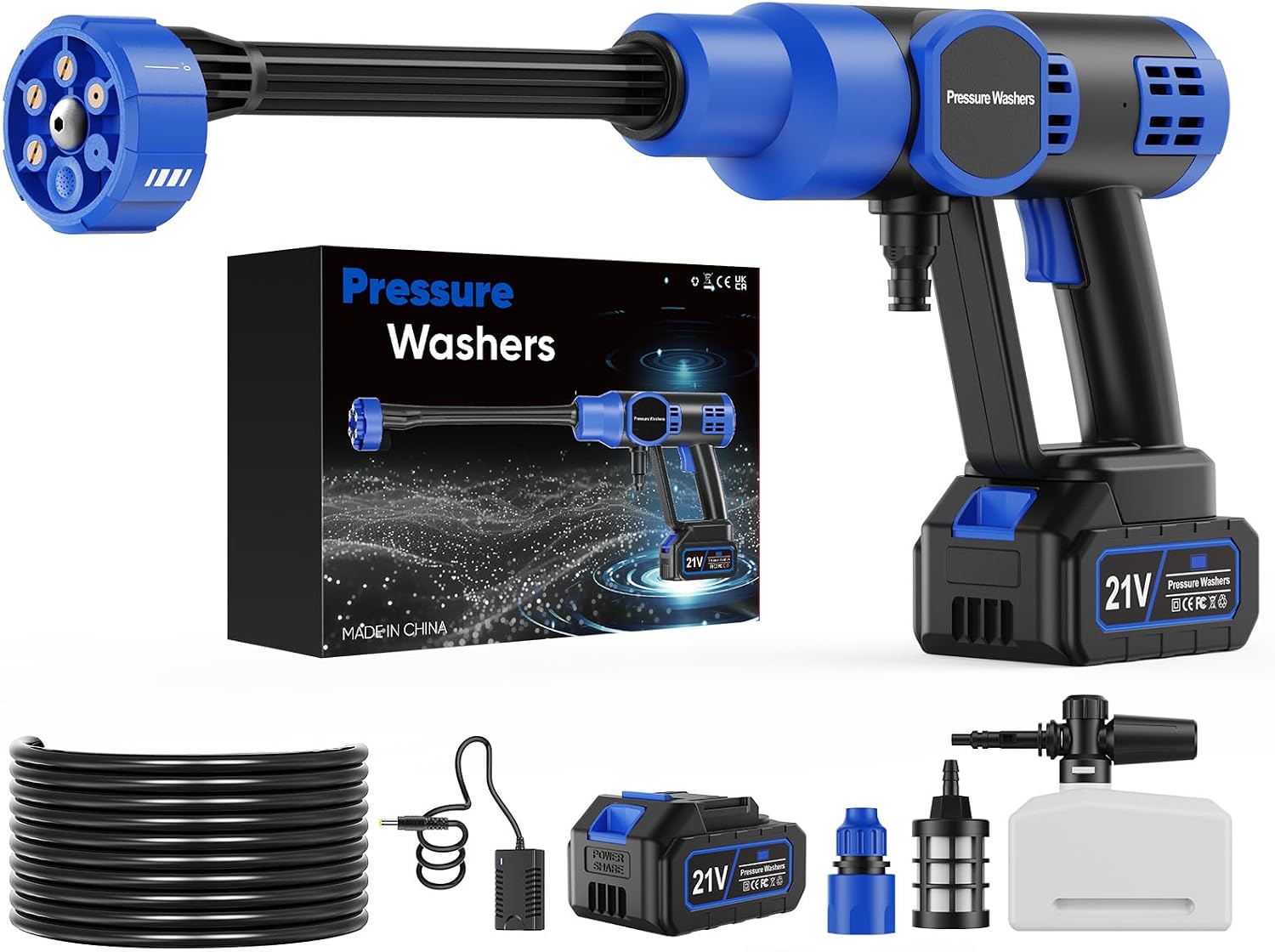
Cordless pick for boats, cars, and quick jobs: 5000 PSI Cordless Pressure Washer with 4.0Ah Battery
 Visit on Amazon →
A cordless pressure washer solves one problem brilliantly: the outlet is never where the job is. A boat on a trailer at the ramp, a car in a driveway with no exterior plug, a dock box, a set of patio chairs at the back of the yard. No cord to drag, no extension cord to keep dry, no tangle around the tires. The 4.0Ah battery is the whole point of the machine, because runtime is what decides whether you finish the job or stand around waiting.
Here is my honest warning, and it is the same warning I give about every cordless unit. The 5,000 PSI figure in the name is a peak number, and the listing does not publish a GPM figure next to it. That is exactly the thing I tell people to look for, so treat this as a convenience machine, not a driveway stripper. Use it for rinsing, pre soak, wheels, bumpers, hull sides, outdoor furniture, and anything where getting a cord to the work is more annoying than the work itself. Do not buy it expecting to restore a concrete slab.
One thing to confirm before you order: check the listing for what is in the box, especially the water draw setup. A cordless washer is only as good as the water source you can feed it, and that detail decides whether it fits your job.
Flaws but not dealbreakers: Battery runtime is finite and the peak PSI number is doing marketing work. Judge it on the jobs it can realistically finish, not the sticker.
The actual washing workflow
This is the part that decides results, and it costs nothing. Same eight steps whether you are running a corded unit or a battery one.
Step one: pick the nozzle before you pull the trigger. Match the nozzle to the surface, not to your mood. A zero degree stream is for stripping paint and blasting cracks and it should never touch a car, a deck board, or a window seal. A 15 degree fan is for concrete and brick. A 25 degree fan is your general purpose nozzle for fences, siding, and most flat work. A 40 degree nozzle is for rinsing and for anything with paint or clear coat on it. The black nozzle is for soap. If you only remember one rule, make it this one: the narrower the stream, the more damage it can do.
Step two: soak it before you scrub it. Dry dirt plus high pressure equals sandpaper. Wet the surface first and let it sit for a few minutes. You will use less pressure and get a better result.
Step three: use the detergent system properly. Fill the onboard soap tank, apply from the bottom up so the soap does not dry on the way down, and let it dwell. Dwell time does the work. If you rinse soap off in 30 seconds, you paid for detergent and got water. Never let detergent dry on a surface in direct Florida sun.
Step four: work top to bottom, overlap your passes. Start at the highest point and work down, because dirty water runs downhill and you are washing the same area twice if you do it backwards. Overlap each pass by about a third of the nozzle width. Slow and even beats fast and frantic every time.
Step five: keep your distance. Twelve to eighteen inches is a good starting range. Closer means more force and more risk. On paint, wood, or anything older than you are, test a hidden spot first and see how the surface reacts before you commit to the whole panel.
Step six: mind the duty cycle. Electric machines need breaks. If the unit starts sounding different or the housing gets hot, shut it down for a few minutes. Overheating a motor to save ten minutes is how you buy the same washer twice.
Step seven: rinse with the widest nozzle you have. Rinse top down with the 40 degree nozzle and keep the water out of vents, exterior outlets, light fixtures, and the seams around windows and doors. Pressure finds every gap you did not know about.
Step eight: inspect and dry. Let the surface air dry and look at it. If you missed a patch, hit it with the same nozzle and same technique, not with a narrower one. Chasing a streak with a zero degree tip is how people etch concrete and scar paint.
Where people wreck things
A few specific ones I see constantly, because fixing them costs real money.
Never use a zero degree nozzle on a vehicle, no matter how stubborn the bug splatter is. Never pressure wash a wood deck with a narrow stream. It fuzzes the grain and raises splinters, and no amount of sanding makes it look right again. Use the widest fan at a shallow angle and let detergent do the work. Never blast window seals, door gaskets, or the fins on an AC condenser. Never spray up under siding or into brick weep holes, because water goes in and stays in. And never stand directly over the wand with bare feet and sandals on a wet slab, which is a lesson about footwear, not about pressure washers.
Test first, on a spot nobody will ever look at. That single habit prevents almost every disaster on this list.
When neither of these is the right machine
If you are washing a two car driveway plus a fence line every single weekend, or you are stripping heavy growth off a boat hull on the regular, you want a gas machine. That is not a knock on electric. It is a duty cycle and flow conversation. Gas gives you more GPM and longer run times, and it charges you for that with noise, weight, fuel, and maintenance you have to actually do.
For everyone else, corded electric does the job and does it without waking the neighborhood. That is why the Westinghouse is my default recommendation and the cordless unit is the specialty tool for jobs where power is the obstacle. Most homeowners end up using the corded machine on the flat work and the battery one for everything small, which is exactly how the two are meant to split the workload.
What you'll actually spend
Check current Amazon price on both listings before you decide, and then do the math on cost per job instead of sticker price. A washer that gets used twenty times a year is working for pennies by the time you own it, and a washer that sits in the garage because it is a pain to set up is the most expensive purchase in the shed.
The other money goes to consumables and accessories, not the machine. Detergent concentrate, replacement nozzles when you lose the 25 degree tip in the grass, an extra length of hose if your driveway is long, and a surface cleaner attachment if you have a lot of flat concrete. None of that is glamorous and all of it changes how the job goes.
Here is the honest summary. Buy the corded machine if you have flat work and a car to keep clean. Add the cordless one if your jobs happen where an outlet does not. Then learn the nozzles, use the soap tank, and stop buying pressure based on the biggest number on the box.
That is the whole job. Show me the GPM and the nozzle, and I can tell you exactly what a machine will do before it ever touches your driveway.