Most pressure washer advice starts with a PSI number and ends with a machine you do not need. I have spent twelve years detailing cars, boats, and driveways around Tampa, and the honest truth is that a garden hose pressure washer setup handles most of the jobs a homeowner actually has: a dusty daily driver, a grimy patio, patio cushions, garbage cans, a fence that needs a rinse before you stain it, and the concrete pad by the pool.
What it will not do is strip paint or blast ten years of oil off a driveway. That is not a compromise. That is the whole reason it is safe to point at the things you care about.
This guide covers the two pieces that make a hose-fed setup work: a jet attachment that concentrates the water you already have, and a hose that does not fight you every time you walk around the car. I will cover what to buy, how to connect it, and the eight-step wash that gets you a result you would pay someone for.
The short version: buy the jet attachment, buy a hose that does not kink, and skip the machine until you have a real reason to own one.
Why you should trust me
I run a mobile detailing business out of a van in Tampa. I have pressure washed more driveways, decks, hulls, and engine bays than I can count, and I own three pressure washers: an electric one for light work, a gas one for boats and two-car driveways, and a cheap one I bought to review that died inside a month.
That cheap one taught me the lesson I repeat to every client. PSI on the box is a feeling. GPM is the work. A $150 washer with the right nozzle beats a $500 washer with the wrong one every single time, and a hose-fed jet setup with a good nozzle beats both of them on anything soft.
I also know when to put the machine away. Half the calls I get about "my paint looks swirled" or "my trim is chalky" end with me telling someone they were using too much pressure for the job.
How I picked and how I tested
I do not recommend a hose-fed setup from a driveway photo. Every attachment and hose I put my name on gets run through the same checklist before it goes in the van or gets handed to a homeowner:
- Does the jet actually concentrate, or is it a wide spray with a marketing name?
- Are the fittings brass or plastic, and do they seal without a wrestling match and three wraps of tape?
- Do the quick connectors hold at full house pressure without weeping or popping off mid-wash?
- Does the hose kink when you drag it around a tire, or when it sits in the sun for twenty minutes?
- How heavy is it once it is full of water, and does it drain and shrink back down for storage?
- How many of the nozzle functions are actually useful, and how many are filler?
- Does it survive being used the way a homeowner uses it, which is badly, twice a month, in Florida heat?
The two pieces below are the ones I would set up in a client's driveway tomorrow. Neither one is a pressure washer, and neither one pretends to be.
The two pieces that do the work
You need exactly two things: something that turns your tap water into a focused jet, and a hose that delivers it without kinking every five feet. Everything else is optional.
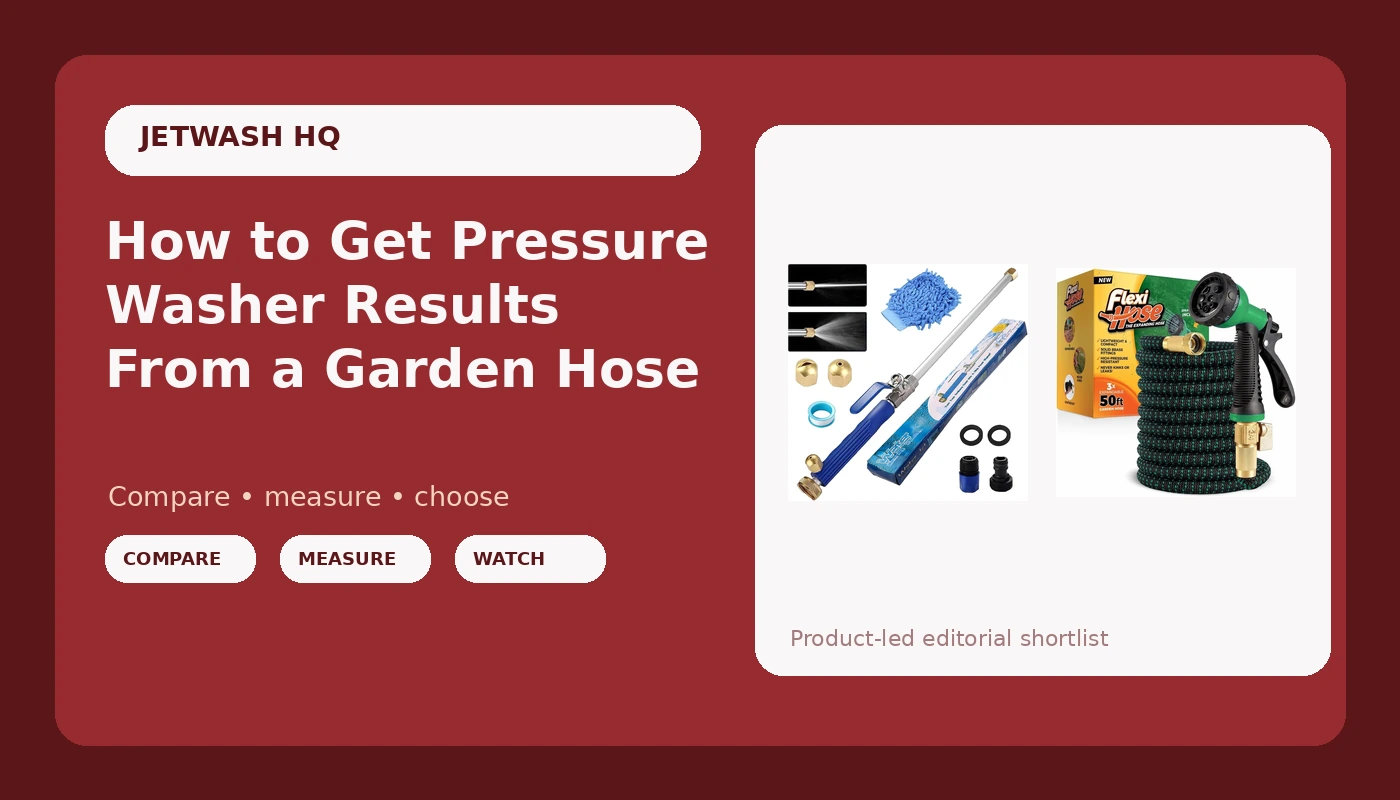
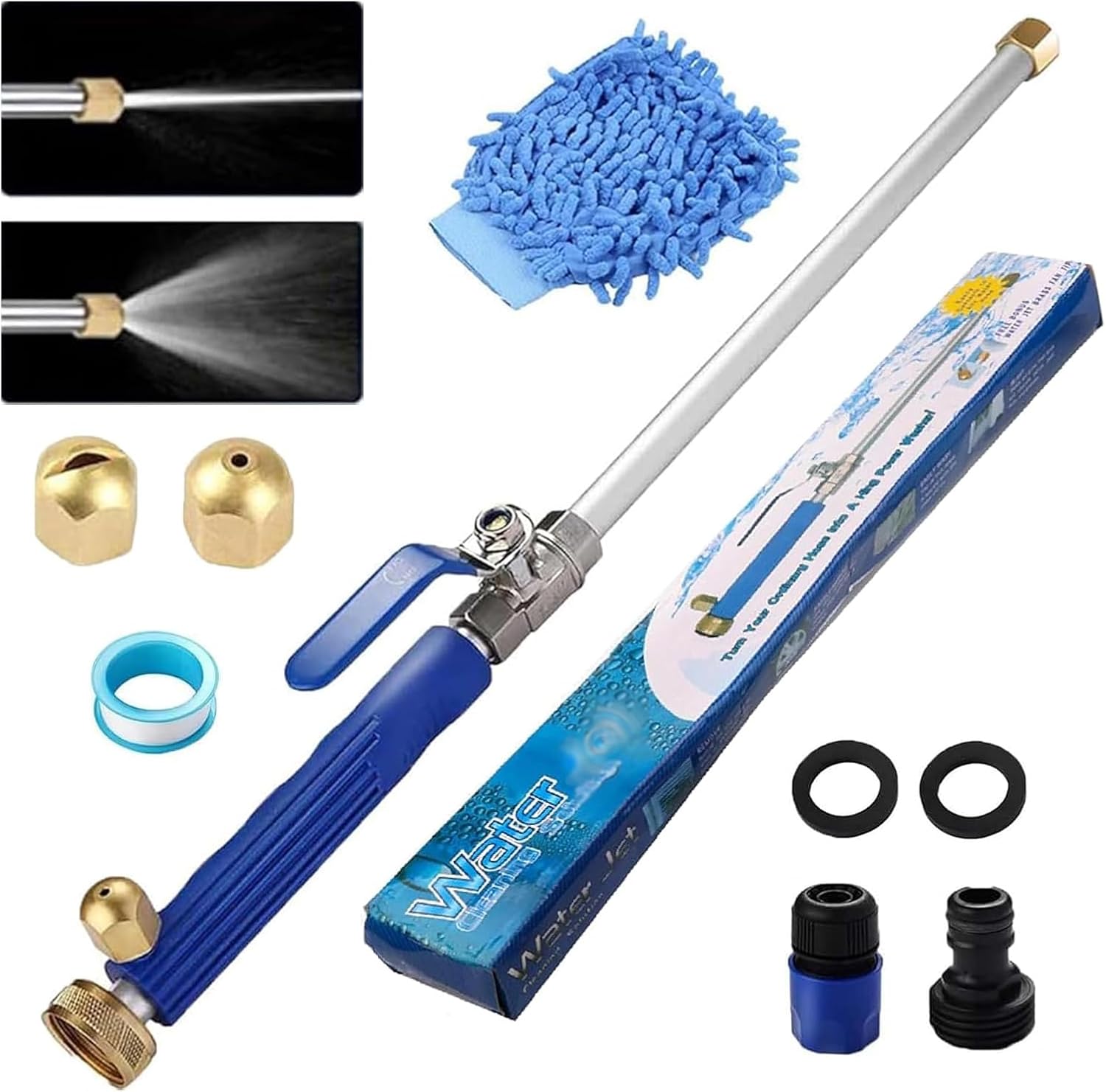
The jet attachment: Jet Flux Hose Pressure Washer,Upgraded 2-in-1 Jet Flux Power Washer with 2 Jet Different Nozzle and Hose Quick Connectors for Car, Patio
 Visit on Amazon →
This is the piece that makes the whole idea work. It is a hose-fed jet attachment, not a machine. It threads onto your spigot or the end of your hose and concentrates the water you already have into a narrow stream, and it ships with two different jet nozzles plus quick connectors so you can swap between the jet and a normal spray without unscrewing anything with wet hands.
Who it is for: anyone with a spigot and a car. Renters who cannot install a machine, apartment dwellers with a shared hose bib, and homeowners who want to rinse a patio without hauling a 40-pound unit out of the garage. It also earns its keep on wheel wells, floor mats, garbage cans, and the underside of a lawn mower deck.
What it is not: a substitute for real pressure. It will not strip paint, it will not erase a rust stain from concrete, and it will not save a fence that needs chemical treatment. It also depends entirely on the water pressure coming into your house, so if you are on a weak well system, the results drop with it.
The quick connectors are the quiet win here. The reason most people stop using a hose gadget is that swapping attachments is annoying, and an attachment you do not use is money on a shelf. Check current Amazon price.
Flaws but not dealbreakers: It is a tap-pressure tool, so treat the "power washer" name as a description of the shape of the stream, not the force behind it. And like any threaded fitting, it wants a clean rubber washer and hand-tight seating, not a gorilla grip.
Anyone who washes a car in the driveway and does not want to own, store, fuel, and winterize a machine should start here.
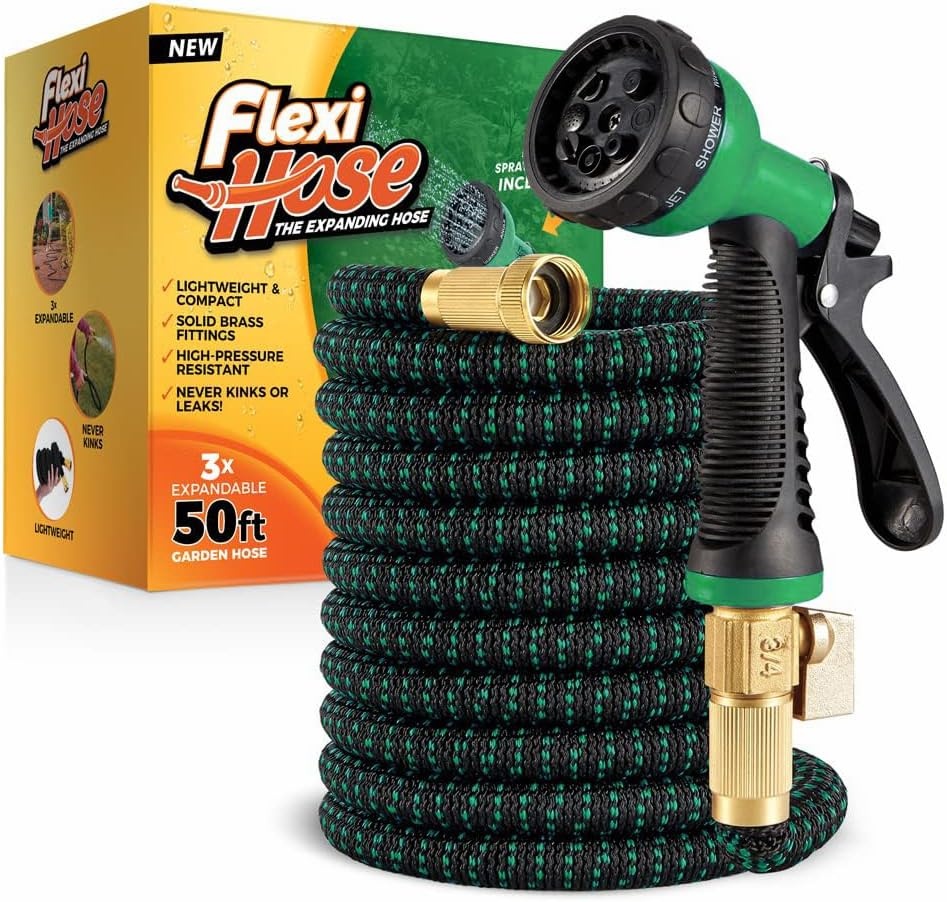
The hose: Flexi Hose with 8 Function Nozzle, 50FT - Lightweight Expandable Garden Hose, No-Kink Flexibility, 3/4 Inch Solid Brass Fittings and Double Latex Core - Black and Green
 Visit on Amazon →
The hose decides whether you enjoy this or resent it. A stiff hose that kinks every five feet turns a fifteen-minute wash into a fight, and it is the number one reason people give up on driveway washing.
This one is expandable, 50 feet, with 3/4 inch solid brass fittings and a double latex core. It ships with an 8-function nozzle, which covers the functions you will actually use: a fan for rinsing, a shower for soap and for watering beds, a jet for wheel wells and mats, a mist for plants, and a soaker setting for the flower bed you keep forgetting about. The brass fittings matter more than the nozzle count, because brass is what keeps the connection from weeping after a season in the sun.
Fifty feet is the right length for most driveways and patios. It reaches around a full-size truck without moving the spigot, and it collapses back down small enough to hang on a hook in the garage instead of coiling into a tangled pile.
Flaws but not dealbreakers: Expandable hoses are not indestructible. Do not leave one pressurized for hours, do not run over it, and drain it before you store it. Store it out of direct sun and it will last far longer than the cheap rubber hose it replaced. Check current Amazon price.
Anyone who is tired of dragging a heavy hose around the yard, or who has limited storage, will get the most out of this one.
The actual workflow: washing a car with a hose-fed jet setup
Here is the sequence I would walk a client through. It works on a sedan, a truck, and a boat trailer, and it takes about thirty minutes once you have done it twice.
Step one: Set up in the shade. Park on a cool surface with the panels cool to the touch. Direct Florida sun plus soap equals water spots and dried streaks before you can rinse. If you have no shade, work in sections and rinse as you go.
Step two: Connect and leak-check. Thread the jet attachment onto the spigot or hose end with the rubber washer seated, hand tight. Click the quick connectors until they seat. Open the spigot slowly and check every joint before you point anything at paint. A weeping fitting at the spigot is the most common reason people think a jet attachment "lost pressure."
Step three: Pre-rinse, top down. Start at the roof and work down, using the fan setting. The goal is to knock off loose grit before anything touches the paint. Grit is what scratches, not soap.
Step four: Wheels first. Switch to the narrow jet and hit the wheels, wheel wells, and floor mats. Do this before the paint so you are not splattering brake dust onto a clean panel.
Step five: Soap. Hose-fed setups do not draw detergent, so this is a bucket job. Car soap in a bucket, a second bucket of clean rinse water, and a wash mitt. Load the mitt, do one panel, rinse the mitt in the clean bucket, reload. The two-bucket habit is the cheapest paint protection you can buy.
Step six: Agitate top down, one panel at a time. Roof, glass, hood, then sides. Do not let soap dry on the surface. If it starts to dry, hit it with the fan nozzle and keep moving.
Step seven: Rinse in sheets. Switch back to the fan, start at the top, and let the water sheet off rather than blasting each panel. A sheet rinse leaves less standing water, which means less spotting when you dry.
Step eight: Dry and store. Microfiber towel or a blower, then drain the hose, disconnect everything, and hang the hose out of the sun. Ninety seconds of storage is what keeps the setup working next month.
For patios and furniture, the same logic applies with one change: use the fan, keep the nozzle moving, and never hold a narrow jet on one spot of wood, mortar, or painted trim. Soft surfaces do not need pressure. They need flow and patience.
Where a hose-fed setup loses
Be honest with yourself about the job before you buy anything. A hose-fed jet setup is the wrong tool for a two-car driveway with ground-in tire marks, a boat hull that has been in the water all season, a deck with mold roots in the grain, or anything that involves stripping a coating.
That is machine territory, and it comes with machine costs: a unit that weighs enough to be a chore, a cord or a fuel can, a duty cycle you have to respect, and a surface cleaner attachment if you want a driveway done evenly instead of in stripes. If you go that route, shop the flow rate, not the PSI headline. A unit with real GPM and a spinning surface cleaner will out-clean a higher-PSI unit with a wand every time, and it will do it without striping your concrete.
The middle ground that most homeowners actually want is this: a hose-fed jet setup for the car, the patio, and the rinse work, and a machine borrowed or rented once a year for the heavy job. You get professional results on the soft stuff and you never store a machine you use twice a year.
What this all costs
Two pieces, no engine, no fuel, no oil changes, no winterizing ritual. That is the entire cost story. A hose-fed setup is a fraction of what a machine costs, and it fits on a shelf instead of taking up half a garage bay.
Do the math in washes rather than dollars. If you wash your car twice a month from spring through fall, the per-wash cost of these two pieces is pocket change, and you are not paying for the machine maintenance that eats the savings of owning a pressure washer you barely use. Check current Amazon price on both, add a bucket, a mitt, and a couple of microfiber towels, and you have a complete car wash station for less than a single professional detail.
The expensive mistake is buying a cheap machine first, discovering it is loud, heavy, and too much for your paint, then buying the hose setup anyway. Skip that step.
The bottom line
Flow beats pressure, and the nozzle is the machine. A garden hose pressure washer setup is not a compromise for people who cannot afford better. It is the correct tool for soft surfaces, and it is the one you will actually pull out of the garage on a Saturday morning.
Buy the jet attachment for the focused stream, buy the hose so the stream actually reaches the car, and learn the eight steps until they are muscle memory. Your paint, your patio, and your back will all thank you.