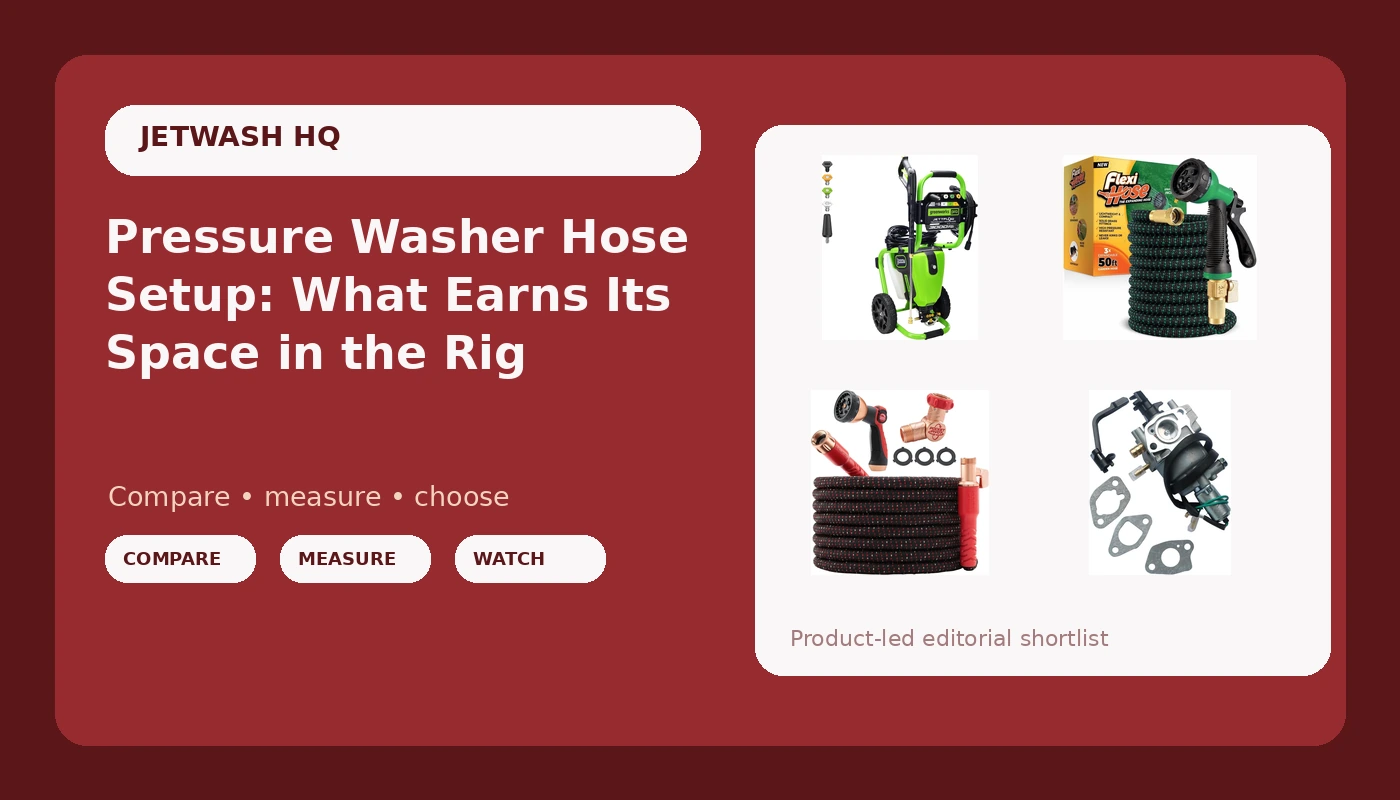
I run a mobile detailing rig out of a van in Tampa, which means my pressure washer hose setup has to survive boat hulls, moldy fences, and a client's driveway that bakes in the Florida sun by 10 a.m. I have owned three pressure washers in twelve years: the electric one for light work, the gas one for the serious jobs, and a cheap one I bought to review that died inside a month. That last one taught me more than the other two combined, mostly because it hid a weak pump behind a big PSI number on the box.
Related: Pressure Washer Nozzle Guide: Which Tip Does What
The piece that earns its place in most setups is the Greenworks 3000 PSI brushless electric washer, because 2.0 GPM of real flow at a sane price beats a bigger PSI number with a weak pump behind it. The rest of this comparison covers the supporting cast I keep in the van: two expandable hoses that handle rinse and fill duty, and the carburetor that keeps my job-site generator alive when I am three driveways away from the nearest outlet. Four products, four very different jobs, and only one of them is a pressure washer.
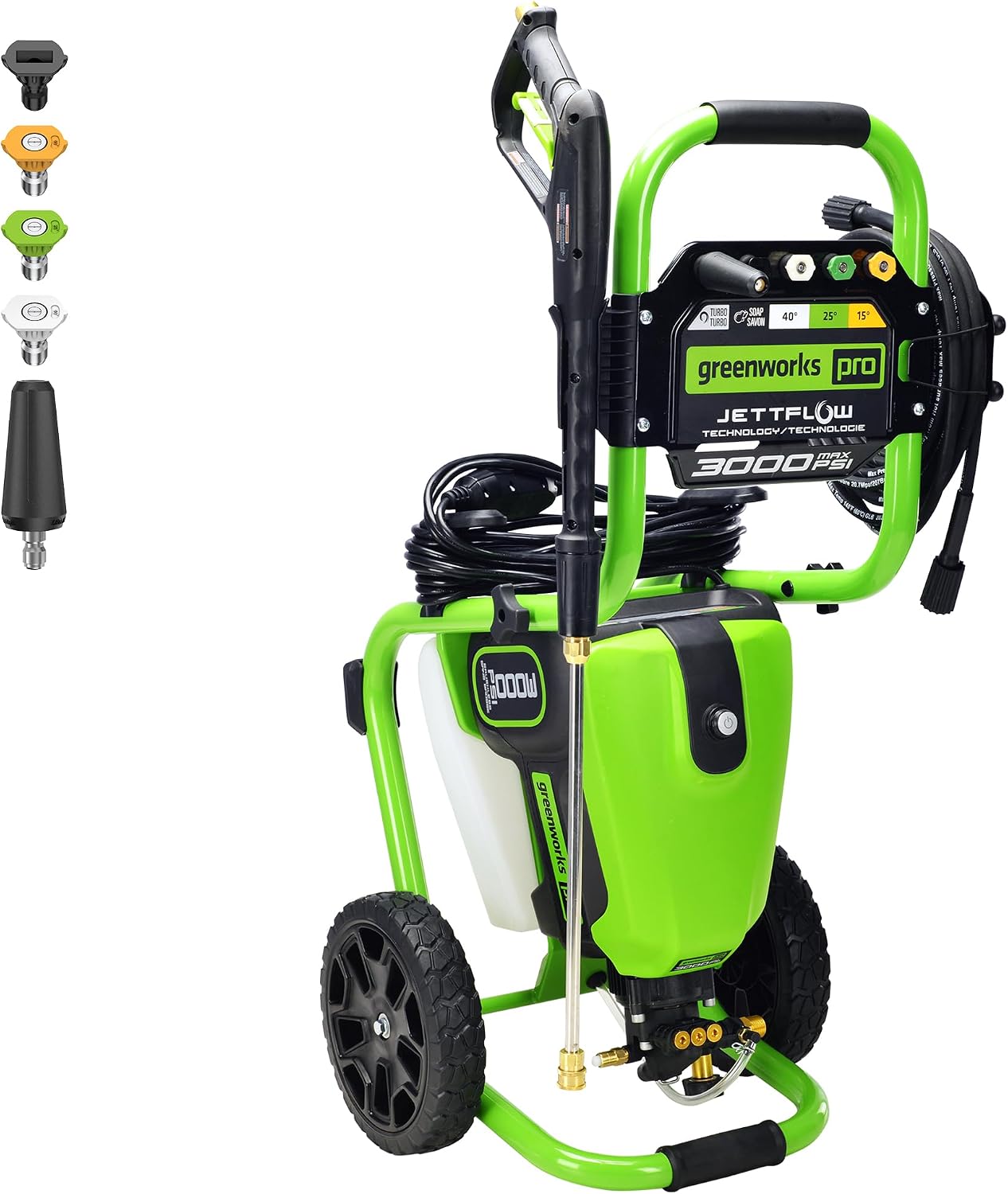
Greenworks 3000 PSI (2.0 GPM Max) Brushless Electric Pressure Washer
Real 2.0 GPM flow, brushless motor, onboard detergent tank
Heavy for an electric, and the stock wand is the weak link
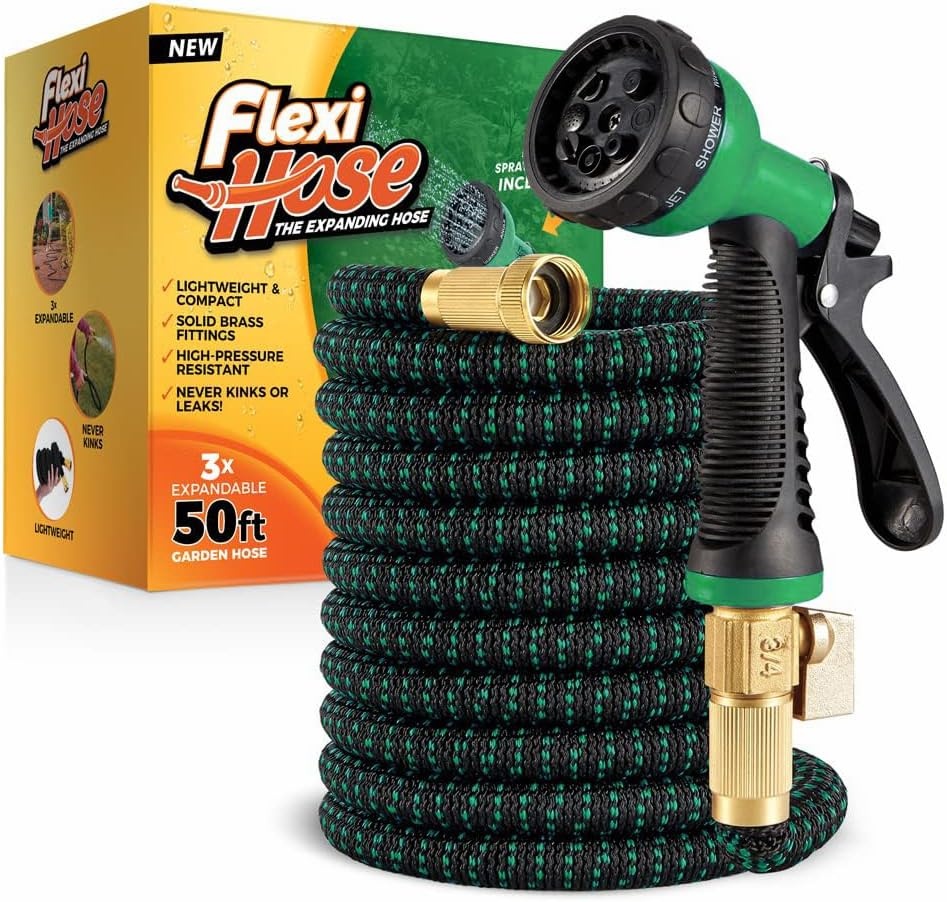
Flexi Hose with 8 Function Nozzle, 50FT Expandable Garden Hose
Light, genuinely kink resistant, brass fittings that seal
50 feet runs out fast on a two-car driveway
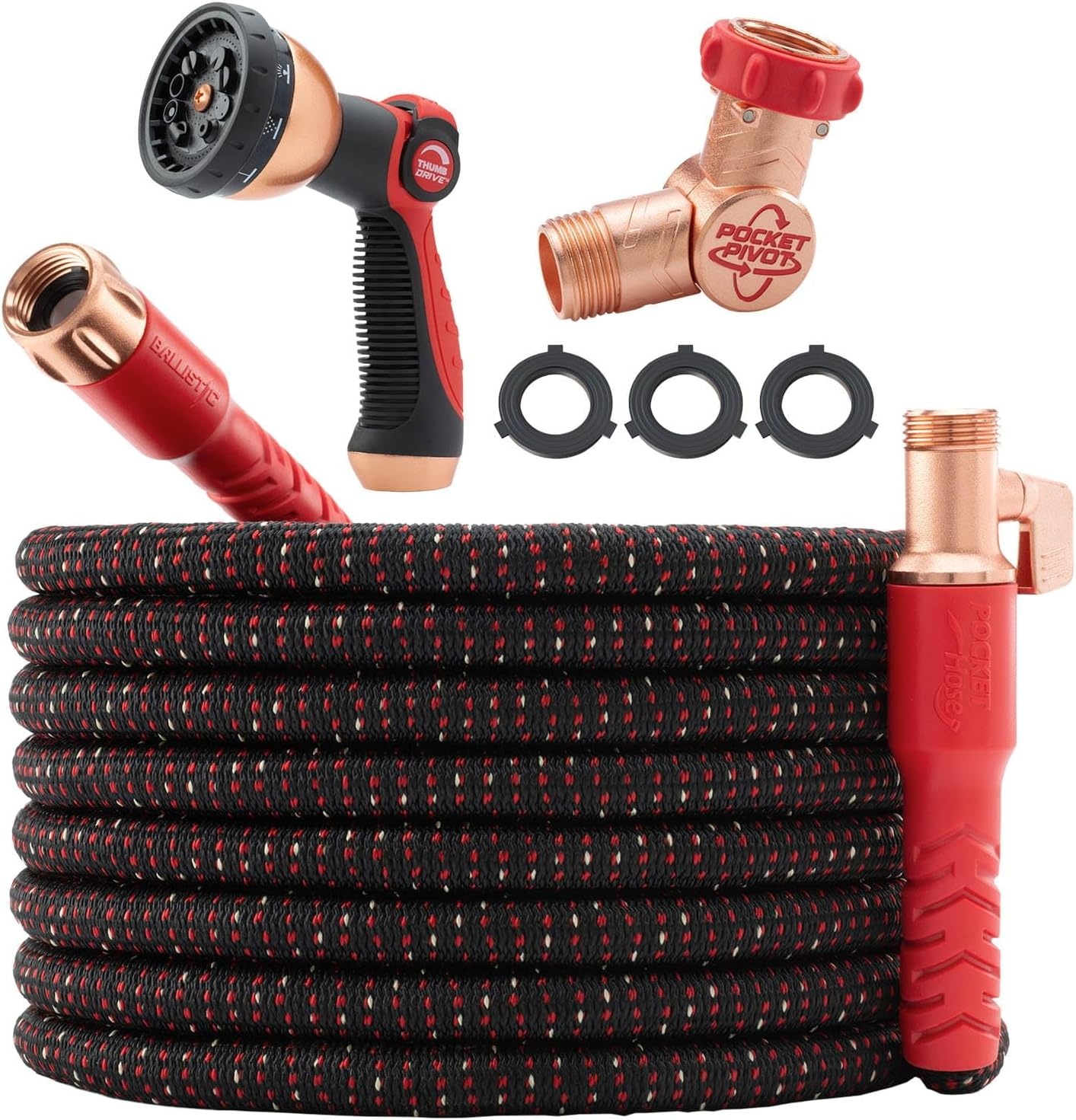
Pocket Hose Ballistic 100 FT Expandable Garden Hose
100 feet of reach that stores in a bucket
Expandable construction has pressure limits, so keep it off the washer
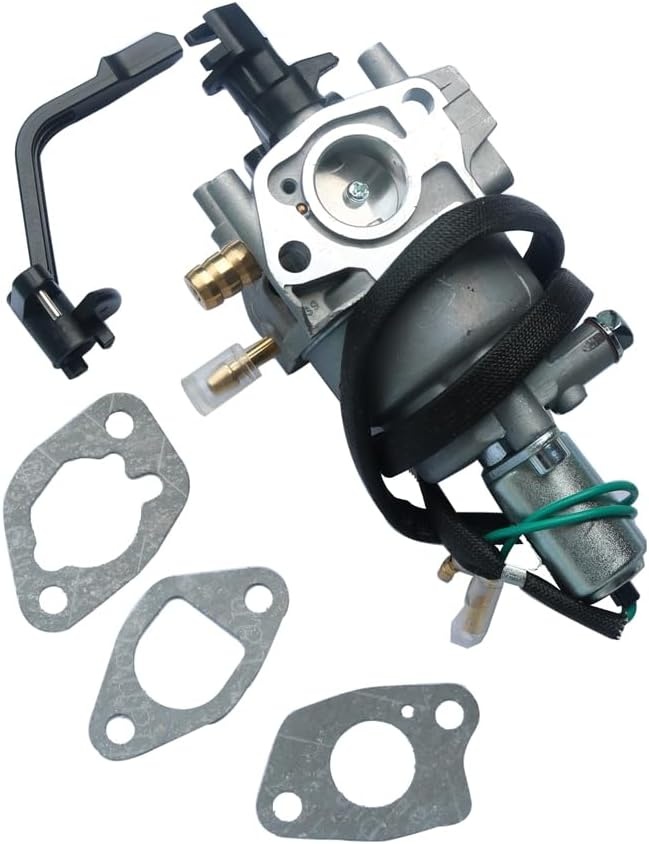
Carburetor Carb For WEN DF475T DF475X DF475 4750 Watt Dual Fuel Generator LPG GAS Propane
A direct replacement that puts a dead generator back on the job
Gaskets are not always in the box, and it needs tuning after install
Prices and availability were captured from Amazon Creators API and may change.
How I judge this gear
Four rules, and I do not bend them.
First, flow rate over pressure. PSI is how hard the water hits. GPM is how much water is doing the work. A washer rated at 2.0 GPM moves twice the water of a 1.0 GPM unit at the same pressure, which is why two machines with identical PSI numbers can feel completely different on a concrete driveway. Skip anything under 1.5 GPM. You will spend more time waiting for the water than cleaning with it.
Second, detergent draw. If a washer cannot pull soap from a tank or a bottle on its own, it is a hose with a trigger, and you will be hand-scrubbing everything that needs chemical help. Cars, boats, siding, and fences all want soap.
Third, hose and wand quality. This is where budget machines quietly fail. A stiff hose that kinks every five feet turns a twenty-minute job into a forty-minute argument. A wand that feels like a toy flexes under load and sprays your shoes. Neither shows up on a spec sheet, and both decide whether you enjoy using the thing.
Fourth, duty cycle. Cheap electrics overheat. Gas units run all day. Know which one you are buying before you commit.
That framework is what the rest of this comparison runs on.
The washer: Greenworks 3000 PSI brushless electric
The Greenworks unit is the anchor of this group, and the reason is simple: 2.0 GPM max at 3000 PSI is a real flow number, not a marketing number. That combination is enough to strip a dirty deck, knock mold off a fence, and clean a car without dragging out the gas machine.
The brushless motor matters more than people give it credit for. Brushed motors wear out at the brushes, which is the failure point on nearly every cheap electric I have seen die. A brushless design removes that wear item, runs cooler, and generally gives you a longer service life for the same job. If you are buying an electric to keep for years instead of one season, brushless is the spec to insist on.
The onboard detergent tank is the second thing I look for, and this machine has one. Being able to draw soap without a separate bottle-and-siphon rig is the difference between washing a car properly and just wetting the dirt. Fill the tank, swap to a soap nozzle, and work top to bottom.
Where it loses points: it is heavy for an electric, and the included wand and hose are the first things I would upgrade. That is true of almost every washer in this class. The machine is the engine. The wand and hose are the experience, and the stock versions are usually the cheapest parts in the box.
For a homeowner with a driveway, a patio, a car, and maybe a fence, this is the one to buy. Visit on Amazon → and check the current price against what your local big box is charging.
The hoses: reach, kinks, and what expandable actually means
Expandable hoses are not pressure washer hoses, and the sooner you accept that, the happier you will be. They are for rinse water, filling buckets, washing the car with a garden nozzle, and hosing down the driveway after you are done. Put one on a pressure washer and you will be buying a replacement.
The Flexi Hose 50FT is the one I reach for on most days. It is light enough to carry in one hand, the double latex core keeps it from turning into a knot when you drag it around a corner, and the 3/4 inch solid brass fittings are the part that actually matters long term. Plastic fittings crack. Brass ones do not. The 8 function nozzle is a bonus, not the reason to buy it, but it means you can go from a gentle shower on a newly waxed car to a hard jet on a concrete walkway without hunting for a second attachment.
The trade-off is length. Fifty feet covers a single-car driveway and a front walk. It does not cover a two-car driveway with a corner lot, and stretching it taut is how you ruin the internal core. If your spigot is on the wrong side of the house, fifty feet runs out.
That is where the Pocket Hose Ballistic 100 FT comes in. One hundred feet of reach that drains down and stores in a bucket is genuinely useful when the spigot is far from the work. It is the hose I hand a client's kid to water plants with, because it is nearly impossible to kink and it does not weigh anything.
What it is not: a hose for anything with pressure behind it. Expandable construction has a working pressure ceiling, and a pressure washer blows right past it. Use it for rinse and fill, keep it out of the sun when you can, and it will last far longer than the reviews suggest.
My honest setup: a 50 foot Flexi Hose for daily work and a 100 foot Pocket Hose for the long-reach jobs. Visit on Amazon → for the Flexi, and Visit on Amazon → for the Ballistic, then measure your actual reach before you order either one.
The carburetor: the part that keeps the generator on the job
This one looks like the odd product in the group until you have run a mobile rig for a season. A pressure washer with no power source is a very heavy paperweight. When I am working a job without a usable outlet, the generator runs the electric washer, the vacuum, and the buffer, and it sits for weeks at a time between jobs. Sitting is what kills small engines.
The Carburetor Carb for the WEN DF475T, DF475X, and DF475 4750 watt dual fuel generator is a direct replacement part for exactly that failure. If your generator starts hard, surges, or dies under load after a winter of storage, the carburetor is usually the culprit, and the fix costs less than a service appointment. Dual fuel units are especially prone to it because the propane side leaves the gasoline side sitting with old fuel in the bowl.
Two practical notes. Buy the gasket kit at the same time, because replacement carburetors do not always ship with every gasket you will need, and you do not want to be stuck mid-repair. And expect to tune the idle and mixture screws after install. A replacement carburetor is a starting point, not a plug-and-play part.
This is a maintenance purchase, not a fun one. Visit on Amazon → if your generator has earned a rebuild.
What I would buy, and in what order
If you are building a setup from nothing, the order is not complicated.
Buy the washer first, because nothing else works without it. The Greenworks is the right call for the vast majority of homes: real flow, a brushless motor, a detergent tank, and enough pressure for driveways, decks, and cars. It is the machine I would hand a friend who asked me what to buy.
Buy hose reach second, based on how far your spigot is from where you actually work. Under sixty feet of run, take the Flexi Hose. Over sixty feet, take the Pocket Hose Ballistic. Buy both if you have a corner lot and a second car, because swapping hoses mid-job is the kind of small annoyance that makes you stop washing things.
Buy the carburetor when your generator tells you it needs one. Hard starting, surging, and stalling under load are the signals. It is a cheap fix that saves an expensive tool, and if you run a gas pressure washer instead of an electric, the same logic applies to that engine too.
The trap to avoid is spending your whole budget on the machine and nothing on the hose and wand. A mid-priced washer with a good hose and a proper surface cleaner will outclean a premium washer with the stock accessories every single time. The nozzle is the machine. Remember that and you will not waste money.
Quick answers
Can I run an expandable hose on a pressure washer? No. The working pressure ceiling is far below what a washer puts out. Use it for rinse water and filling only.
Is 3000 PSI and 2.0 GPM enough for a driveway? For a residential concrete driveway, yes, especially with a surface cleaner attachment. For commercial work or heavy stripping, you want gas.
Do I need a generator for an electric washer? Only if you work away from outlets. If you do, the generator becomes part of the pressure washer setup, and its carburetor becomes a wear item you plan for.
What is the one upgrade that matters most? A surface cleaner. It turns a mediocre washer into a professional tool on flat surfaces, and it costs less than a tank of gas.
The short version of everything above: flow beats pressure, the hose decides whether you enjoy the job, and the cheapest part in the box is usually the one you will replace first. Get the washer right, then spend the leftover budget on the accessories that make it work.