I've been detailing cars, boats, and driveways around Tampa for twelve years, and I've killed more pressure washers than I'd like to admit. One cheap unit I bought specifically to write about died inside a month. The small electric machine I use for light work is still on the shelf. The gas unit only comes out for boat season, and my neighbors know exactly when that happens.
Here's the lesson that took me too long to learn: the washer is half the story. The other half is what feeds it and what you point at the ground. A modest machine with a good nozzle and a hose that doesn't fight you will out-clean a bigger unit with a stiff hose and a wand that feels like a toy. That isn't an opinion, it's how flow and contact time work. Pressure is how it feels. Gallons per minute is what actually lifts dirt off concrete.
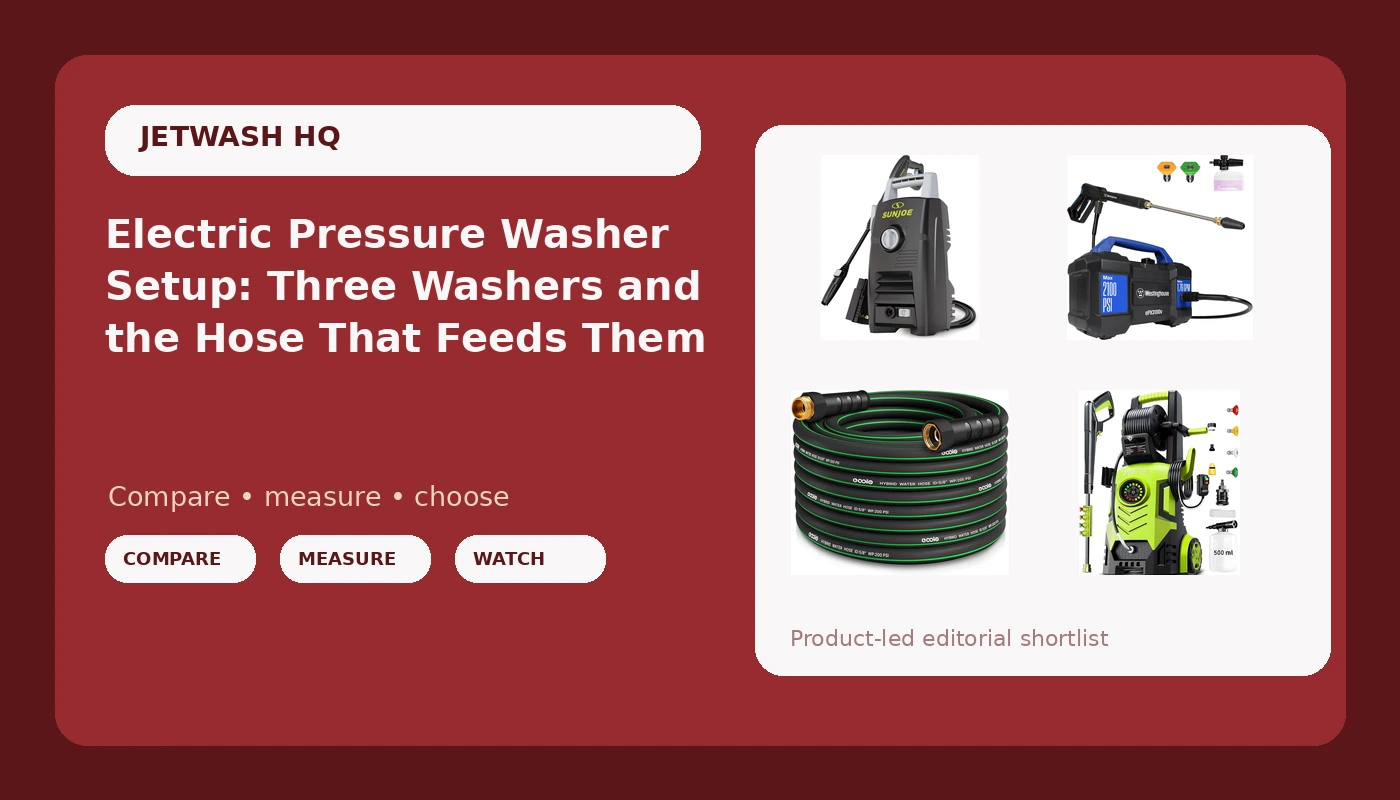
So this is a complete electric pressure washer setup comparison: three electric washers and the one accessory that decides whether you enjoy using any of them, a 50-foot non-expandable hybrid supply hose. If you want a clean driveway, a clean car, and no regrets by week three, this is the shortlist I'd hand you.
The short answer: the Westinghouse ePX3100v is the pick for most homes, because 1.76 max GPM is a real flow number to sit next to its 2100 max PSI, and the Sun Joe SPX205E-XT is the pick when you want the simplest machine that still gets the job done. The 5000Max unit is the feature-loaded wildcard, and the 50-foot hybrid hose is the upgrade almost nobody buys first and almost everybody needs.
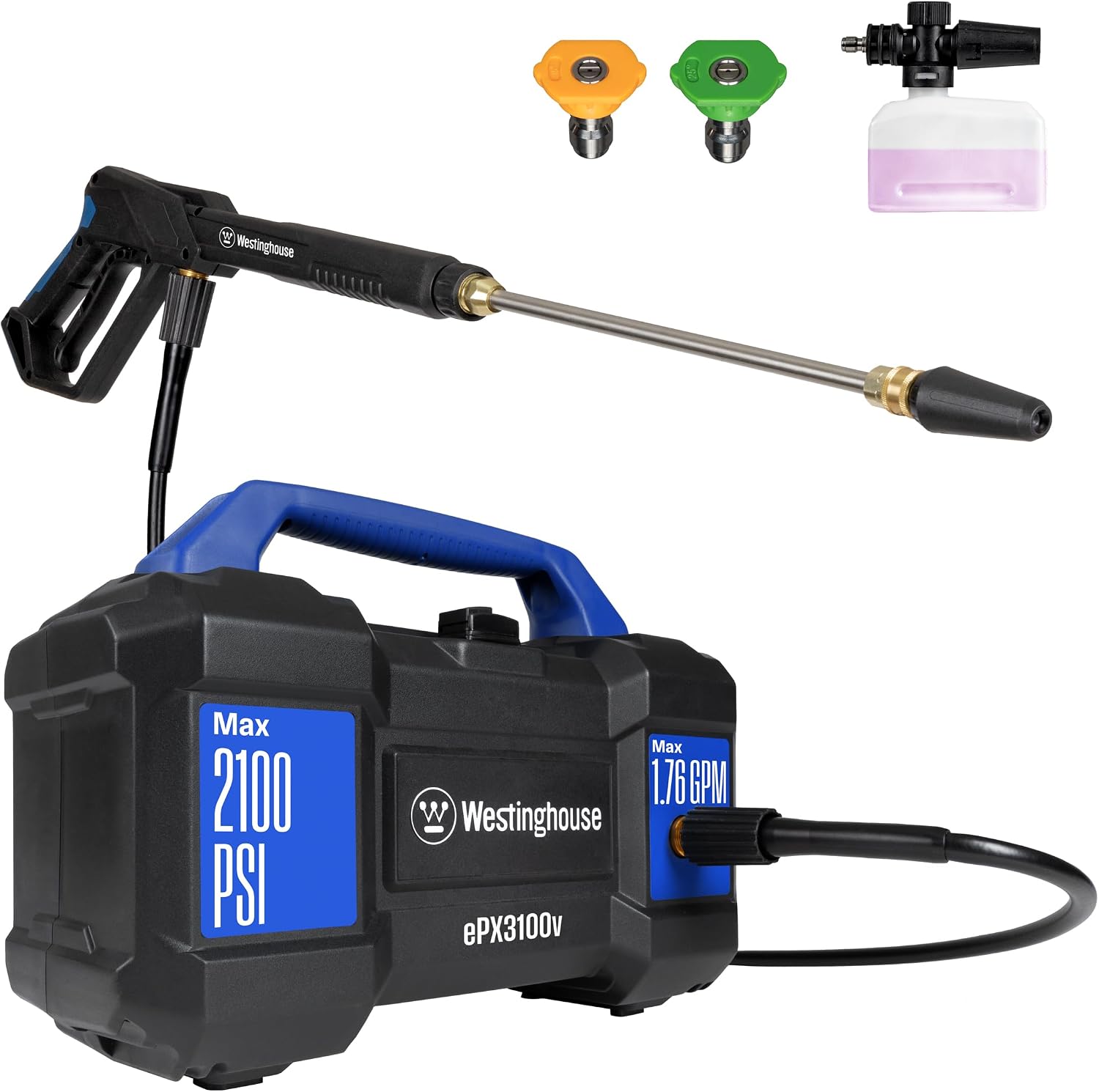
Westinghouse ePX3100v Electric Pressure Washer
Best flow rate of the group at 1.76 max GPM, steel wand, detachable foam cannon, 3-nozzle set
No onboard detergent tank, and the accessory load is lighter than the feature-heavy pick
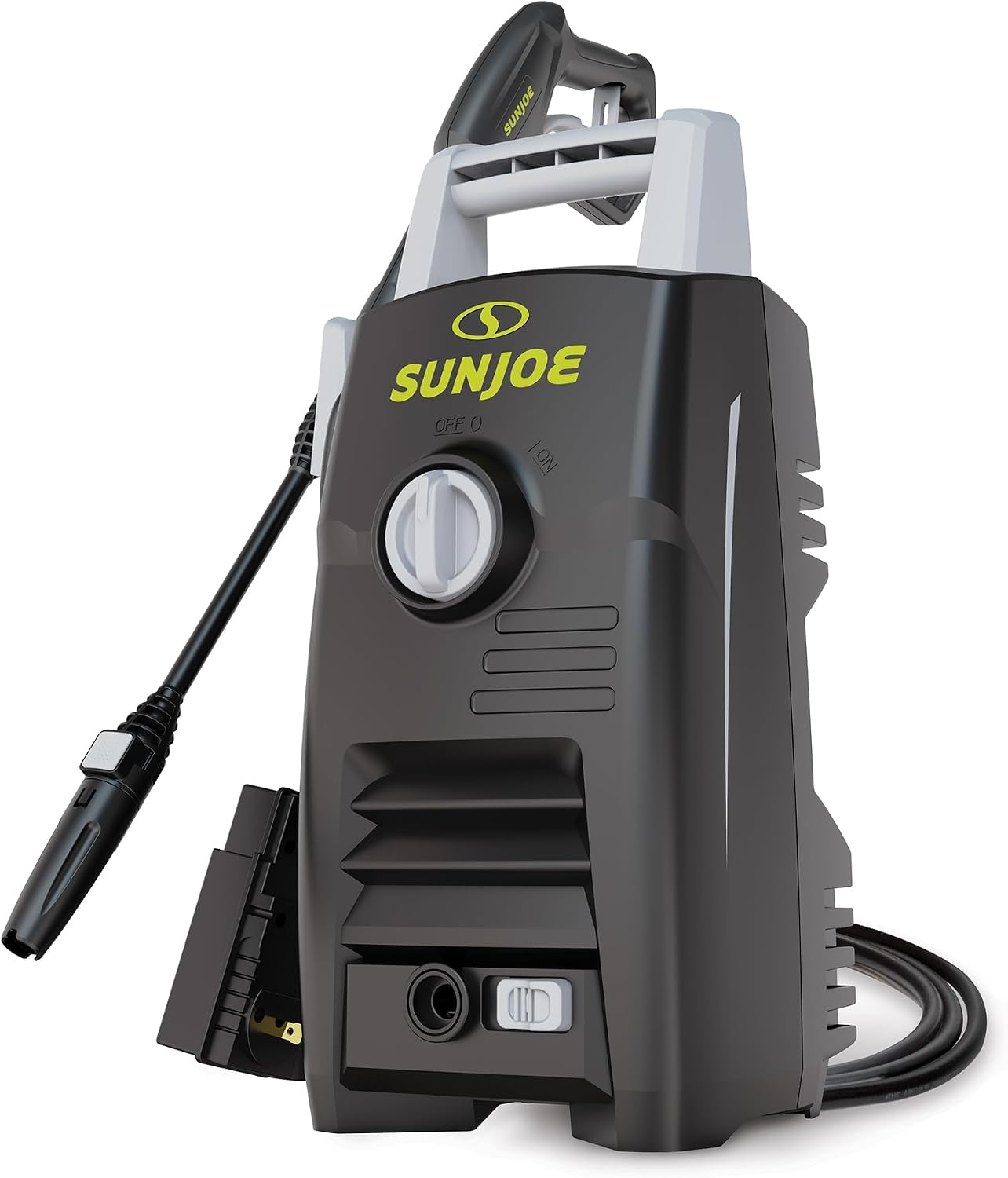
Sun Joe SPX205E-XT Electric Pressure Washer
Total Stop System, GFCI cord, adjustable wand, the least fussy machine here
Shorter hose and fewer included accessories, so you'll buy add-ons sooner
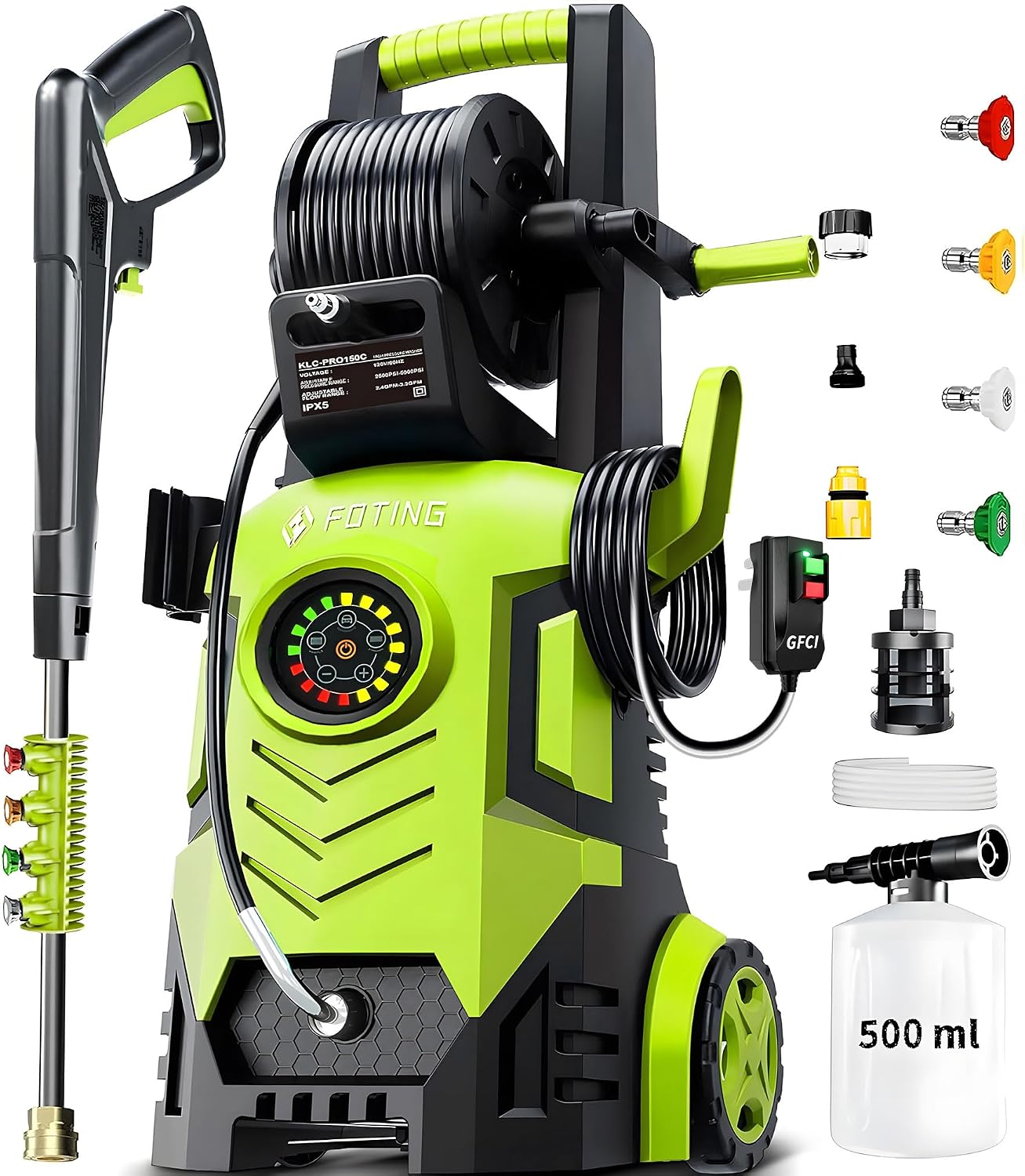
5000Max Pressure Power Washer with Adjustable Touch Screen
8-level touch screen, 35ft GFCI cord, 4 quick connect nozzles, inlet hose, filter, and foam cannon in the box
The name advertises a pressure figure with no matching flow rate, and a touch screen on a wet job is a gamble
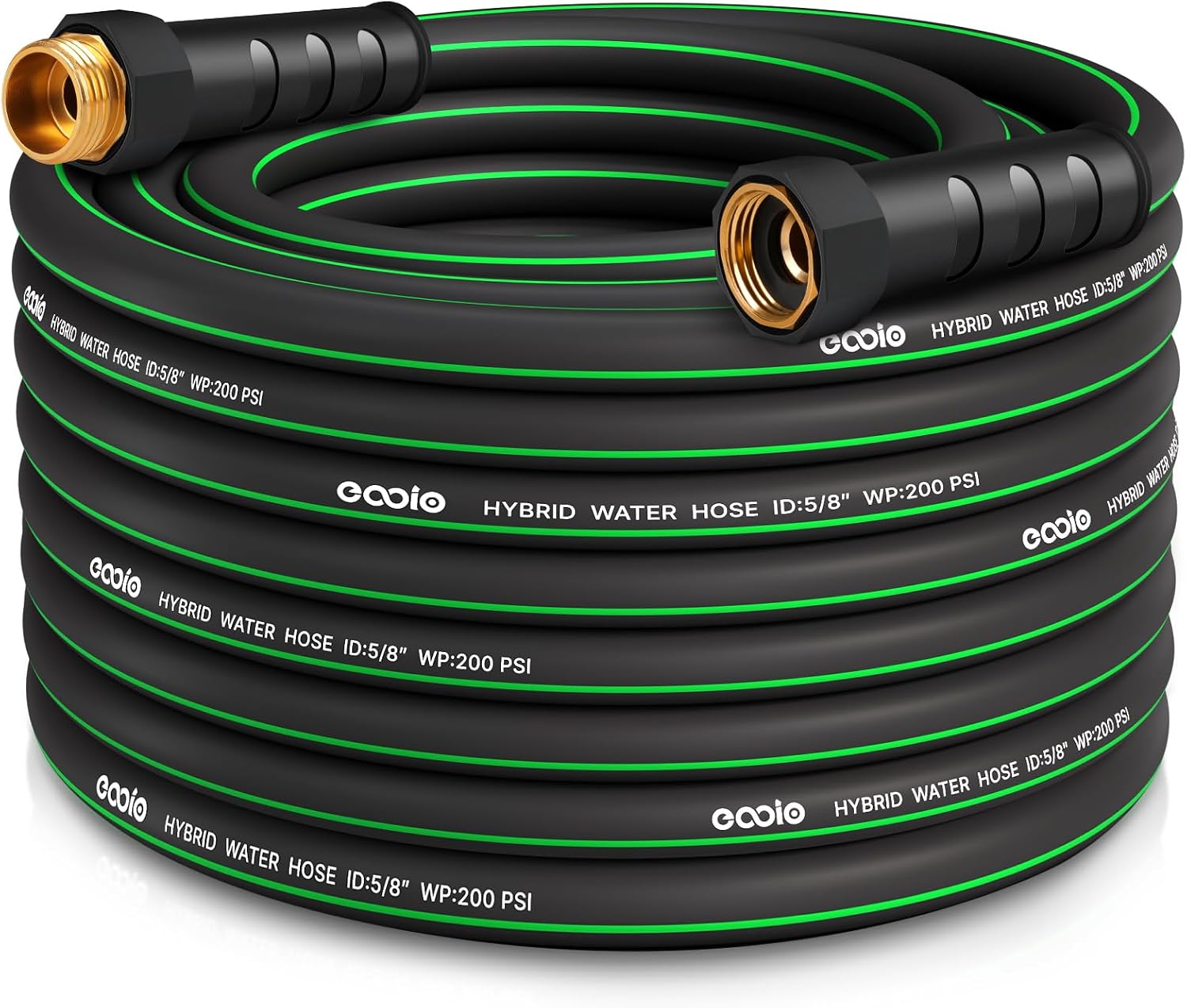
Heavy Duty Garden Hose 50ft, Non-Expandable Hybrid Hose
Kink resistant, lightweight hybrid build, leakproof male to female fittings, 50ft of supply line
It's the feed hose, not a high-pressure hose, and it does nothing for a weak pump
Prices and availability were captured from Amazon Creators API and may change.
How I judge a pressure washer
Four things, in this order.
Flow rate. Not the big number on the front of the box. GPM is the volume of water doing the work, and PSI is only the speed at which it arrives. A machine rated at 1.76 GPM removes grime faster than one rated at 1.2 GPM, even if the second one screams a higher PSI number. When a product name leads with a pressure figure and hides the flow, I get suspicious, and you should too.
Detergent draw. If a washer can't pull soap from a bottle on its own, it's a hose with a trigger. Foam cannons and soap nozzles only help if the machine can actually draw the chemical and push it through. This is where cheap units quietly fail.
The wand and the hose. A wand that flexes like a straw transmits every bit of vibration into your wrist. A stiff hose kinks every five feet and turns a twenty-minute job into a forty-minute argument. These two parts decide whether you use the machine twice a year or twice a month.
Duty cycle and safety. Cheap electrics overheat. A GFCI plug is non-negotiable outdoors, and a Total Stop System, which shuts the motor down when you release the trigger, is the difference between a pump that lasts and a pump that cooks itself while you're repositioning the car.
Westinghouse ePX3100v: the flow number that matters
This is the one I'd point a homeowner toward first, and the reason is on the spec line: 2100 max PSI with 1.76 max GPM. That flow figure is at the top of what consumer electrics deliver, and it's paired with a pro-style steel wand instead of the plastic flexi-wand you get on budget machines. The built-in carry handle is a small thing that matters more than people expect, because you will move this machine around a driveway, a patio, and a fence line in a single afternoon.
The detachable foam cannon is a genuine win for car work. You fill it, you snap it on, you coat the panel, you swap back to a nozzle. That's the workflow a detailer actually uses. The 3-nozzle set covers the common angles out of the box, so you're not ordering extra tips the same week the washer arrives.
Where it gives ground: there's no onboard detergent tank, so soap lives in the foam cannon or a downstream bottle. If you want to flip a switch and have soap on demand while you're standing on a driveway, this isn't that machine. And the accessory package is leaner than the feature-loaded option below, which matters if you like opening one box and having everything.
Sun Joe SPX205E-XT: the simple machine that does the job
The Sun Joe is the machine I recommend to people who want to wash a car, hose down a patio, and put the thing on a shelf without thinking about it again. The GFCI power cord is built in, so you're not hunting for an outdoor outlet with a separate adapter. The adjustable spray wand gives you a range of patterns without swapping tips constantly, and the Total Stop System shuts the motor off the moment you release the trigger, which is exactly what you want if you're the type to set the wand down mid-job and answer your phone.
That Total Stop System detail is worth more than it sounds. The pump isn't spinning against a closed valve while you scrub a stubborn spot with a brush. That's the failure mode that kills budget electrics early, and it's why I don't write off this class of machine the way some detailers do.
The trade-off is accessories and reach. You get a 20-foot hose and an adjustable wand, and that's roughly it. No foam cannon, no quick connect nozzle set, no inlet filter. For a sedan and a front walk, that's plenty. For a two-car driveway, a fence, and a boat, you'll be buying add-ons within a month, and you should budget for them from the start.
The 5000Max: features in the box, questions on the spec line
Read the name carefully, because it tells you exactly where my eyebrows go up. The machine is called 5000Max and it leads with a pressure figure, but there's no matching flow rate in the name to tell you what that pressure is actually pushing. That's the oldest trick in this category, and it's the reason my first question about any washer is about GPM, not PSI.
Set that aside and the package is genuinely loaded. A 35ft power cord with GFCI is the longest here by a wide margin, which means fewer extension cord debates in a driveway. You get four quick connect nozzles, an inlet hose, an inlet filter, and a foam cannon in the box, which is a complete starter kit rather than a machine plus a shopping list. The inlet filter is the kind of small inclusion that saves a pump from grit, and the eight-level adjustable touch screen lets you dial intensity instead of swapping tips.
The hesitation is the interface itself. A touch screen on a tool that lives outdoors, gets rained on, and gets handled with wet hands is a design bet, not a proven win. Physical dials and triggers survive abuse. I'd want to know how that panel behaves after a season before I'd call it the safe pick for someone who leaves equipment outside.
The 50-foot hybrid hose: the part that decides everything
Here's the thing nobody tells a first-time buyer. Every pressure washer on this list is fed by a garden hose running from your spigot to the machine's inlet. If that hose kinks, restricts, or bursts, your pump starves. Starved pumps cavitate, cavitation destroys them, and no amount of PSI on the box will save you. The feed line is part of the pressure washer setup, even though it never appears in the marketing photos.
This 50-foot heavy duty hose is non-expandable, which is the correct choice for this job. Expandable hoses look tidy on a shelf and then restrict flow and fail under constant pressure. This one is a kink resistant hybrid build that stays lightweight enough to drag around a driveway corner without a fight, and the leakproof male to female fittings mean you're not chasing drips at the spigot and the machine inlet.
Fifty feet is the sweet spot for most homes. It reaches from a front spigot around a garage corner to a driveway, or from a back tap out to a patio, without leaving coils of hose underfoot. And when you're done, it coils up and hangs on a hook instead of fighting you.
One clarification, because people get this wrong: this is a supply hose. It carries water from your tap to the washer's inlet. It is not a high-pressure hose and it never connects to the wand. If you need more reach at the working end, that's a different product.
The trade-offs, side by side
The Westinghouse wins on flow and wand quality and gives up onboard soap storage. The Sun Joe wins on simplicity and safety features and gives up accessory depth. The 5000Max wins on what's in the box and cord length and gives up spec transparency. The hose wins on supply reliability and gives up nothing, because it isn't competing with the machines, it's supporting them.
That's the whole decision in one paragraph. If your jobs are driveways, fences, and vehicles on a regular schedule, pay for flow. If your jobs are a car and a patio a few times a year, pay for simplicity and put the savings toward a nozzle set. If you want one box that covers everything and a cord that reaches the far corner of the lot, the feature-loaded machine is defensible as long as you accept the spec sheet gap.
What I'd buy with the machine
Before you upgrade from one washer to a bigger washer, buy the parts that turn a mediocre machine into a professional tool.
A surface cleaner attachment is the single best money you'll spend in this category. It replaces the wand for flat work, cleans concrete evenly instead of leaving zebra stripes, and cuts a driveway job in half. A 25-degree nozzle handles concrete and brick. A 40-degree nozzle handles car paint and siding without etching it. A dedicated soap nozzle or foam cannon handles the pre-treatment that does half the cleaning chemistry for you.
None of those upgrades care which washer they're attached to. A modest machine with the right nozzle beats a big machine with the wrong one, and it isn't close.
The verdict
For most homes, the Westinghouse ePX3100v is the pick, because 1.76 max GPM is a real working number and the steel wand and foam cannon match how people actually wash cars and concrete. The Sun Joe SPX205E-XT is the right call if you want a compact, GFCI-protected machine with a Total Stop System and you're not planning to make pressure washing a hobby. The 5000Max is the pick for someone who wants the longest cord and the fullest accessory box and is willing to bet on a touch screen outdoors.
Whoever you are, buy the 50-foot hybrid hose. It's the least exciting purchase in this article and the one that keeps your pump alive and your temper intact. Then buy a surface cleaner. Then, and only then, think about whether you need a bigger machine.