Related: PSI vs GPM: The Number That Actually Cleans Your Driveway
Every gas pressure washer on the shelf leads with the big number. 3200 PSI, 3400 PSI, 4200 PSI. Nobody prints the number that actually cleans in the same size font, and that number is GPM. A complete gas pressure washer setup comes down to three things: a machine that moves enough water, a hose that does not fight you every five feet, and a couple of inexpensive tools that keep you from dragging the heavy machine out for a five minute job.
I have been detailing cars and boats out of Tampa for twelve years, and my gas machine runs most weeks of the year. This page is the gas pressure washer setup I would hand a homeowner with a two car driveway, a fence that grows mold, and a boat that needs its hull rinsed before anyone touches a buffer. It covers the machine, the hose upgrade that matters more than people expect, the cheap gun that handles the small jobs, and the parts side of gas equipment that nobody mentions until April, when the thing will not start.
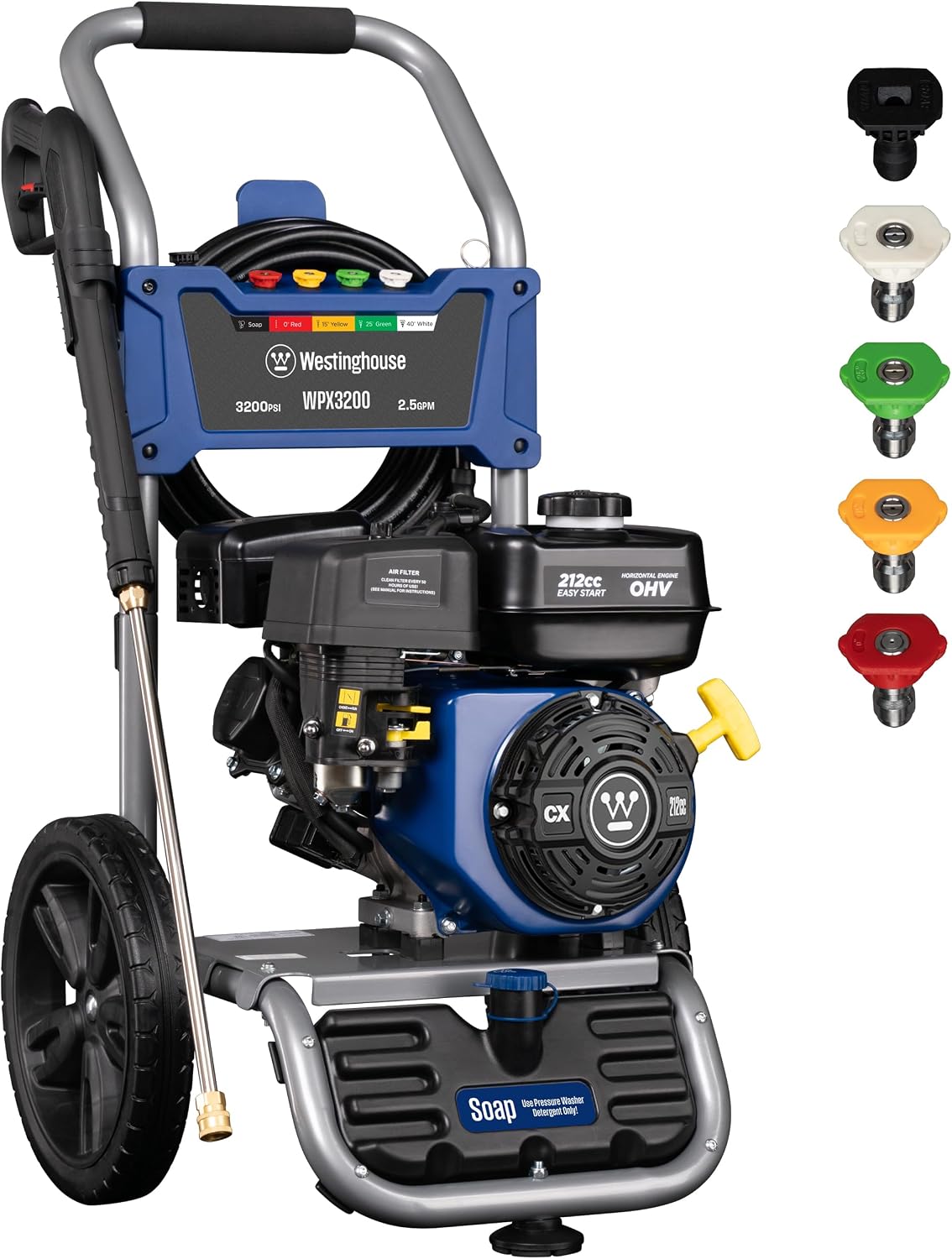
The machine: Westinghouse WPX3200 Gas Pressure Washer
3200 PSI and 2.5 GPM. If you only remember one of those numbers, remember 2.5. Flow rate is what actually cleans; pressure is just how it feels. A surface cleaner needs flow to spin and to keep spinning. Below roughly 2.0 GPM, a 15 inch surface cleaner stalls out and you spend the afternoon watching a bar turn slowly in circles instead of cleaning concrete. At 2.5 GPM the attachment works the way it is supposed to, and a driveway goes from a chore to a twenty minute job.
The onboard soap tank is the second thing I look at. A washer that cannot draw detergent is a hose with a trigger. Fill the tank, drop in the black soap nozzle, and you are downstreaming detergent without a bottle hanging off the gun or a siphon tube falling into the grass.
Out of the box it comes with the spray gun, the wand, and a five nozzle set, which means you are not buying a wand on day one just to use the machine you already paid for. Nozzle discipline matters more than the PSI rating: white 40 degree for rinsing, green 25 for general washing, yellow 15 for concrete, red 0 for the one bad spot that will not come out, black for soap. Never put the red nozzle on wood, a car, or anything you care about.
The tradeoffs are real and worth saying out loud. Gas is loud. Gas is heavy. Gas wants fresh fuel, oil changes, and a fuel system that does not sit all winter with ethanol in it. Electric is fine for 90 percent of people. Gas is for when you are washing a boat or a two car driveway every week.
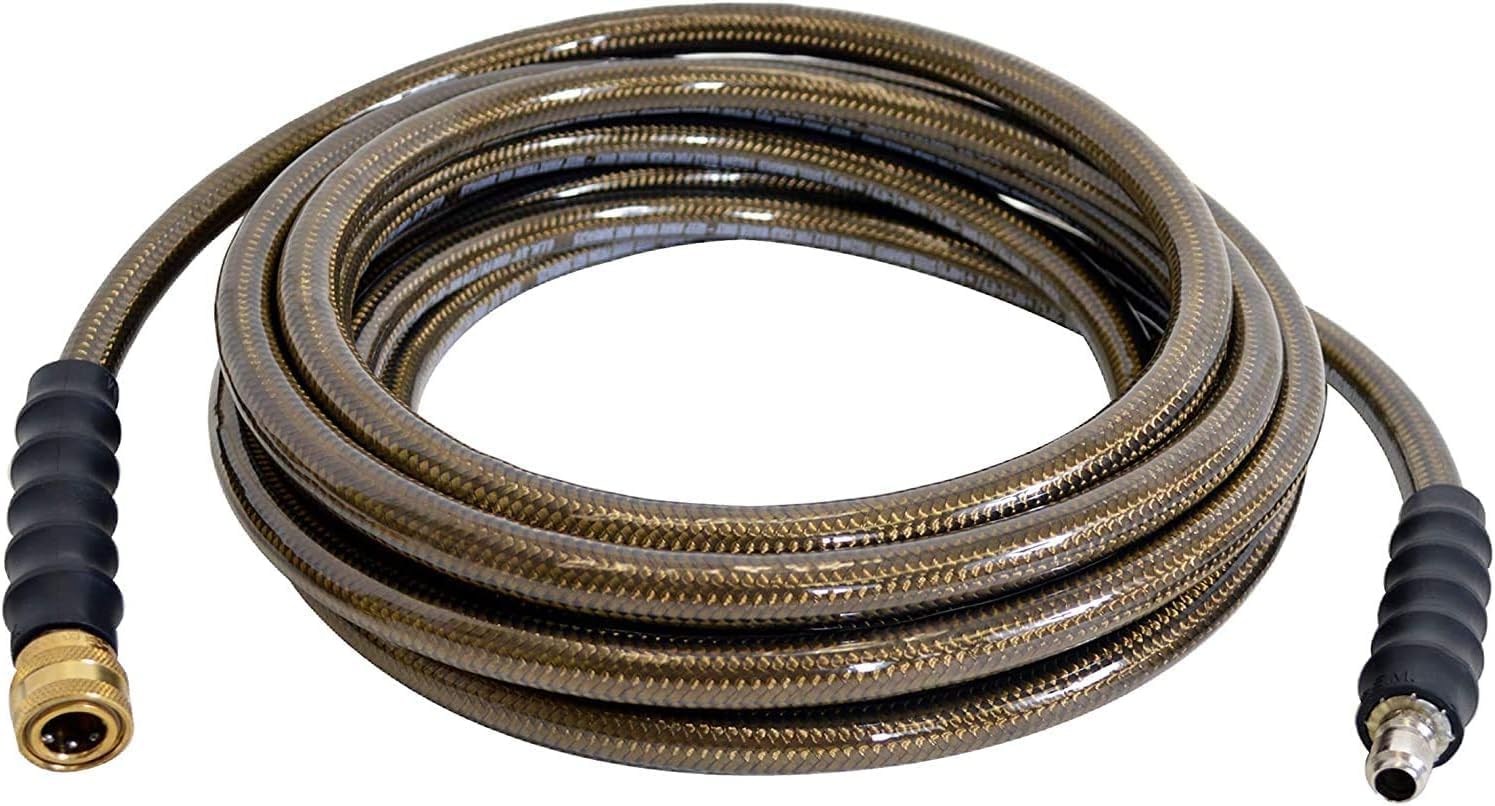
The hose: Simpson 50 ft, 3/8 inch 4500 PSI Monster hose
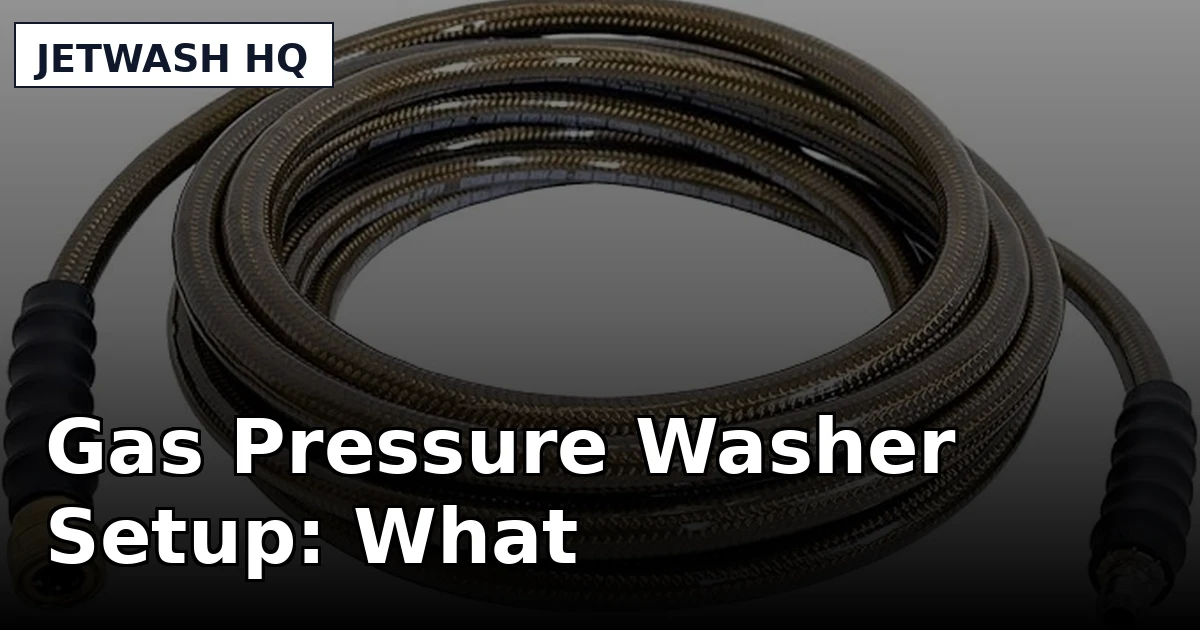
The hose in the box is usually 25 feet of stiff plastic that kinks every five feet, and it is the most common reason people quietly stop using a pressure washer they paid good money for. This Simpson replacement is 50 feet, 3/8 inch inside diameter, and rated to 4500 PSI for cold water.
Two details matter. The 3/8 inch inside diameter keeps flow up over a long run, where a thinner 1/4 inch hose chokes it. And the 4500 PSI rating gives you headroom above a 3200 PSI machine, which is exactly what you want. A hose running at its limit is a hose waiting to burst in the middle of a job.
Fifty feet means the machine stays at the curb while you walk the driveway, the deck, and the back fence without dragging it along. Kink resistance is not a spec anyone prints on a box, but it is the difference between a tool you like and a tool you resent. One note: this is a cold water hose. If you run a hot water skid, you need a hose built for heat.
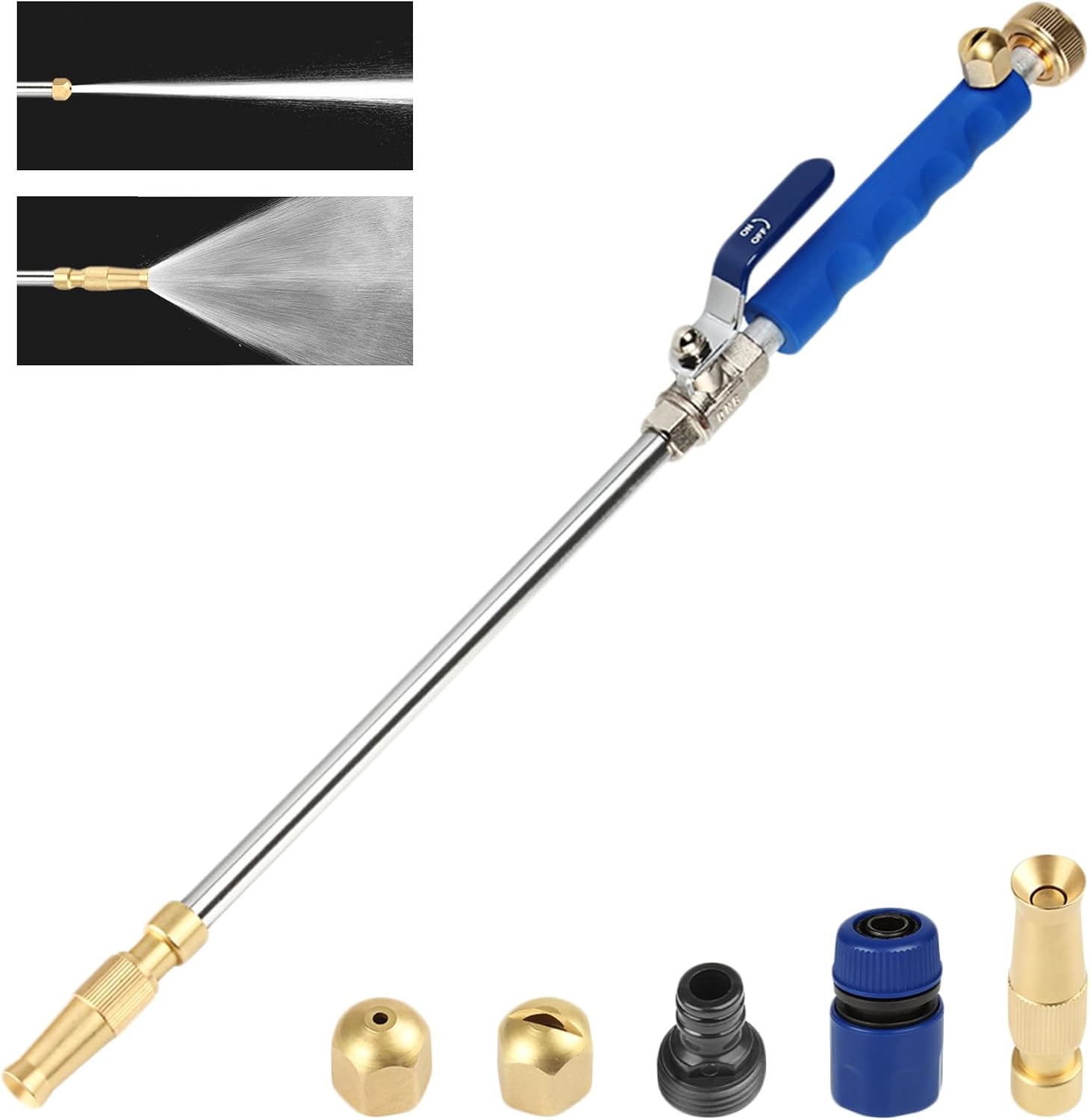
The garden hose gun: Hydro Jet High Pressure Power Washer
This one is not a pressure washer and it is not pretending to be. It screws onto the end of a garden hose and gives you a better trigger, a longer reach, and two nozzle types, an adjustable one and a fan one. What you get is garden hose pressure, delivered where you point it.
That is enough for more jobs than you would think: second story windows, screens, patio furniture, the top of a fence, an AC condenser coil, the car before you pull out the machine, the mud out of a wheel well. It also saves you twenty minutes of setup for a five minute job, which is the actual reason I keep one hanging by the spigot.
What it will not do: strip paint, clean a concrete driveway, or take mold off a fence. If your garden hose pressure is weak to begin with, this is a weak tool. Buy it as a rinse tool and a reach tool, not as a replacement for the gas machine.
The parts reality: carburetor for the WEN DF475T, DF475X, and DF475
Here is the part of gas ownership nobody puts on the box. Gas equipment does not usually die of a worn out pump. It dies of a clogged carburetor after a winter of sitting with ethanol fuel in the bowl. This is a replacement carburetor for the WEN DF475T, DF475X, and DF475 4750 watt dual fuel generators, the kind of unit that ends up on a mobile detailing rig running lights, a buffer, or a transfer pump when the job site has no spigot.
If you run any gas engine, the maintenance rule is the same. Run propane when you can, because propane does not gum a carburetor the way ethanol gas does, and drain the bowl before storage if you do not. Check the fuel lines and gaskets while you have it apart. And verify your exact model number before you order, because generator families look identical from three feet away and the carburetors are not always the same.
How I judge a pressure washer setup
Four questions, every time. What is the real GPM, not the PSI printed on the front of the box. Does it draw detergent properly. Are the hose and the wand worth keeping. Could I do a full driveway with it without cursing.
Most marketing answers the first question with the wrong number and ignores the rest. A machine with a strong PSI figure and a weak flow rate will feel powerful in your hand and clean slowly on the ground. A machine with good flow, a hose that does not kink, and the right nozzle will out clean a more expensive unit with bad accessories every single time. The nozzle is the machine. A surface cleaner or a better tip turns a mediocre washer into a professional tool.
What actually decides whether you like your setup
Flow first. Then the hose, because you touch it the whole time you work. Then the detergent system, because soap does more work than pressure on most organic mess. Then duty cycle, which is where cheap electric units lose and where gas wins by default, because it will run as long as you keep fuel in it.
Pressure is the least interesting number on the page. It is also the one everyone checks first. I do it too, and I have been wrong about it before.
Pressure washer setup reference table
Match the item to the job. Every row below is a tool I would keep on the truck or in the garage, and none of them replaces the others.
| Item | What it handles | Key spec | Who it is for |
|---|---|---|---|
 Visit on Amazon → Visit on Amazon →Westinghouse WPX3200 Gas Pressure Washer |
Driveways, fences, hulls, patios | 3200 PSI, 2.5 GPM, onboard soap tank, 5 nozzle set | Anyone with weekly heavy jobs or a boat |
 Visit on Amazon → Visit on Amazon →Simpson 50 ft Monster hose |
Replacing a stiff stock hose, extending reach | 50 ft, 3/8 inch inside diameter, 4500 PSI, cold water | Every gas machine owner, especially one stuck with a 25 ft stock hose |
 Visit on Amazon → Visit on Amazon →Hydro Jet garden hose gun |
Windows, screens, furniture, quick rinses | Garden hose end, adjustable and fan nozzles, extendable | Anyone who wants a rinse tool without dragging out the machine |
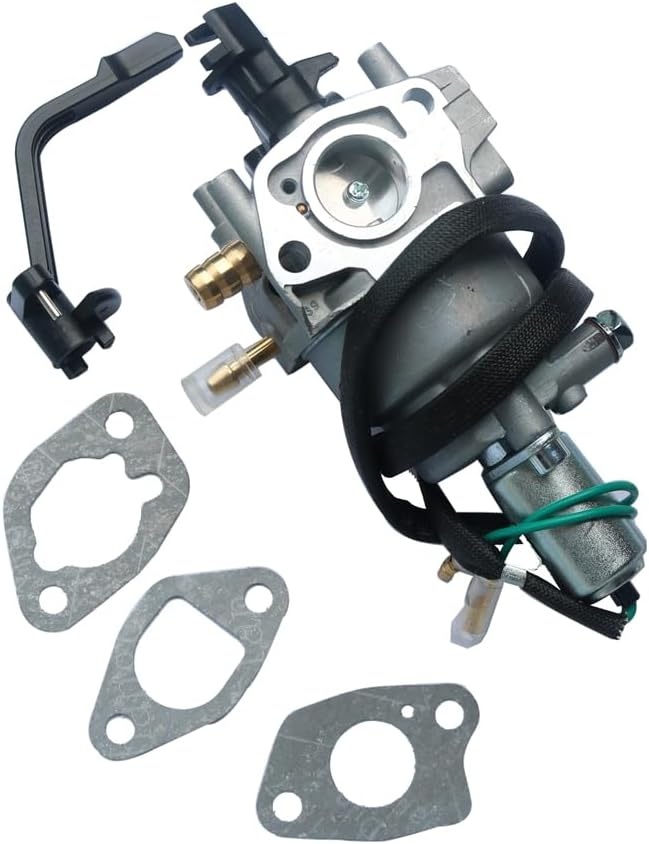 Visit on Amazon → Visit on Amazon →Carburetor for the WEN DF475 family |
Restoring a generator that will not run | Fits DF475T, DF475X, DF475 dual fuel units | Owners of that generator family |
What I would buy, and in what order
Machine first, if you have real work and a place to store it. Hose second, because it is the cheapest quality of life upgrade in this entire article. The garden hose gun third, for the small jobs. The carburetor only if you own that generator family and the machine quit after winter. That order has held up for me for a decade.
Should you buy the Westinghouse WPX3200?
Yes, if you have decided you want gas. 2.5 GPM is enough to run a surface cleaner properly, the onboard soap tank means it actually draws detergent, and the included gun, wand, and five nozzles get you working on day one. It is loud, it is heavy, and it needs fuel system care. For a driveway, a fence, and a boat, that trade is worth making.
Should you buy the Simpson 50 ft Monster hose?
Yes, and it might be the first thing I would buy after the machine itself. 3/8 inch inside diameter, 50 feet, rated well above a 3200 PSI machine, cold water only. If your stock hose kinks, this fixes the single most annoying part of pressure washing.
Should you buy the Hydro Jet garden hose gun?
Yes, if you understand what it is. Garden hose pressure with a better handle and more reach, and it will save you from firing up a gas machine just to rinse a patio chair. It will not clean concrete or strip a deck, and it was never meant to.
Should you buy the carburetor?
Only if you own a WEN DF475T, DF475X, or DF475. If you do, and it quit after sitting with gas in it, this is the part that brings it back, and propane is the fuel that keeps it from happening again.