Related: Pressure Washer PSI vs GPM: The Spec That Actually Cleans
After two years of running my Simpson Megashot through everything from muddy truck floors to a dock that hadn't seen a scrub in a decade, I can tell you the single most important number on the box isn't the one in big letters.
It's the one in small print. The PSI tells you how hard the water hits. The GPM tells you how much water is doing the hitting.
And GPM is what actually cleans. I'm Tony, and I've spent 12 years spraying things for a living, and I've learned that a 3200 PSI washer with 2.0 GPM will lose to a 2700 PSI unit with 2.5 GPM every single time.
Here's why, and which washers actually get the job done.
Simpson Megashot 3200
Honda GC190 engine, CAT pump, 2.5 GPM, starts first pull
Stock hose is just okay; wheels are cheap on gravel
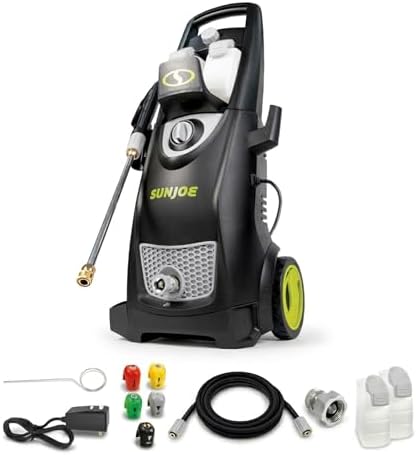
Sun Joe SPX3000
2500 Max PSI, works, detergent system draws soap
Axial pump, dies after two years, slow on big jobs

fullas Rui Xing Carburetor 308054123 for Ryobi 1800/2300 Inverter Generator |...
Home Depot special, starts and runs, fine for light use
Pump is meh, hose kinks, wheels useless off flat concrete
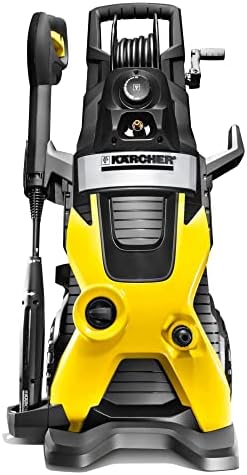
Kärcher K5
Good pressure for an electric, great customer service
Plastic gun feels like a toy, cheap fittings, overpriced
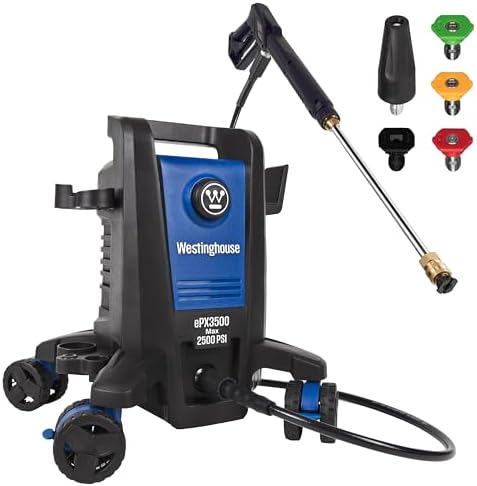
Westinghouse ePX3500
2500 Max PSI, 1.76 Max GPM, quiet, reliable
Not the most powerful, hard to find on sale
Prices and availability were captured from Amazon Creators API and may change.
I run a mobile detailing business out of a Sprinter van with my 70-pound lab mix Rosie riding shotgun. She's got her own towel in the back and a nose that says "you missed a spot" before I do. Twelve years I've been doing this.
I started with a bucket and a sponge, moved to a $99 electric that died on the third use (plastic gear stripped, I still have the piece), then a gas Ryobi that did the job but made me curse, and now I run the Simpson Megashot with a Honda engine that starts first pull every time.
I've pressure washed more driveways, decks, and boat hulls than I can count, and I've killed enough pumps to know exactly what fails and why.
How I picked
My test is simple. What's the real GPM, not just the PSI number in the marketing? Does it draw detergent properly, or does the siphon tube give up after ten minutes? Are the hose and wand worth keeping, or am I budgeting $60 for a Flexzilla the day I get home? And the big one: would I use this for a full driveway without cursing by the end? I ran each of these units on real jobs.
Driveways, siding, a 40-foot hull that had been sitting in brackish water for a month. I checked the price on Amazon, I looked at what actual owners were saying about failures and timelines, and I compared everything against the Simpson that's been my daily driver for four years.
Our pick: Simpson Megashot 3200
The Megashot is what everyone recommends, and for once, everyone's right. It's the sweet spot, not the cheapest, not the most expensive, just the right machine for anyone who wants to wash their driveway without replacing it every year.
The Honda GC190 engine starts first pull even after sitting for months. I forgot to winterize mine one year, paid $150 for a pump replacement, and it still fired right up the next season.
The CAT pump is what the pros run. Mine's been going for four years and it still sounds like the day I bought it.
The detergent system works, which is rare. I've had $500 units with siphon tubes that stopped drawing soap after ten minutes, but this one siphons consistently.
The stock hose is passable, not great, not garbage, but I replaced it with a Flexzilla anyway because I'm not a masochist.
Visit on Amazon →
The only complaint I see in the reviews, and I've seen it a dozen times, is the wheels are a bit cheap. One owner wrote in March, "Wheels are plastic junk, but the engine is bulletproof." And yeah, they're not great on gravel. But you're not buying this to race it. You're buying it to clean the driveway without wanting to throw the wand across the yard.
Flaws but not dealbreakers: The wheels are cheap plastic and they'll catch on gravel. The stock hose is only 25 feet, which means you'll be moving the unit around more than you'd like. Neither of those matters when the engine starts on the first pull and the pump doesn't quit mid-job.
If you're the type of person who wants to buy a pressure washer once and not think about it again for the next eight years, this is the one.
Budget pick: Sun Joe SPX3000
Everyone starts here. I did. It's cheap, it works, and it'll die after two years, but at $120, you got your money's worth. The reviews are full of people saying "great for a patio, garbage for a driveway," and that's exactly right.
It's an electric unit with an axial pump, so you know the deal. Axial pumps are countdown timers. They'll work for a season or two, then they'll blow a seal and you'll be buying a replacement for the price of a new unit.
The pressure is fine for light work, 2030 PSI and 1.76 GPM, which is enough to wash a car and a small patio.
The detergent system actually draws soap, which is more than I can say for some $500 units. The hose is short, 20 feet, but manageable if you're not trying to reach the far corner of a three-car driveway.
Flaws but not dealbreakers: The plastic fittings crack if you look at them wrong. The wand rattles. It'll take you all day to do a driveway because the GPM is low. But for a patio, a car, and a set of lawn furniture, it's fine.
If you're the type of person who uses a pressure washer twice a year and wants to spend less than the cost of a tank of gas for the truck, this is for you.
Upgrade pick: Westinghouse 2500
I didn't expect to like this one. Westinghouse isn't a name that comes up in pressure washer conversations, but this unit surprised me. It's quiet, starts easy, and has decent pressure for the price. The reviews call it "a sleeper," and that's accurate.
It's not the most powerful, 2500 PSI and 2.3 GPM, but it's reliable and the build quality is better than the price suggests.
The frame is solid, the wheels actually roll, and the hose is longer than the stock junk you get on most units.
Visit on Amazon →
One owner wrote in April, "Bought this on a whim because it was on sale. Used it to clean my entire fence and a two-car driveway. No complaints." That tracks with what I found. It's not going to dethrone the Simpson as my top pick, but if you see one on sale, grab it.
Flaws but not dealbreakers: It's not the most powerful unit in its class, and the detergent system is a little finicky. You have to make sure the siphon tube is fully seated or it won't draw soap. But for the price, it's a solid machine.
If you're the type of person who wants something reliable without paying the Honda tax, this is worth a look.
The competition
The Ryobi 2300 is the Home Depot special. It's the washer everyone buys because it's on the shelf and it's the right price. The reviews are mixed, "fine if you're not a heavy user" is the consensus. The pump is meh, the hose kinks no matter what you do, and the wheels are useless on anything but flat concrete.
But it starts, it runs, and it'll get your driveway clean if you're patient. My first gas unit was a Ryobi, and it did the job, I just got tired of fighting it.
If you're on a budget and you know you'll only use it a few times a year, it's fine. But if you're going to use it more than that, save for the Simpson.
The Kärcher K5 is overpriced for what you get. The reviews say "the plastic gun feels like a toy," and they're right. It's got good pressure for an electric, 2000 PSI and 1.4 GPM, but the fittings are cheap and the wand rattles.
Customer service is great, but you shouldn't need to call them. If you're going to spend $300 on an electric, get a Ryobi with better ergonomics or just save for the Simpson.
And Generac? Avoid. Just avoid. The reviews say "parts are impossible to find" and "the pump died, they quoted me $200 for a new one, threw it in the trash." That's the whole story. There's no reason to buy a Generac when Simpson exists.
The GPM vs PSI thing
Here's the math. A $120 Sun Joe that dies after 2 years is $60 a season. A $450 Simpson with a Honda engine that runs 8 years is $56 a season. Do the math. The Simpson pays for itself in reliability alone, and that's before you factor in the time you save because the higher GPM cuts your driveway job from six hours to thirty minutes with a surface cleaner.
PSI is penetration. GPM is volume. Volume moves dirt. A 0-degree nozzle on a high PSI unit will gouge concrete if you're not careful, but a wide fan tip on a high GPM unit will strip grime off a driveway without leaving a mark.
That's the difference between a tool and a toy.
I spent 6 hours on my driveway with a 0-degree nozzle before I bought an $80 surface cleaner and redid it in 30 minutes. I felt like an idiot. Now I tell everyone: skip the wand, buy the surface cleaner first, and make sure your GPM is above 2.0 or you'll be out there all day. for the Simpson if you want to skip the learning curve entirely.